The Historical Context of Maintenance-Driven Risk
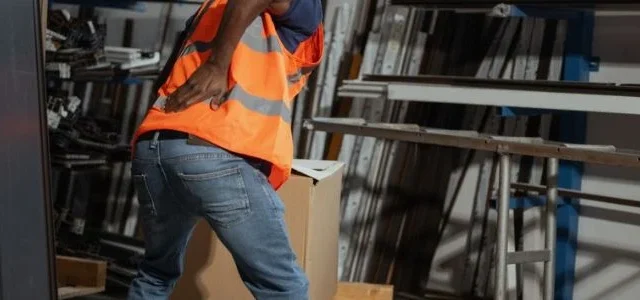
For decades, industrial safety was governed by the "Run-to-Failure" or rigid "Calendar-Based" models. Historically, the industrial revolution and the subsequent standardization of manufacturing in the 20th century established the practice of servicing machinery at fixed intervals—such as every 500 hours of operation or every six months. While this provided a baseline of safety, it suffered from a persistent blind spot: it ignored the reality that equipment wear is highly contextual.
In the 1970s and 80s, the introduction of Total Productive Maintenance (TPM) sought to engage all employees in the upkeep of their tools, yet these systems remained heavily reliant on manual data entry and human intuition. Safety professionals have long observed a direct correlation between maintenance backlogs and injury rates. According to data from the Occupational Safety and Health Administration (OSHA), a significant percentage of "struck-by" and "caught-in-between" incidents occur during emergency repairs performed on machines that have experienced unexpected, catastrophic failure. The traditional approach forced technicians into high-pressure, time-sensitive repair environments where the likelihood of skipping safety protocols—such as Lockout/Tagout (LOTO) procedures—increased exponentially.
Bridging the Gap Between Operational Efficiency and Safety
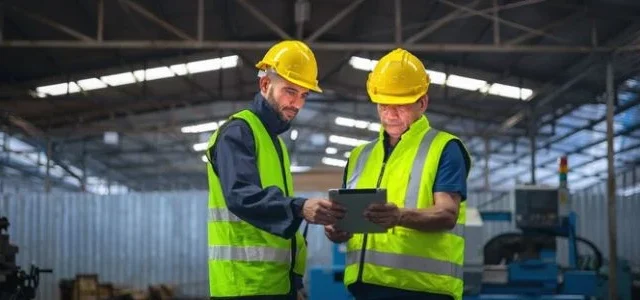
The modern industrial landscape is now characterized by the proliferation of the Industrial Internet of Things (IIoT). Sensors installed on hydraulic pumps, robotic arms, and conveyor systems transmit data points regarding temperature, vibration, and acoustic signatures. When these data streams are fed into AI-powered predictive maintenance platforms, the resulting analysis provides a "health score" for the asset.
This intelligence allows maintenance managers to shift their resources toward assets that are showing genuine signs of degradation rather than those that simply hit a calendar milestone. From a safety perspective, the implications are profound. Planned maintenance is inherently safer than reactive maintenance. When an organization anticipates a failure, they can schedule the downtime, secure the necessary specialized tools, clear the floor of non-essential personnel, and ensure that all safety permits are properly vetted. This eliminates the "panic-repair" dynamic, which is statistically the most dangerous period in any facility’s operational lifecycle.

Data-Driven Insights and Risk Mitigation
Recent industry studies indicate that companies adopting predictive maintenance (PdM) technology see a reduction in unexpected equipment downtime by 30% to 50%. More importantly, organizations leveraging AI to monitor safety-critical equipment report a decline in maintenance-related injuries by approximately 20%.
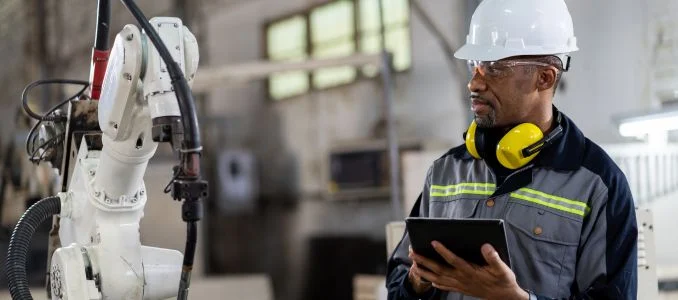
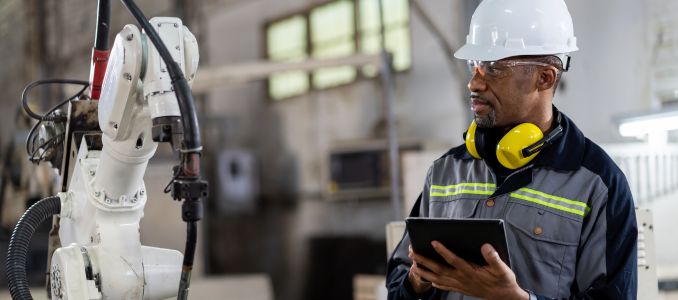
The mechanics of this improvement lie in the AI’s ability to detect "pre-failure" signatures. For instance, a robotic hand on an assembly line might develop a subtle, high-frequency vibration in its actuator. A human operator may not hear it, and a standard check might not catch it until the part snaps. The AI, however, identifies the deviation from the machine’s "normal" baseline performance. By triggering a maintenance alert weeks before the component fails, the system prevents a potentially hazardous situation where a failing part could shatter, drop a load, or cause a sudden, violent movement of the robotic limb.
The Human-AI Collaboration: Augmentation, Not Replacement
A common misconception in the manufacturing sector is that AI aims to displace the skilled technician. In reality, industry experts and union representatives emphasize that AI acts as an force multiplier for the human workforce. Maintenance experts provide the qualitative context—such as "this machine was recently moved to a higher-humidity environment"—that the AI may lack.
"The goal is not to remove the expert technician from the equation," says Dr. Elena Vance, a senior consultant in industrial systems integration. "The goal is to provide that technician with a surgical level of insight. Instead of spending 80% of their time inspecting machines that are functioning perfectly, they spend 100% of their time addressing the specific, high-risk items that the AI has flagged as potential failure points."
By automating the diagnostic process, companies are effectively reducing "inspection fatigue," a phenomenon where technicians, burdened by thousands of check-points, begin to perform "pencil-whipping" or cursory inspections. AI-driven monitoring ensures that the eyes of the maintenance crew are focused only where they are needed most.
Implications for Workplace Compliance and Liability
The shift toward AI-powered safety has legal and regulatory implications. As AI models become more adept at predicting failures, the definition of "due diligence" in workplace safety may evolve. Regulatory bodies are increasingly interested in how digital records can support an organization’s safety claims. If a company can demonstrate that they are using industry-leading predictive analytics to mitigate risks, it may influence insurance premiums and provide a robust framework for compliance audits.
Furthermore, the integration of these systems facilitates a more accurate "Safety Audit Trail." In the event of a near-miss or incident, investigators can review the AI’s history to determine if the failure was truly unpredictable or if the maintenance system failed to act on existing data. This transparency fosters a culture of accountability that is often absent in paper-based maintenance logs.
Challenges to Implementation
Despite the clear safety benefits, widespread adoption faces hurdles. High initial capital expenditure, the need for robust digital infrastructure, and the challenge of training legacy workforces to trust digital insights remain significant barriers. Many legacy machines, some decades old, are not "smart" and require the retrofitting of sensors, which can be complex and expensive.
Moreover, there is the risk of "algorithm bias." If an AI model is trained on poor-quality historical data, it may provide inaccurate risk assessments. Organizations must ensure that their digital transformation is supported by a rigorous data-cleansing process. If the input data is flawed, the maintenance schedule will be flawed, potentially leading to a false sense of security that is more dangerous than no system at all.
Future Outlook
The trajectory of the industry is clear. As machine learning models become more sophisticated and the cost of sensor technology continues to drop, predictive maintenance will become the standard rather than the exception. We are moving toward a future where "smart factories" possess a degree of self-awareness regarding their own safety status.
For the safety professional, this transition is the most significant development in decades. It represents a move away from the traditional, reactive model—which treated accidents as an inevitable cost of doing business—toward a preventative model where the hazards are identified and neutralized before they ever materialize. The result is a workplace that is not only more productive but fundamentally more humane, where the reliance on human intuition is bolstered by the precision of artificial intelligence to ensure that every worker returns home safely at the end of their shift.
As we look toward 2030, the synergy between human expertise and machine intelligence will likely be the benchmark for operational excellence. Organizations that fail to bridge this gap will find themselves at a distinct disadvantage, not only in terms of productivity but in their ability to maintain the high safety standards that modern workforces expect and deserve.