
The Chronology of Administrative Transition
The current transition follows a long-standing political mandate to curtail federal involvement in primary and secondary education. The administration’s roadmap for the Department of Education’s dissolution involves a phased handover of federal authority. Over the past several months, the Department has been actively auditing its internal programs and distributing them among existing federal departments.
In early 2026, the administration accelerated these transfers. Programs related to vocational training and workforce development have been migrated to the Department of Labor, while health-related educational initiatives have been absorbed by the Department of Health and Human Services. This process is intended to streamline bureaucratic oversight, according to administration spokespeople, though critics argue that the fragmentation of these services threatens the cohesive delivery of educational equity and civil rights enforcement for students with disabilities.
Secretary Linda McMahon and the Future of IDEA
Secretary of Education Linda McMahon has maintained a consistent stance regarding the department’s closure. In recent briefings, she has confirmed that the department’s total dissolution is not merely a proposal under consideration but a finalized policy objective. Regarding the Individuals with Disabilities Education Act (IDEA) and the broader spectrum of Special Education services, Secretary McMahon has explicitly stated that these functions will be relocated rather than eliminated.
However, the lack of transparency regarding the new "home" for these essential services has become a flashpoint for disability rights organizations. The National Association of the Deaf (NAD) and other advocacy groups have expressed concern that the transition risks disrupting the regulatory framework that ensures a Free Appropriate Public Education (FAPE) for millions of students. Secretary McMahon’s public assertions that a move is inevitable have underscored the urgency for state-level preparation, as the federal government appears to be finalizing the logistics of this transfer behind closed doors.
The Role of Federal Special Education Oversight
The federal oversight of special education is not a trivial administrative function; it is a vital pillar of the American public school system. Under current law, the Department of Education manages roughly $15 billion in annual grants to states under IDEA Part B, which funds the education of children with disabilities ages 3 through 21.
The concern among policy analysts is that relocating these responsibilities to agencies like the Department of Health and Human Services or the Department of Labor could dilute the focus on academic achievement and civil rights protections. Historically, the Department of Education has served as the primary enforcement mechanism for the Rehabilitation Act and the Americans with Disabilities Act (ADA) within the classroom setting. If these enforcement powers are dispersed across multiple federal departments, advocates fear a degradation in oversight consistency, potentially leaving students in underfunded districts with less recourse when their rights are violated.
Implications for State-Level Education Policy
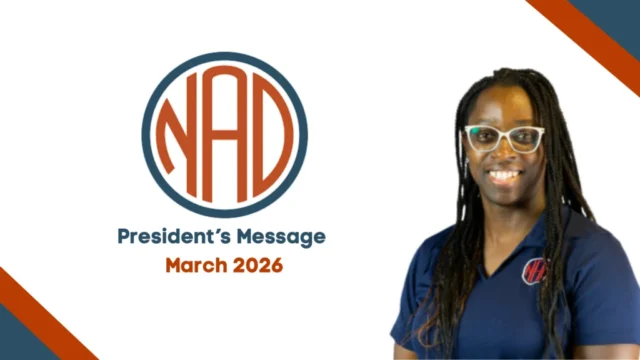
The potential closure of the federal Department of Education necessitates a paradigm shift in how states manage their own educational mandates. NAD President SJ Hakulin has repeatedly cautioned that the onus of protecting deaf and special education services will likely shift squarely onto state associations and local school boards.
This environment of uncertainty has prompted the development of proactive frameworks, such as the Blueprint for Excellence in Deaf Education (BEDE). The BEDE initiative is designed to provide a cohesive, evidence-based standard for states to adopt, ensuring that even in the absence of centralized federal guidance, the educational outcomes for deaf and hard-of-hearing students remain prioritized. This framework, which will be a primary topic of discussion at the upcoming NAD Conference in San Francisco, serves as a model for how educational stakeholders can fill the vacuum left by federal retreat.
Data and Fiscal Impact Analysis
The fiscal implications of the department’s closure are vast. The Department of Education’s total discretionary budget for Fiscal Year 2025 exceeded $79 billion. Redirecting these funds requires complex legislative maneuvering and inter-departmental cooperation. If special education funding is subsumed by agencies that lack the statutory mission of "education," the risk of budget reallocation—where funds intended for specialized instruction are diverted to workforce or social service programs—is statistically significant.
Furthermore, the administrative burden of these transfers cannot be understated. Transitioning the oversight of billions of dollars in grants, monitoring thousands of state-level compliance reports, and managing federal civil rights investigations requires a level of institutional continuity that the current dissolution plan has yet to demonstrate. Industry experts suggest that a "murky" transition period could last anywhere from 18 to 36 months, during which time state education agencies may struggle to interpret federal compliance standards.
Advocacy and Future Outlook
For organizations like the NAD, the priority is clear: ensuring that the transfer of Special Education authority does not result in the dilution of civil rights protections. The lack of a clear, public plan for where these services will be placed has led to calls for greater congressional oversight. Disability activists are currently lobbying for a guarantee that the transition plan will include a singular, dedicated office for Special Education to maintain the continuity of IDEA protections.
The argument for maintaining a centralized authority for special education rests on the principle of equity. By housing these services within one office, the federal government ensures that a student’s right to an education is not dependent on which state they live in or which federal agency happens to be overseeing their specific funding stream. As the Department of Education enters its final months of operation, the focus of the disability community remains fixed on the "where" of this transition.
Preparing for the Summer Conference
The upcoming NAD Conference in San Francisco is expected to be a pivotal moment for educators and advocates. As the timeline for the Department of Education’s closure shortens, the conversation will shift from theoretical discussions about federal policy to practical, tactical plans for state-level advocacy.
The BEDE initiative serves as a primary example of this shift toward self-reliance. By providing a standardized blueprint, the NAD aims to empower local educators to maintain high standards of instruction and accessibility, regardless of the federal landscape. The conference will provide a platform for experts to dissect the potential challenges of the transition and to prepare for the reality of a post-Department of Education landscape.
Conclusion
The impending closure of the U.S. Department of Education marks a fundamental change in the relationship between the federal government and the American classroom. While the administration frames the dissolution as a move toward greater efficiency and decentralization, the uncertainty surrounding the future of special education highlights the risks inherent in such a massive bureaucratic overhaul.
As the "when" of the department’s closure becomes clearer, the "where" of special education services remains the most critical unanswered question. For parents, teachers, and students, the coming months will be defined by an urgent need for clarity, advocacy, and a commitment to ensuring that the rights of students with disabilities remain protected, regardless of which federal entity holds the authority over their education. The transition is not merely a logistical challenge; it is a test of the nation’s commitment to the fundamental principles of inclusive and equitable education.