
The Scale of the Acoustic Challenge
The science of sound is unforgiving. According to the World Health Organization (WHO), over 1.5 billion people globally live with some degree of hearing loss, and exposure to loud sound environments is a primary driver for noise-induced hearing damage. In the context of live music, sound levels at festivals frequently exceed 100 decibels (dB). For perspective, the human ear begins to sustain damage after sustained exposure to sounds above 85 dB. At 100 dB, damage can occur in as little as 15 minutes of unprotected exposure.
Tinnitus—the perception of internal noise such as ringing, buzzing, or hissing—is often the first warning sign of acoustic trauma. While often temporary after a loud gig, repeated exposure can lead to permanent changes in the auditory system. With the 2026 festival season expected to see record-breaking attendance figures, the potential for widespread auditory fatigue and damage is higher than ever.
A Strategic Partnership: Download Festival 2026
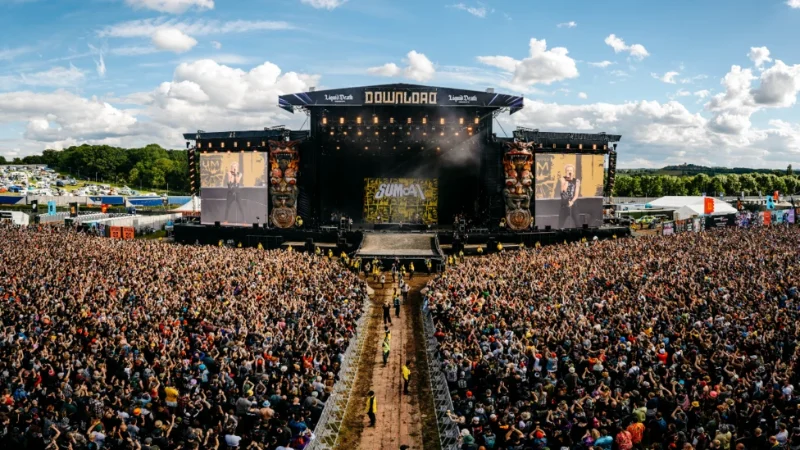
In a significant move to bridge the gap between music enjoyment and medical awareness, Tinnitus UK has announced a strategic partnership with Download Festival for its 2026 edition. Download, historically recognized as the UK’s premier rock and heavy metal festival, presents a unique case study in sound intensity. The genre’s inherent reliance on high-decibel amplification makes it a vital environment for public health outreach.
The collaboration involves a multi-faceted approach. Organizers and charity representatives will facilitate on-site education regarding decibel limits and the importance of "acoustic breaks." This partnership serves as a model for the wider music industry, demonstrating that festivals can prioritize public safety without compromising the sonic integrity of the performances. Industry analysts suggest that this proactive stance by a major event promoter may signal a shifting standard in how large-scale productions manage crowd welfare.
Chronology of Awareness and Industry Response
The intersection of audiology and the music industry has evolved significantly over the last decade. Historically, the burden of hearing protection was placed solely on the individual. However, the timeline of the last five years shows a distinct shift toward corporate and organizational responsibility:
- 2021–2022: Post-pandemic, there was a surge in live event attendance, accompanied by a spike in reports of hyperacusis and tinnitus among younger demographics.
- 2023: Health organizations began lobbying for clearer "noise maps" within venues, allowing attendees to identify safer zones for viewing.
- 2024: The development of high-fidelity, non-linear earplugs reached mass-market viability, allowing concert-goers to reduce volume without distorting frequency response.
- 2025: Initial pilot programs for "quiet zones" at major UK festivals were tested, yielding positive feedback from attendees who reported feeling less auditory fatigue.
- 2026: The partnership between Tinnitus UK and Download Festival represents the most comprehensive integration of hearing health education to date, marking a milestone in festival safety protocols.
Data-Driven Insights on Auditory Safety
Research indicates that the "danger zone" is not limited to the front row. Sound pressure levels can remain dangerously high even at the back of a large crowd, particularly in enclosed stadium environments. Data suggests that the cumulative effect of a three-day festival—where sound exposure is constant for 8 to 10 hours daily—places a massive stress load on the inner ear hair cells, which do not regenerate once destroyed.
Furthermore, the prevalence of tinnitus in the UK is significant. Millions of adults currently live with the condition, with a growing subset being young adults who cite concert attendance as a primary cause. The economic impact is equally substantial, as tinnitus-related productivity loss and medical interventions place a strain on healthcare infrastructure. Experts argue that education is the most cost-effective medical intervention available today.
Best Practices for the Modern Music Fan
The core message from medical professionals is that prevention does not equate to abstinence. It is entirely possible to enjoy a high-energy performance while maintaining physiological safety. The following strategies have been identified by Tinnitus UK as the most effective methods for mitigating risk:
- Investment in High-Fidelity Protection: Modern earplugs are vastly different from the foam options of the past. High-fidelity variants use acoustic filters to lower the volume of the entire frequency spectrum evenly. This preserves the clarity of the music while keeping sound pressure levels within a safe range.
- The 60/60 Rule: While typically applied to headphone use, the principle remains relevant for live music. Try to limit exposure to 60% of the maximum intensity for no more than 60 minutes before taking a break.
- Spatial Awareness: The inverse square law of physics dictates that sound intensity drops significantly as you move away from the source. By standing even 10–15 meters further back from the speaker stacks, fans can reduce their exposure by several decibels without losing sight of the stage.
- Acoustic Recovery: Providing the ears with "quiet time" between sets or after a long day is essential. The auditory system requires time to recover from the metabolic stress induced by high-volume exposure.
The Role of Advocacy and Support
For those already navigating the challenges of tinnitus, the landscape of support has expanded. Tinnitus UK emphasizes that the condition is manageable, provided individuals have access to the right tools. The charity offers a comprehensive suite of resources, including Cognitive Behavioral Therapy (CBT) modules, sound therapy tools, and a confidential helpline.
The integration of these resources into the festival environment is intended to destigmatize the condition. By moving the conversation out of the clinical office and into the public sphere of the festival field, Tinnitus UK is effectively normalizing the concept of "hearing maintenance."
Broader Implications for the Music Industry
The implications of this movement are far-reaching. As public awareness grows, there is an increasing expectation for venues to be held accountable for sound management. Some jurisdictions are already exploring legislation that would require venues to display real-time decibel monitoring. While such measures remain controversial due to the logistical challenges of varying acoustics, the trend toward greater transparency is clear.
If the 2026 festival season proves successful in integrating hearing health awareness, it is likely that future licensing agreements for large-scale events will include clauses regarding noise exposure limits and the mandatory provision of protective equipment for staff and attendees. This is not merely a matter of health policy; it is an economic imperative. By protecting the hearing of the next generation of concert-goers, the industry ensures that the market for live music remains sustainable for decades to come.
Conclusion: A Future of Sound
The mission to protect hearing is not an attempt to silence the music; it is a movement to ensure that the music never stops. As fans head out to fields and arenas this summer, the consensus among experts is clear: small, proactive choices—such as wearing earplugs, taking breaks, and choosing vantage points wisely—can make the difference between a lifetime of auditory health and the onset of preventable conditions.
By fostering a culture where hearing protection is viewed as a standard accessory, much like sunscreen or hydration, the live music community can continue to thrive. The partnership at Download Festival 2026 is a testament to the fact that when organizers, artists, and fans work in concert, the result is a safer, more sustainable experience for everyone. For those seeking further information, Tinnitus UK remains the primary point of contact for resources, support, and guidance on maintaining hearing health amidst the roar of the crowd. Through education and advocacy, the industry is paving the way for a future where every note can be heard, cherished, and protected for a lifetime.