The Clinical Pivot: Challenging Traditional Paradigms
For years, clinical practice in speech-language pathology has been heavily influenced by an ableist framework, which often prioritizes vocal speech as the primary metric of successful communication. This traditional approach has frequently left non-speaking or minimally speaking individuals relegated to clinical settings, where their interaction with peers is limited to therapists or caregivers who may not use the same communication modalities.
Ordóñez, through her years of professional experience, identified a critical lack of horizontal, peer-to-peer connection for AAC users. Her professional inquiry led her to challenge several long-standing assumptions: Is traditional language therapy truly respectful if it ignores the primary communication modality of the user? Furthermore, is the limited exposure provided in individual sessions—typically once or twice a week—sufficient to achieve communicative competence? These questions became the foundational pillars of her mission, prompting a move from theoretical skepticism to practical action.
Chronology of Development
The trajectory of VOZ SOS CAAPAZ was shaped by three distinct, high-impact developments between 2024 and 2026:
- The CAAmigos Angelman Initiative (2024): Ordóñez joined a virtual, evidence-based, and neuroaffirmative program. This experience allowed her to move beyond rigid, traditional methodologies, adopting a "Comprehensive Literacy" model. This model provided the necessary framework to integrate theoretical knowledge into naturalistic, joyful, and highly effective practice.
- The "Nothing About Us Without Us" Paradigm (2025): The publication of Gran Blasko’s seminal article in the AAC journal (Volume 41) served as a professional catalyst. Blasko, a non-speaking AAC user, challenged professionals to include AAC users in every facet of research, product design, and clinical training. This call to action significantly influenced Ordóñez’s commitment to making her projects participatory rather than top-down.
- Relationship-Based Learning (2025): By prioritizing horizontal relationships where communication partners act as learners alongside the AAC user, Ordóñez began to structure her interventions around connection and mutual growth rather than clinical prescription.
Implementation: From Theory to Public Space
The project officially manifested in October 2025, coinciding with AAC Awareness Month. The first gathering took place at the Comfama Rionegro park, an environment chosen for its openness to the public, which served the dual purpose of normalizing AAC technology in a social setting and providing a safe space for users to interact.
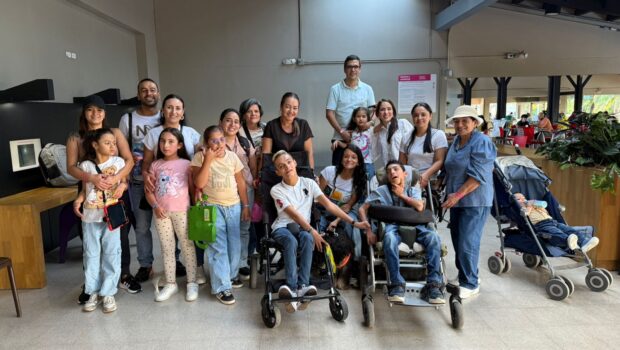
The participant profile for this inaugural event included six AAC users utilizing diverse technologies, ranging from tablet-based solutions like Proloquo2go and TD Snap to sophisticated eye-tracking systems such as Grid 3. The presence of ten family members and a speech-language pathologist underscored the collaborative nature of the program.
The positive reception of this event was perhaps best encapsulated by participant Pablo Andrés Calderón Gómez, who noted the significance of meeting fellow users. His feedback highlights a common sentiment among the AAC community: the urgent need for expanded access to communication rights, as many users remain isolated due to a lack of community infrastructure.
Literacy as a Human Right
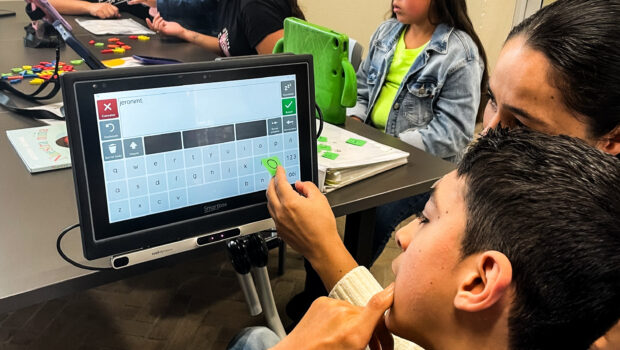
In February 2026, the project expanded its scope by hosting a shared reading session at a public library in Rionegro. Utilizing Erin Sheldon’s Comprehensive Literacy model, the session was designed to provide "emergent" readers with the necessary print knowledge through interaction with literate peers and texts. This event marked a crucial pivot toward academic and social inclusion, reinforcing the idea that literacy is a fundamental right, regardless of a person’s preferred communication method.
Data-Driven Implications for AAC Practice
The implications of the VOZ SOS CAAPAZ project are significant for the broader field of communication disorders. Current data suggests that AAC users who engage in peer-to-peer social networks show improved self-efficacy and higher rates of vocabulary acquisition compared to those restricted to solitary clinical interventions.
The shift toward "presuming competence"—a key tenet of neuroaffirmative practice—is at the core of Ordóñez’s methodology. By assuming that every individual has the capacity to communicate and learn, the project removes the "ceilings" often placed on individuals with complex communication needs. For families, this model offers a roadmap for moving beyond standard therapy toward a more inclusive, rights-based approach.
Future Projections and Systemic Change
While VOZ SOS CAAPAZ currently operates on a monthly cadence, the project’s long-term goal is to normalize these gatherings across more municipalities. The model relies on a collaborative, multidisciplinary approach where the family unit, the clinician, and the AAC user act as a cohesive team.
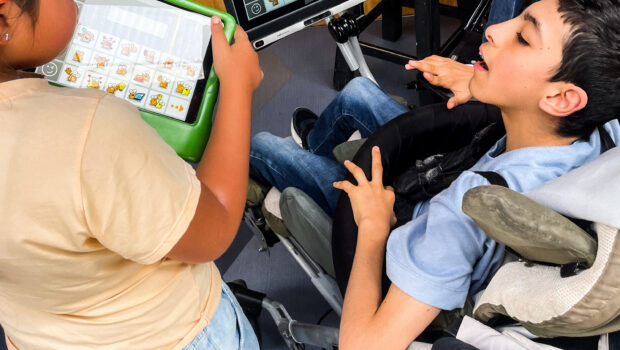
The success of the project in Rionegro demonstrates that the barriers to inclusion are often more logistical and societal than they are biological. By creating environments where non-speaking individuals can lead, learn, and socialize, the program challenges the societal expectation that communication must be vocal to be valid.
Conclusion and Call to Action
The work performed by Ángela Marcela Ordóñez serves as a blueprint for other professionals seeking to modernize their practices. The core philosophy of VOZ SOS CAAPAZ—that "each person has a voice" and that the role of the professional is to provide access to the tools that project that voice—challenges the status quo of modern speech therapy.
As the project continues to evolve, its impact is measured not just in the number of participants, but in the qualitative shift in how these individuals navigate their communities. For families of AAC users, the lesson is clear: if current clinical or pedagogical practices seem to limit the potential of a loved one, it is time to advocate for models that prioritize autonomy, connection, and the fundamental right to full participation in society. By fostering these connections, VOZ SOS CAAPAZ is effectively dismantling the invisible walls that have long separated the non-speaking community from the broader social fabric.