The Evolution of Industrial Risk Assessment
Industrial safety relies fundamentally on the ability to anticipate failure before it manifests. In high-stakes sectors—including petrochemical refining, offshore drilling, nuclear energy, and large-scale manufacturing—the margin for error is razor-thin. A single component failure, such as a valve failing to actuate or a pressure sensor providing a false reading, can trigger a cascade of events. When these technical glitches intersect with human decision-making under pressure, the consequences can be catastrophic, extending far beyond the immediate equipment to threaten personnel, surrounding communities, and the environment.
The HAZOP methodology was formalized in the 1960s, primarily within the British chemical industry, as a response to the growing complexity of large-scale processing plants. Since then, it has become the gold standard for process safety management. The process involves a multidisciplinary team conducting a granular review of a facility’s systems, utilizing “guide words” to stimulate discussion about potential deviations. Questions such as "What if flow is higher than normal?" or "What if the temperature drops unexpectedly?" are posed to map out the entire spectrum of risk.
The Limitations of Traditional HAZOP
Despite its proven efficacy, the traditional HAZOP process faces significant contemporary challenges. As facilities have grown in scale and complexity, the sheer volume of data involved in a comprehensive safety review has become overwhelming. Modern refineries, for instance, can contain hundreds of thousands of individual components, each requiring validation against safety standards.
The current process is often labor-intensive, time-consuming, and prone to "meeting fatigue." Expert teams spend hundreds of hours in boardrooms analyzing Piping and Instrumentation Diagrams (P&IDs). This manual approach relies heavily on the collective memory and anecdotal experience of the team members present. If a specific scenario is overlooked or if the team lacks recent data on similar failure modes at other facilities, the blind spots remain. Furthermore, the findings of a HAZOP report are frequently archived as static documents, often failing to translate into the high-impact training tools required to prepare operators for actual emergency scenarios.

The AI Integration: A New Workflow
The introduction of AI into the HAZOP workflow does not seek to replace the expertise of seasoned engineers or safety professionals. Instead, it serves as a force multiplier for their intelligence. By leveraging machine learning algorithms and computer vision, AI can ingest vast quantities of historical incident data, maintenance logs, and sensor telemetry to assist in the analysis phase.
When an engineering team opens a digital P&ID, an AI-enabled system can instantly cross-reference the components against a global database of known failure modes. If the system detects a specific type of control loop, it can automatically flag previous instances where similar loops failed, the subsequent consequences, and the most effective safeguards identified in previous studies. This reduces the time spent on rote, repetitive analysis and allows human experts to focus their cognitive energy on high-level strategy and complex, site-specific variables.
Chronology of Safety Innovation
To understand why this shift is occurring now, one must look at the timeline of digital transformation in industrial safety:

- 1960s-1980s: The era of manual HAZOP. Safety studies were conducted using physical paper drawings and whiteboard brainstorming sessions.
- 1990s-2000s: The digital transition. CAD software replaced drafting tables, and safety reports were digitized into database formats, improving searchability but maintaining the same core meeting structure.
- 2010s: The rise of digital twins. Facilities began creating virtual replicas of their physical assets to monitor real-time performance.
- 2020s: The emergence of AI-assisted HAZOP. Predictive analytics and generative AI began to be integrated into safety workflows, allowing for the simulation of failure scenarios based on real-time data.
Data-Driven Safety Improvements
The transition to AI-assisted safety is supported by compelling industry data. According to recent industrial safety studies, human error remains a factor in approximately 70% to 80% of major industrial accidents. Furthermore, research by the Center for Chemical Process Safety (CCPS) suggests that organizations that integrate predictive data into their safety meetings reduce the time required for comprehensive HAZOP reviews by 30% to 40%.
Beyond time efficiency, the quality of the findings is markedly improved. By using AI to identify latent risks that human reviewers might miss due to cognitive bias or fatigue, firms have reported a 20% increase in the identification of "near-miss" scenarios that were previously categorized as low-probability.
From Meetings to Immersive Training
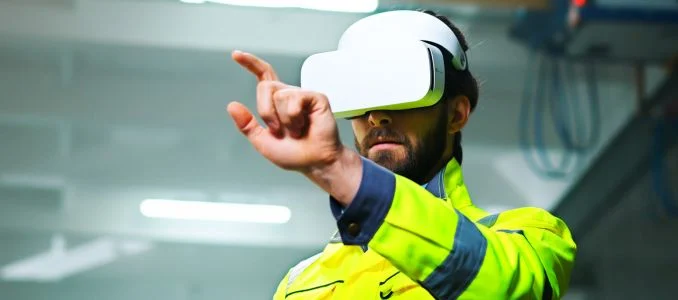
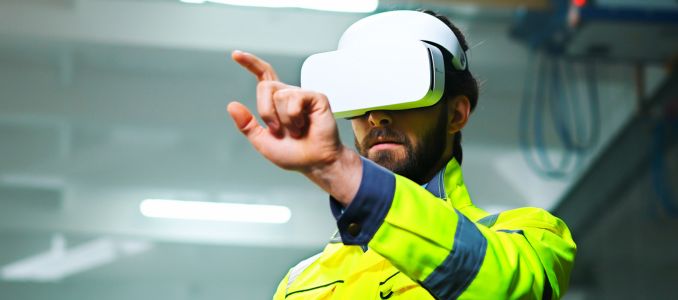
The most significant potential of AI-assisted HAZOP lies in its ability to bridge the gap between "knowing" the risk and "practicing" the response. Once the AI has identified potential failure modes during the HAZOP process, these scenarios can be exported directly into Virtual Reality (VR) simulation environments.

Instead of reading a report, operators can step into a fully realized, immersive virtual replica of their facility. They can experience the sights, sounds, and pressures of a critical failure event—such as a boiler rupture or a toxic leak—within a safe, controlled environment. This "HAZOP-to-Training" pipeline ensures that the safety knowledge generated in the boardroom is directly transferred to the workforce on the front lines.
Official Perspectives and Industry Reactions
Safety regulators, including the Occupational Safety and Health Administration (OSHA) and international equivalents, have signaled growing interest in digital safety tools. While regulators maintain that the final responsibility for safety rests with the facility operator, there is an industry-wide consensus that digital tools, when properly validated, enhance compliance and reduce the probability of catastrophic failures.
Industry experts have noted that while the technology is powerful, the "human-in-the-loop" requirement remains critical. "AI is an excellent tool for pattern recognition and organizing complex data sets," says Dr. Elena Vance, a lead consultant in process safety systems. "However, it cannot replicate the nuanced, context-dependent intuition of an engineer who has worked on a specific plant for thirty years. The future is a partnership, not a replacement."

Broader Implications and Future Outlook
The implications of this shift are profound for the global industrial sector. As energy transition projects—such as hydrogen production and carbon capture—introduce new, less-understood chemical processes, the speed at which safety teams can analyze and prepare for these risks is paramount.
Furthermore, as the industry faces an aging workforce and the retirement of "tribal knowledge," AI-assisted HAZOP provides a mechanism to capture and institutionalize the experience of retiring experts. By digitizing their insights into the AI training set, companies can ensure that the safety wisdom of previous generations is preserved and updated for the next.
In conclusion, the integration of artificial intelligence into HAZOP studies is moving industrial safety from a reactive, meeting-heavy model toward a proactive, immersive, and data-driven discipline. By transforming abstract safety analysis into actionable, high-fidelity simulations, the industry is not only preventing incidents but also building a more resilient, better-trained workforce capable of navigating the complexities of the modern industrial landscape. As these technologies mature, the standard of safety will no longer be defined by the length of the meeting, but by the precision of the simulation and the readiness of the operator.