
The Vulnerability of Manual Oversight
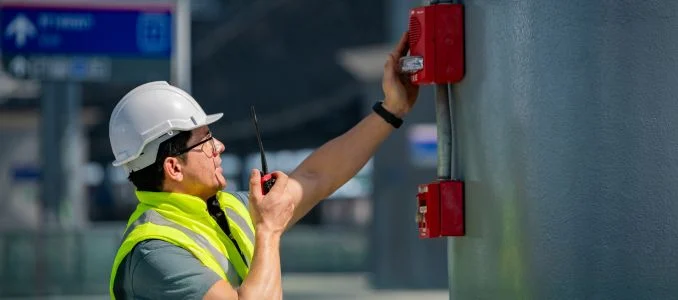
For generations, the fire watch has been the cornerstone of construction site safety. This traditional method involves deploying trained personnel to patrol a site continuously, tasked with identifying fire hazards and manually raising the alarm in the event of an emergency. While this approach has provided a baseline level of protection for over a century, industry experts argue that it is increasingly insufficient for the modern construction environment.
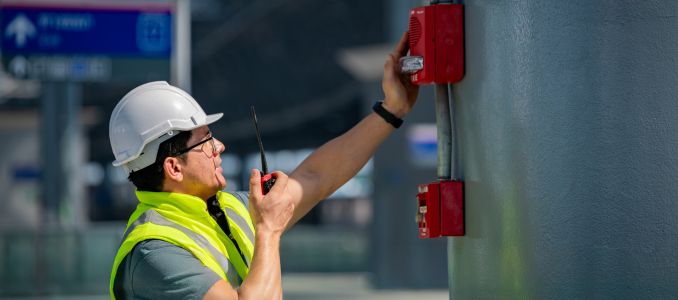
Aaron Velardi, head of North American development at Ramtech North America, points to the inherent limitations of human-centric safety models. "The industry must reassess whether traditional approaches alone can meet the demands of today’s complex construction environments, particularly as projects scale in size and pace," Velardi notes. The primary risk factor is human fallibility: fatigue, lapses in attention, and the sheer physical impossibility of a single guard covering a multi-story, sprawling site mean that fire hazards—particularly smoldering electrical faults or chemical reactions—can go undetected until they reach a critical stage.
A Century of Regulation: From Early Standards to the IFC
The requirement for fire watches is deeply rooted in the history of industrial safety. Following catastrophic urban fires in the early 20th century—most notably the devastating 1910 wildfires that reshaped American building codes—regulatory bodies began codifying the necessity of a human presence to monitor active construction zones.
Formalization of these requirements accelerated significantly in the 21st century. The International Fire Code (IFC) introduced a concrete definition of a "fire watch" in its 2009 edition, framing it as a temporary, continuous surveillance measure. By 2018, the IFC had significantly tightened these mandates, granting fire code officials greater authority to require fire watches during high-risk construction or demolition phases.
The 2021 edition of the IFC continued this trend, specifically addressing the risks posed by vertical construction. It established that for new structures exceeding 40 feet in height, a fire watch may be mandated during non-working hours at the discretion of local authorities. This policy change reflects a growing national concern regarding the vulnerability of unattended sites during off-hours, when the absence of workers leaves a building unprotected for extended periods.
The Patchwork of Regional Compliance
There is no singular, monolithic federal regulation governing fire watch procedures in the United States. Instead, site managers must navigate a fragmented landscape of mandates dictated by the Occupational Safety and Health Administration (OSHA), the National Fire Protection Association (NFPA), and state-specific amendments.
This regional variation creates significant operational hurdles for construction firms working across state lines. For instance, in New York City, the Fire Department of the City of New York (FDNY) requires fire guards to hold specialized certifications, ensuring a high level of competency. Conversely, in cities like Austin, Texas, the focus is on rigorous documentation, with mandates requiring patrol logs to be updated every 30 minutes to prove that the site has been thoroughly inspected. In Florida, the regulatory environment is triggered by equipment failure; a 24-hour fire watch is typically mandated immediately upon the impairment of life safety systems, such as sprinklers or fire alarm panels.
The Case for Temporary Detection Systems
As the complexity of modern building materials and the density of construction equipment increase, the limitations of the "walking guard" model become more apparent. Temporary, wireless fire detection systems offer a technological solution designed to bridge the gap between human observation and total site security.
Unlike a human patrol, which is intermittent by nature, these systems provide 24/7, instantaneous, and wide-area monitoring. They utilize interconnected sensors that can detect smoke, heat, and flame signatures, transmitting alerts to remote monitoring stations or site managers in milliseconds. This rapid response capability is critical in the first few minutes of a fire, where the difference between a minor incident and a total loss is measured in seconds.
Furthermore, these systems provide a "digital audit trail." While a manual logbook can be subject to human error or falsification, modern digital monitoring provides time-stamped, irrefutable data on the status of the site. This data is invaluable for insurance purposes, providing stakeholders with verifiable evidence that safety protocols were active and functional at the time of an incident.

Economic and Operational Implications
The economic impact of large-loss fires in the construction sector extends far beyond the direct cost of materials and labor. Projects that suffer major fire damage face severe schedule delays, contractual penalties, litigation, and increased insurance premiums—often to the point of becoming uninsurable.
Insurance providers are increasingly incentivized to promote technology-driven monitoring. By reducing the probability of a total-loss event, contractors can lower their risk profile. While the initial investment in temporary detection technology is higher than the hourly wage of a fire watch guard, the long-term cost-benefit analysis favors technology. When accounting for the reduced risk of catastrophic loss and the potential for lower insurance premiums, the adoption of advanced detection systems is becoming a standard feature of risk management strategies for large-scale developments.
Future-Proofing the Job Site
The integration of Internet of Things (IoT) sensors and AI-driven analytics into construction safety marks the next frontier. Future systems are expected to move beyond simple detection to predictive modeling, where sensors identify environmental anomalies—such as excessive dust buildup near electrical panels or fluctuations in temperature—before a fire even starts.

However, industry analysts caution that technology should not be viewed as a complete replacement for human oversight, but rather as an augmentation. The most effective safety strategy combines the nuanced decision-making of experienced personnel with the tireless, precision-based monitoring of electronic detection systems.
As regulatory bodies continue to update the IFC and NFPA standards to reflect current technological capabilities, it is likely that the "human-only" fire watch will eventually be viewed as a historical relic. For developers and general contractors, the shift toward a hybrid, tech-heavy safety model is no longer merely a recommendation; it is an operational necessity in an industry where the cost of failure is higher than it has ever been. By embracing modern detection systems, the construction sector can protect its workers, its assets, and its bottom line, ensuring that the projects of tomorrow are built upon a foundation of proactive, intelligent safety.