
A Diagnosis and a Global Challenge
In 2011, the Dioguardi family—parents Heather and David, along with their three-year-old daughter Romy—were stationed in Johannesburg, South Africa, as part of a U.S. government diplomatic posting. Living abroad was a routine aspect of their professional lives, characterized by relocation every few years. However, the trajectory of their life changed significantly when they returned to Seattle temporarily for the birth of their second daughter, Avy.
Following a standard newborn hearing screening at the University of Washington Medical Center, Avy was diagnosed with bilateral sensorineural high-frequency hearing loss at just two weeks of age. For the family, the diagnosis presented a dual challenge: navigating the medical and developmental complexities of pediatric hearing loss while residing in a foreign country where they were unfamiliar with local specialized resources.
The Chronology of Early Intervention
The family’s path to finding appropriate care was both rapid and strategic. After returning to Johannesburg with seven-week-old Avy, the parents immediately sought out local audiologists and an Auditory Verbal Therapist to begin the foundational work of language development. Despite these efforts, the necessity for high-quality, specialized support led them back to Seattle when Avy was seven months old to fit her for her first set of hearing aids.

During this brief window, the family connected with Kim Hamren, a Birth to Three Specialist at Listen and Talk. This connection proved to be the turning point in Avy’s development. They established a schedule of weekly tele-intervention sessions that bridged the geographical gap between South Africa and the United States. These sessions provided the parents with the coaching necessary to foster listening and spoken language (LSL) skills in a toddler, serving as an essential lifeline that eased the isolation often felt by families in similar circumstances. When the time came for the family to choose their next international post, the established support system at Listen and Talk served as a primary factor in their decision to return to Seattle.
Integrating into the Listen and Talk Community
Upon settling back in Seattle, the Dioguardi family fully integrated into the Listen and Talk educational model. Avy began her journey in the Birth to Three program and participated in Music and Movement classes, which utilize rhythm and auditory stimulation to enhance brain development in children with hearing loss.
Simultaneously, her older sister, Romy, enrolled in the Listen and Talk Blended Classroom Pre-K program. This program is intentionally designed to include a mix of students with and without hearing loss. In a classroom where 50% of the students had typical hearing, Romy gained a unique perspective, eventually becoming a knowledgeable advocate for hearing technology. This environment created a seamless transition for Avy, who followed her sister into the Pre-K program for two years.
The pedagogical approach at Listen and Talk focuses on high-level language development, ensuring that students do not just hear, but actively listen and synthesize information. By utilizing "picture pages" and daily communication logs, the school maintained a transparent feedback loop between teachers and parents. This enabled Avy to develop critical soft skills: she learned to articulate when she had not understood a word or a phrase, effectively turning a potential communication barrier into an opportunity for self-advocacy—a skill that has proven vital in her academic and social life.
The Broader Landscape of Pediatric Hearing Health
The success seen in Avy’s development aligns with data provided by organizations such as the Alexander Graham Bell Association for the Deaf and Hard of Hearing. Studies consistently indicate that when children with hearing loss are identified early and receive high-quality LSL intervention, they can achieve developmental milestones comparable to their peers with typical hearing.

The economic and social implications of such early intervention are profound. Children who receive early support are more likely to succeed in mainstream classrooms, pursue higher education, and integrate into the workforce without the limitations historically placed upon the deaf and hard of hearing community. By prioritizing the "Listening and Spoken Language" approach, institutions like Listen and Talk focus on neuroplasticity—the brain’s ability to reorganize itself—which is at its peak during the first three years of life.
A Global Citizen and the Impact of Advocacy
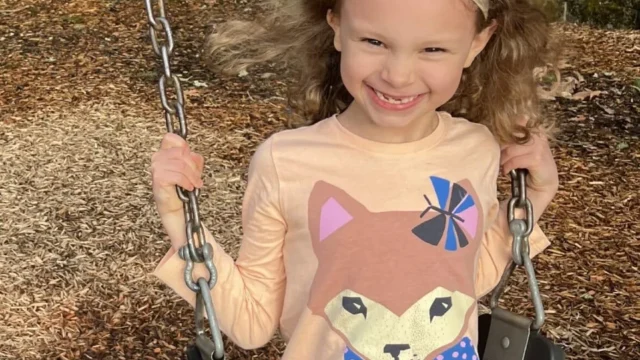
As of September 2025, Avy will celebrate her fourteenth birthday. Her life has been defined by mobility and adaptability; beyond South Africa and Seattle, she has resided in Washington D.C., Amman, Jordan, and Warsaw, Poland, and now resides in Denver, Colorado. Her ability to navigate these diverse cultural and educational landscapes is a testament to the core competencies she developed at Listen and Talk. She is an avid reader, a student of musical theater, and an active participant in sports—all areas that require high levels of communication and social engagement.
The Dioguardi family emphasizes that Avy’s hearing loss has never functioned as a constraint. Instead, it has served as a framework through which she learned to engage with the world more intentionally. The "Listen and Talk" philosophy—that no child should be limited by their hearing loss—has been fully realized in her development.
The Necessity of Sustained Support
The sustainability of such specialized education relies heavily on community investment. The Listen and Talk Alumni Family Giving Campaign, which the Dioguardi family supports, acts as a primary funding vehicle for these life-changing services.
"As a former student or family member of Listen and Talk, you know firsthand the incredible impact our organization has on children with hearing loss," stated a representative from the school. "Your support ensures that we can continue to provide speech therapy, audiology testing, and parent education classes to families regardless of their background or current location."

The implications of these donations are measurable. Each contribution funds the specialized diagnostic equipment and the intensive training required for staff to keep pace with evolving hearing aid and cochlear implant technologies. For families like the Dioguardis, giving back is not merely an act of philanthropy; it is an investment in a future where hearing loss is effectively managed as a manageable condition rather than a life-altering disability.
Conclusion: A Legacy of Empowerment
The journey of Avy Dioguardi provides a roadmap for families currently navigating the early stages of a hearing loss diagnosis. By combining medical intervention with a language-rich, supportive educational environment, children can transcend the boundaries that were once considered insurmountable. As Avy continues her education and looks toward the future, her story remains a powerful reminder of the importance of early diagnosis, consistent therapy, and the enduring strength of a supportive community. The work being done by organizations like Listen and Talk is not just teaching children to hear—it is empowering them to lead, communicate, and succeed in a global society.