The research was spearheaded by Dr. Mattia Rosso and Associate Professor Leonardo Bonetti at the Center for Music in the Brain (MIB) at Aarhus University, in collaboration with the Centre for Eudaimonia and Human Flourishing at the University of Oxford. Their findings suggest that the brain’s reaction to a continuous stream of sound is far more complex than a simple "firing" of neurons in the auditory cortex. Instead, the brain engages in a sophisticated reconfiguration process, aligning its internal rhythms with external stimuli to optimize perception, attention, and cognitive processing. This breakthrough has profound implications for our understanding of consciousness, music cognition, and the development of future clinical diagnostics for neurological disorders.
The Technological Breakthrough: Understanding FREQ-NESS
At the heart of this discovery is the development of FREQ-NESS, a novel computational framework designed to solve one of the most persistent problems in neuroscience: signal overlap. For decades, researchers using Magnetoencephalography (MEG) or Electroencephalography (EEG) have struggled to disentangle the various electrical signals produced by the brain. Because multiple networks often fire at similar times across different regions, identifying which specific network is responsible for a particular cognitive function is akin to trying to isolate a single voice in a crowded stadium.
FREQ-NESS utilizes advanced source separation algorithms to identify and isolate these overlapping networks based on their dominant frequencies. Unlike traditional neuroimaging methods that rely on predefined regions of interest or broad frequency bands—such as alpha (8–12 Hz) or beta (13–30 Hz)—the FREQ-NESS approach is entirely data-driven. It scans the whole brain to find unique frequency signatures and then traces how those signals propagate across different anatomical regions.
"We’re used to thinking of brainwaves like fixed stations—alpha, beta, gamma—and of brain anatomy as a set of distinct regions," Dr. Rosso explained during the announcement of the findings. "But what we see with FREQ-NESS is much richer. It is long known that brain activity is organized through activity in different frequencies, tuned both internally and to the environment. Starting from this fundamental principle, we’ve designed a method that finds how each frequency is expressed across the brain."
By providing a high-resolution map of these frequency-specific networks, the method allows researchers to see the "wiring" of the brain change as it interacts with the environment. This represents a significant leap forward from fMRI (functional Magnetic Resonance Imaging), which offers excellent spatial resolution but lacks the temporal speed to capture the brain’s millisecond-by-millisecond adjustments to sound.
A Chronology of Auditory Neuroscience and the Study’s Evolution
The journey toward the development of FREQ-NESS and the subsequent findings on brain reorganization began with a decade of research into music cognition. The Center for Music in the Brain at Aarhus University has long been a global leader in investigating how the human mind processes rhythm and melody. Historically, auditory research focused on the primary auditory cortex, the area of the brain responsible for the basic registration of sound.
In the early 2000s, neuroscientists began to realize that music involves almost every part of the brain, including motor areas (for rhythm), the limbic system (for emotion), and the prefrontal cortex (for structure and memory). However, the tools to see these areas interact in a unified, frequency-dependent way were lacking. Between 2018 and 2022, the research team at Aarhus and Oxford began developing the algorithmic foundations for what would become FREQ-NESS, seeking a way to bridge the gap between temporal and spatial data.
The study involved participants listening to various auditory stimuli, ranging from simple metronomic beats to complex musical tones, while their brain activity was monitored. The data collection phase was followed by intensive computational analysis using the new method. By late 2023, the team successfully demonstrated that the brain’s networks were not just "turning on," but were actually shifting their spatial distribution based on the frequency and rhythm of the input. The final results, published in Advanced Science in 2024, mark the culmination of this multi-year international effort.
Supporting Data: The Mechanics of Neural Reconfiguration
The data gathered through the FREQ-NESS method provides a detailed look at the brain’s "dynamic reshuffling." The study found that when a subject is exposed to a steady rhythm, the brain’s internal oscillations—specifically in the theta and gamma bands—begin to reorganize.
Key findings from the research data include:
- Frequency-Specific Propagation: Certain networks were found to be exclusive to specific frequencies. For instance, a 10 Hz network might originate in the occipital lobe but shift its connectivity toward the temporal lobe when auditory stimuli are introduced.
- Real-Time Adaptation: The reconfiguration occurs within milliseconds of the sound’s onset. The brain effectively "predicts" the next beat by aligning its neural firing patterns with the external rhythm, a process known as entrainment.
- High Reliability: The researchers tested the FREQ-NESS method across multiple experimental conditions and different datasets. The results showed a high level of consistency, suggesting that the patterns of reorganization are not random but follow a structured, biological logic.
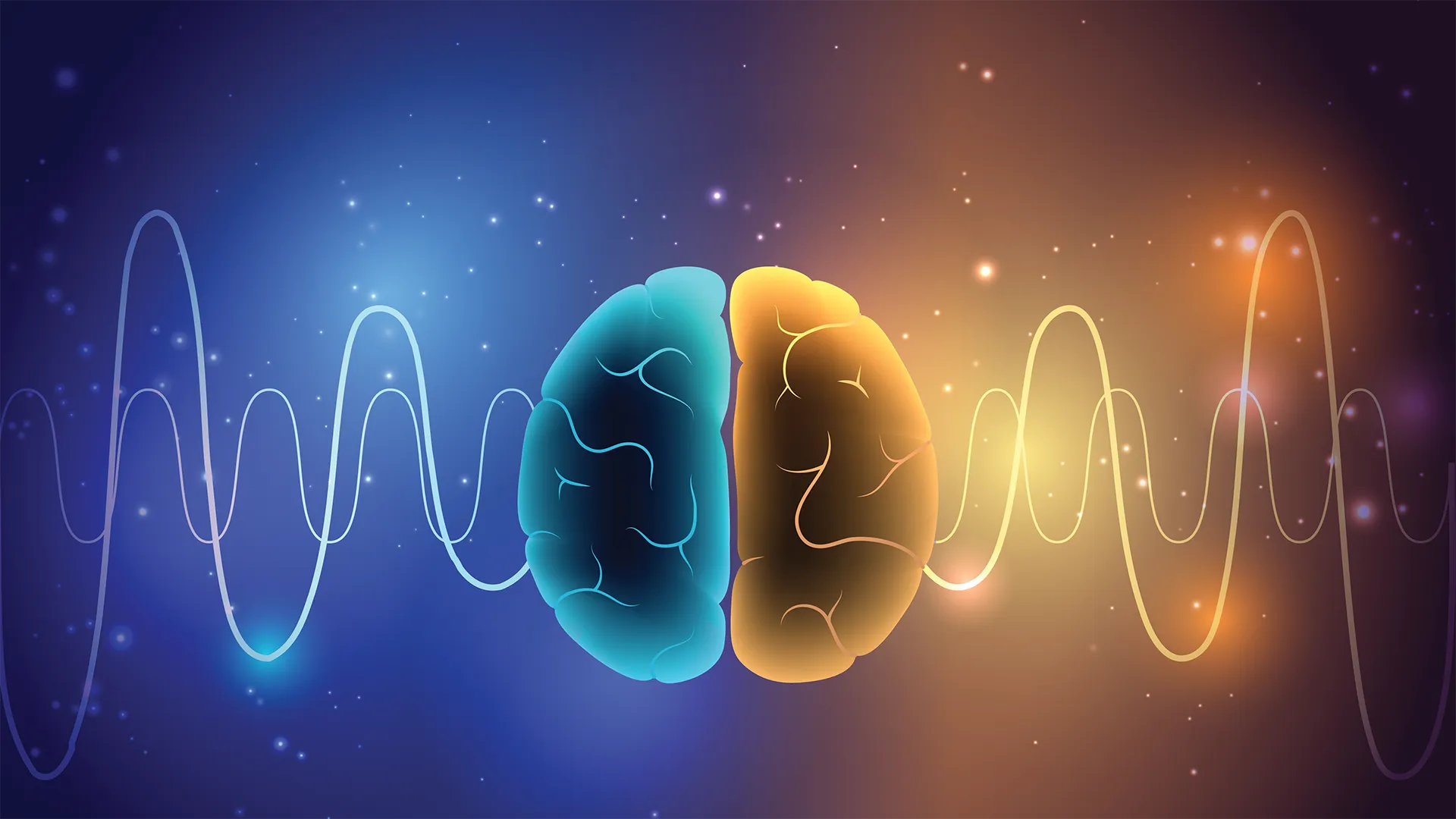
This data suggests that the brain operates less like a static computer and more like an orchestra that tunes its instruments differently depending on the piece of music being played. When the "music" changes—whether it is a tone, a rhythm, or a complex environmental sound—the "instruments" (brain regions) change how they communicate with one another.
Official Responses and Scientific Reception
The publication of the study has drawn significant interest from the international neuroscience community. Experts in the field of neuroimaging have praised the FREQ-NESS method for its potential to standardize how we look at brain connectivity.
Professor Leonardo Bonetti, a co-author of the study, emphasized the philosophical and practical shift this research represents. "The brain doesn’t just react: it reconfigures. And now we can see it," Bonetti stated. "This could change how we study brain responses to music and beyond, including consciousness, mind-wandering, and broader interactions with the external world."
Colleagues from the University of Oxford’s Centre for Eudaimonia and Human Flourishing have noted that this research could be pivotal in understanding "well-being" at a neurological level. If we can map how the brain reorganizes during positive experiences, such as listening to music, we may be able to develop better interventions for mental health.
Independent researchers have also pointed out that the data-driven nature of FREQ-NESS reduces the "observer bias" often found in neuroimaging studies, where researchers might look for activity only in the areas they expect to see it. By mapping the whole brain simultaneously, the Aarhus-Oxford team has provided a more objective view of neural dynamics.
Broader Impact and Clinical Implications
The implications of real-time brain reorganization extend far beyond the laboratory. One of the most promising applications of this research is in the field of clinical diagnostics. Many neurological and psychiatric conditions, such as Alzheimer’s disease, schizophrenia, and epilepsy, are characterized by "dysconnectivity"—a failure of brain networks to communicate effectively.
By using FREQ-NESS, clinicians could potentially identify the early stages of these diseases by observing how a patient’s brain fails to reorganize in response to simple auditory stimuli. For example, a healthy brain might show a specific pattern of reconfiguration when hearing a rhythm, whereas a brain affected by dementia might show a sluggish or disorganized response.
Furthermore, the study paves the way for advancements in:
- Brain-Computer Interfaces (BCIs): If we can precisely map how specific frequencies propagate, we can create more sensitive BCIs that allow individuals with paralysis to control external devices using their neural oscillations.
- Individualized Brain Mapping: Because FREQ-NESS is highly reliable across datasets, it could lead to "personalized" neuroimaging, where a patient’s unique brain-network profile is used to tailor medical treatments.
- Music Therapy: Understanding the exact mechanisms of how music reshapes the brain could lead to more effective, evidence-based music therapy for stroke recovery or speech disorders.
- States of Consciousness: The method provides a new lens through which to study altered states of consciousness, whether induced by meditation, pharmacological means, or sleep, by tracking how network organization shifts during these transitions.
Conclusion and Future Directions
The study by Rosso, Bonetti, and their team marks a transformative moment in auditory neuroscience. By proving that the brain is a fluid, self-organizing system that adapts its very structure to the rhythms of the world, the research opens a new chapter in our quest to understand the human mind.
A large-scale research program is currently underway to expand on the FREQ-NESS methodology. Supported by an international network of neuroscientists, the next phase of the project will look at how the brain reorganizes during more complex tasks, such as language processing and social interaction. As our ability to map the brain in real time improves, we move closer to a future where the mysteries of consciousness and the intricacies of neural communication are finally laid bare. The brain, it seems, is not just listening to the music of the world—it is constantly rewriting its own score.