The Widespread Reality of Hearing Impairment
The sheer scale of hearing loss is staggering. The WHO’s most recent estimates indicate that more than 1.5 billion people globally live with some degree of hearing impairment. This translates to a significant portion of the world’s population facing challenges in communication, social interaction, and overall quality of life. Of particular concern is the subset of individuals experiencing disabling hearing loss, defined as a hearing threshold of greater than 35 decibels in the better-hearing ear. This condition affects approximately 430 million people, a figure that represents over 5% of the global population and necessitates dedicated rehabilitation efforts.
The trajectory of these statistics paints a concerning picture for the future. With global populations continuing to grow and age, the incidence of hearing loss is expected to surge. Projections suggest that by 2050, nearly 2.5 billion people may experience some form of hearing loss, with a substantial 700 million, or roughly one in every ten individuals, requiring intervention and support. This anticipated increase highlights the proactive measures needed to address a burgeoning public health concern.
A critical aspect of the global hearing loss landscape is its uneven distribution. The vast majority of individuals with disabling hearing loss, nearly 80%, reside in low- and middle-income countries. In these regions, access to essential ear and hearing care services is often limited due to financial constraints, geographical barriers, and a scarcity of trained professionals. This disparity exacerbates the burden of hearing loss, creating significant inequities in health outcomes.
It is important to note that prevalence figures for hearing loss can vary across studies due to differences in methodologies. Factors such as the specific hearing thresholds used for definition, the age groups surveyed, the testing techniques employed, and the very definition of hearing loss itself can influence the reported numbers. Therefore, a nuanced understanding of these variables is crucial when interpreting statistical data.
Global Hearing Loss Statistics at a Glance
To provide a clearer picture of the global impact, the following table summarizes key statistics from the WHO:
| Global Hearing Loss Fact | Definition or Context |
|---|---|
| More than 1.5 billion people live with some degree of hearing loss. | This represents the broadest global prevalence estimate, encompassing all levels of hearing impairment. |
| Around 430 million people require rehabilitation for disabling hearing loss. | This number specifically addresses individuals with hearing loss greater than 35 dB in the better-hearing ear, indicating a significant impact on daily functioning. |
| More than 25% of people over age 60 have disabling hearing loss. | This highlights the strong correlation between age and the likelihood of experiencing significant hearing impairment. |
| Around 95.1 million children aged 5-19 live with hearing loss. | This statistic underscores that hearing loss is not solely an issue for older adults; it also affects children and adolescents, impacting their development and education. |
| Nearly 2.5 billion people may have some degree of hearing loss by 2050. | This projection is based on anticipated population growth and aging trends, emphasizing the need for future preparedness. |
| More than 700 million people may require hearing rehabilitation by 2050. | This projection indicates that by mid-century, approximately 1 in 10 individuals worldwide may need support for hearing loss. |
It is crucial to acknowledge that these WHO estimates are primarily based on hearing loss in the better-hearing ear. This means that they may not fully capture the prevalence of unilateral hearing loss (UHL), including single-sided deafness (SSD). Consequently, the total number of individuals experiencing clinically significant hearing loss could be higher than these figures suggest.
Regional Disparities in Hearing Health
While global figures offer a broad perspective, significant variations in hearing loss prevalence exist across different world regions. The WHO’s 2021 World Report on Hearing provides estimates for hearing loss of moderate or higher grade across six distinct WHO regions. These regions are defined for public health purposes and do not strictly adhere to all political or continental boundaries.
| WHO Region | People With Moderate-or-Higher Hearing Loss | Regional Prevalence |
|---|---|---|
| Western Pacific Region | 136.5 million | 7.1% |
| European Region | 57.3 million | 6.2% |
| Region of the Americas | 62.7 million | 6.2% |
| South-East Asia Region | 109.4 million | 5.5% |
| African Region | 39.9 million | 3.6% |
| Eastern Mediterranean Region | 22.1 million | 3.1% |
Europe in Focus: Within the European Region, an estimated 57.3 million people, representing 6.2% of the population, experience moderate-or-higher hearing loss. However, when milder forms of hearing loss are also considered, the number escalates dramatically to approximately 190 million individuals, affecting about one in five people in the region. It is important to note that the WHO European Region encompasses 53 countries across Europe and Central Asia, a scope that extends beyond the boundaries of the European Union.

Defining and Quantifying Hearing Loss and Deafness
The terminology surrounding hearing impairment can be a source of confusion, with "hearing loss" and "deafness" often used interchangeably, though they represent distinct concepts. Hearing loss exists on a spectrum, ranging from mild to profound, and can affect one or both ears. The WHO clarifies that individuals who identify as deaf typically experience profound hearing loss, characterized by very little or no hearing.
The variability in population estimates for hearing loss and deafness stems from several factors: differing definitions of hearing loss, the age structure of the populations being studied, the availability and quality of local data, and the statistical modeling techniques used to generate estimates. In regions where direct population data is scarce, estimates may rely more heavily on extrapolations and predictive models, further contributing to the diversity of reported figures. Consequently, there is no single, universally applicable percentage that accurately describes every individual experiencing hearing loss.
Hearing Loss Across the Lifespan
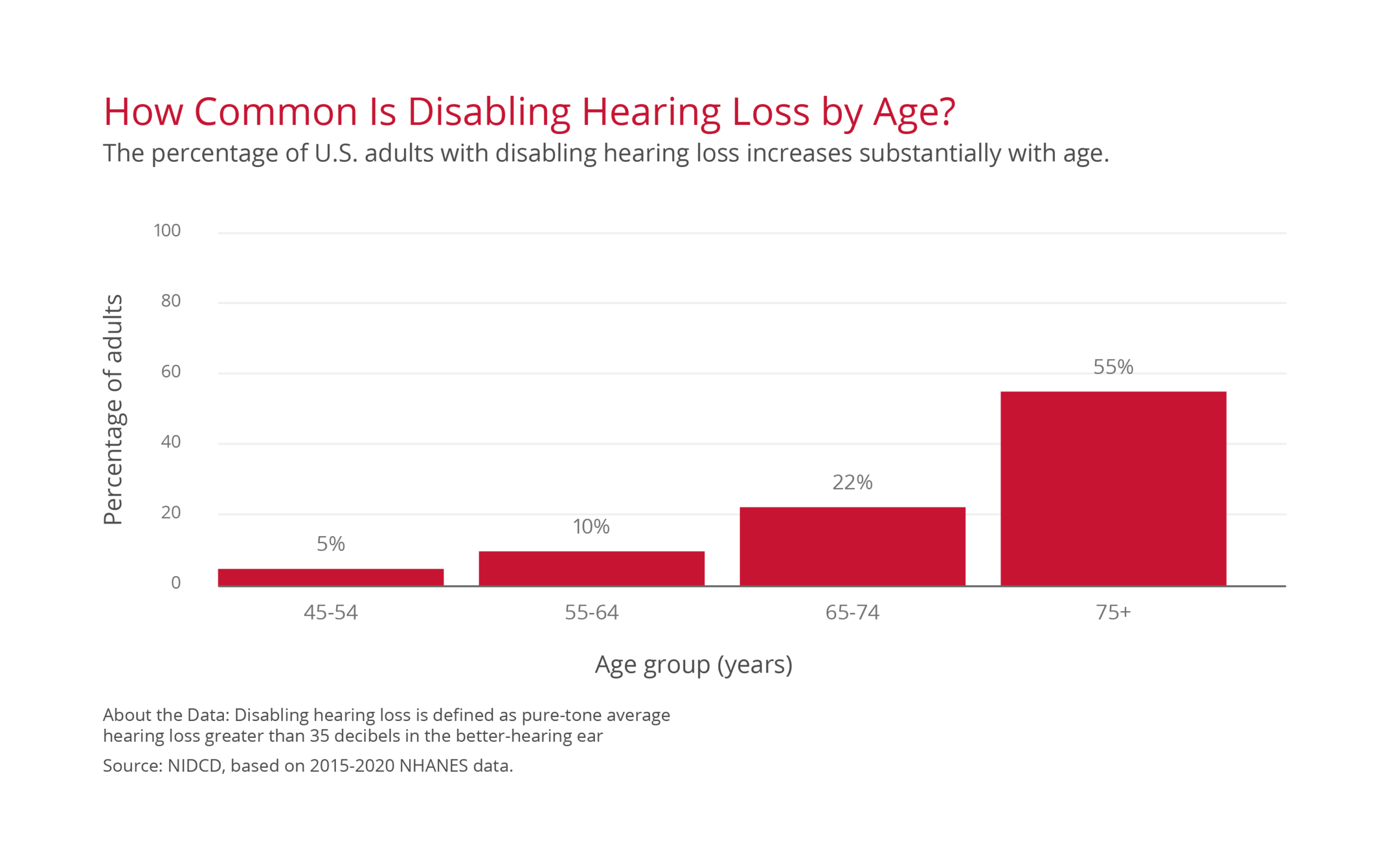
Hearing loss is not confined to any specific age group; it can manifest at any stage of life. However, its prevalence generally increases with age. As noted, over 25% of individuals aged 60 and above worldwide are affected by disabling hearing loss.
Children and Young Adults: Early Onset and Future Risk
Globally, around 95.1 million children and adolescents aged 5 to 19 live with some degree of hearing loss. This can be congenital, present at birth, or develop later in life due to various factors including genetic predispositions, infections, chronic ear conditions, injuries, and exposure to loud noise. Early identification of the signs of hearing loss in children is paramount for timely intervention and support, crucial for their cognitive, social, and emotional development.
A significant concern for young adults is the risk of permanent, avoidable hearing loss stemming from unsafe listening practices. The WHO estimates that over 1 billion young adults are at risk due to prolonged exposure to loud music and entertainment sounds through personal audio devices and at crowded venues. Adopting safe listening habits and utilizing hearing protection can mitigate this preventable cause of hearing impairment.
Adults and Older Adults: Gradual Changes and Cumulative Factors
Age-related hearing loss, scientifically known as presbycusis, is a gradual process that often affects both ears. This insidious nature means that many individuals may not immediately recognize the extent of their hearing decline. Presbycusis is a natural consequence of aging, but its progression can be influenced by a confluence of factors beyond chronological age. These include genetic predispositions, underlying health conditions, the use of certain medications (ototoxic drugs), occupational noise exposure, and recreational activities involving loud sounds. Furthermore, access to preventative care and timely audiological services can play a role in managing the impact of age-related hearing loss.
Country Spotlight: Hearing Loss Demographics in the United States
Examining specific country data provides a more granular understanding of hearing loss prevalence. In the United States, the National Institute on Deafness and Other Communication Disorders (NIDCD) reports the following statistics:
| U.S. Statistic | Estimate | Data Source |
|---|---|---|
| Children born with detectable hearing loss in one or both ears | Approximately 2-3 per 1,000 | CDC (Centers for Disease Control and Prevention) early hearing detection and intervention program |
| People aged 12+ with hearing loss in both ears | Around 1 in 8 | NHANES (National Health and Nutrition Examination Survey), based on audiometric examination |
| Adults aged 18+ reporting some trouble hearing | About 15%, or 37.5 million | NHIS (National Health Interview Survey), based on self-reported survey |
| Adults who could benefit from hearing aids | About 28.8 million | NHANES data on hearing thresholds and HA candidacy criteria |
| Adults aged 70+ who could benefit from hearing aids and also made use of them | Fewer than 1 in 3 | NHANES analyses comparing measured HL with reported HA use |
It is important to note that direct comparisons between WHO and NIDCD figures should be made with caution, as they employ different measurement criteria and thresholds. Additionally, some NIDCD statistics, such as those related to "trouble hearing," may encompass unilateral hearing loss (UHL) and single-sided deafness (SSD), which are not always fully accounted for in broader global estimates.
Identifying the Root Causes: Risk Factors for Hearing Loss
The etiology of hearing loss is multifaceted, with various risk factors contributing to its development at different life stages.
The Impact of Aging
As individuals age, natural changes occur within the inner ear, leading to a gradual decline in hearing sensitivity. Age-related hearing loss, or presbycusis, typically affects both ears symmetrically and can particularly impair the ability to understand speech, especially in noisy environments.
The Damaging Power of Loud Noise
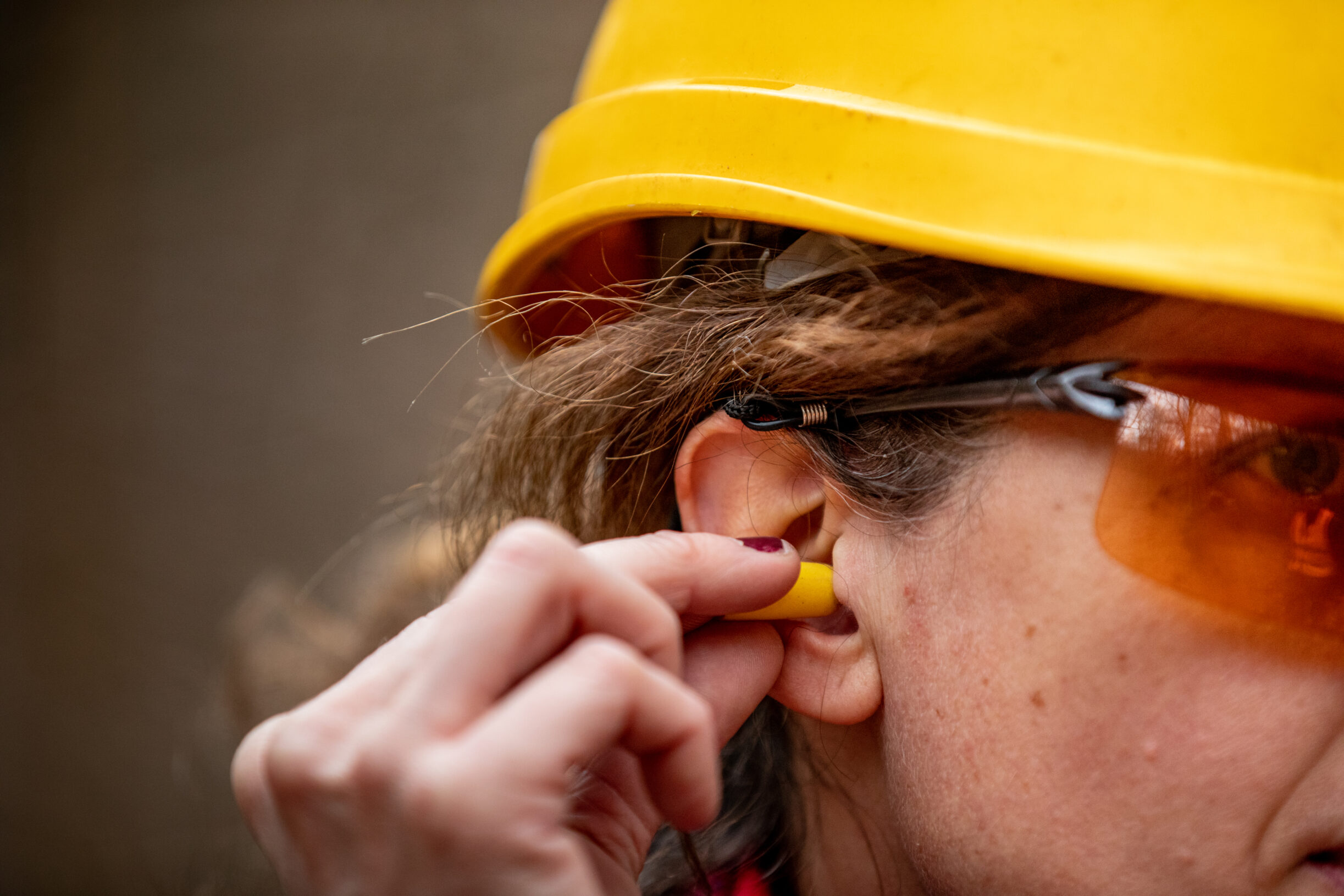
Exposure to loud noise, whether through repeated or intense bursts, is a significant contributor to hearing loss. The delicate sensory hair cells within the inner ear are particularly vulnerable to damage from excessive sound levels. Common sources include noisy workplaces, the operation of power tools, attending concerts and other entertainment venues, and the use of personal audio devices at unsafe volumes. Implementing ear protection, taking regular listening breaks, and adhering to safe listening practices are crucial preventive measures against noise-induced hearing loss.
Other Contributing Factors
Beyond aging and noise exposure, a range of other factors can contribute to hearing loss. These include genetic predispositions, biological sex, infections (such as meningitis or measles), chronic ear conditions (like otitis media), head injuries, certain systemic health conditions (e.g., diabetes, cardiovascular disease), smoking, and the use of ototoxic medications. Given the diverse array of potential causes, a professional hearing assessment is indispensable for anyone experiencing changes in their hearing.
The Significance of Hearing Loss Statistics
Understanding hearing loss statistics is paramount for several reasons. Firstly, these figures underscore the widespread nature of hearing difficulties, affecting individuals across all geographic regions and socioeconomic strata. Secondly, they highlight that a significant number of individuals with hearing loss remain undiagnosed or untreated, underscoring the need for greater public health awareness and accessible diagnostic services.
Unaddressed hearing loss carries substantial consequences, impacting an individual’s ability to communicate effectively, participate in social activities, pursue education and employment opportunities, and maintain an overall high quality of life. The WHO recognizes hearing loss as a significant global public health issue, estimating that the economic cost of unaddressed hearing loss amounts to nearly US$1 trillion annually worldwide. This figure accounts for lost productivity, healthcare expenditures, and the broader societal impact.
While statistics provide valuable context, they cannot replace personalized medical assessment. The definitive way to ascertain the presence, type, and degree of hearing loss is through a professional hearing evaluation.
Recognizing the Need for a Hearing Test
A proactive approach to hearing health is essential. Individuals should consider getting their hearing tested if they notice any of the following signs:
- Difficulty understanding conversations, especially in noisy environments.
- Frequently asking others to repeat themselves.
- Experiencing ringing or buzzing in the ears (tinnitus).
- Finding that sounds seem muffled or indistinct.
- Needing to turn up the volume on televisions or radios significantly higher than others.
- Feeling fatigued or stressed after social interactions due to the effort of listening.
A hearing screening can serve as an initial, valuable step in assessing hearing status. For those who require it, a more comprehensive audiological assessment can then accurately diagnose any hearing loss, determine its specific type and severity, and guide appropriate management strategies.
For individuals experiencing mild to moderate hearing loss, hearing aids and other assistive listening devices can significantly improve communication and daily functioning. For those with severe-to-profound hearing loss, advanced solutions such as cochlear implants and other implantable hearing technologies may be considered in consultation with a hearing care professional. The selection of the most suitable intervention is highly individualized, depending on the specific hearing profile, personal needs, and professional medical evaluation.
Key Global Hearing Loss Takeaways
In summary, hearing loss is a prevalent global health concern affecting people of all ages and across every continent. While the prevalence and accessibility of care vary significantly by region, the overall impact is substantial. It is crucial to recognize that statistical data, due to differing methodologies and definitions, cannot always be directly compared.
Despite advancements in prevention and treatment, hearing loss remains considerably underdiagnosed and undertreated worldwide. For individuals experiencing any changes in their hearing, seeking professional advice from a hearing specialist at the earliest opportunity is strongly recommended. Early detection and intervention are key to mitigating the long-term consequences of hearing impairment and preserving communication and quality of life.