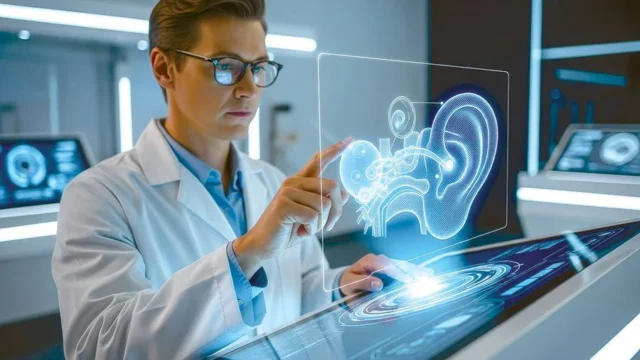

A Paradigm Shift in Hearing Restoration
For decades, the management of hearing loss has primarily focused on assistive technologies and surgical interventions designed to compensate for diminished auditory function. Hearing aids and cochlear implants have served as invaluable tools, enabling millions to regain a significant degree of hearing. However, the advent of gene therapy is poised to revolutionize this field by offering the potential for true biologic restoration of hearing. This groundbreaking approach targets the genetic underpinnings of specific forms of congenital deafness, presenting a fundamentally different paradigm: the possibility of not just compensating for hearing loss, but actively restoring the biological mechanisms of hearing in affected children.
The journey toward this therapeutic frontier has been a long one, rooted in decades of fundamental research into the genetics of hearing. Early breakthroughs in understanding the molecular basis of inner ear development and function laid the groundwork for identifying specific genes associated with deafness. By the early 2000s, researchers had identified over 100 genes implicated in non-syndromic hearing loss, which accounts for the majority of inherited deafness cases. This growing knowledge base facilitated the development of animal models that mimicked human genetic deafness, allowing for preclinical testing of gene-editing and gene-replacement strategies.
Recent clinical trials, though still in their nascent stages, have demonstrated promising results. For instance, trials investigating the use of adeno-associated virus (AAV) vectors to deliver functional copies of genes like OTOF (otoferlin) have shown significant improvements in auditory brainstem responses and behavioral measures of hearing in children with otoferlin deficiency, a severe form of genetic deafness. While these therapies are not yet widely available and are still undergoing rigorous evaluation for long-term efficacy and safety, their emergence signifies a pivotal moment, transitioning from theoretical possibility to tangible clinical application. The implications are vast, offering hope for a future where genetic deafness might be treated with a one-time intervention, potentially leading to lifelong restoration of hearing. This advancement not only promises improved quality of life for individuals and their families but also represents a significant leap forward in regenerative medicine.
Revolutionizing Rhinology: From Symptom Management to Targeted Therapies
In the realm of rhinology, the understanding and treatment of chronic inflammatory diseases of the upper airway have undergone a similar, profound transformation. Historically, management of conditions like chronic rhinosinusitis (CRS) often involved repeated courses of medical therapies, including antibiotics and corticosteroids, coupled with surgical interventions to improve sinonasal drainage. While these approaches provided symptomatic relief and improved airflow, they often addressed the consequences of inflammation rather than its root causes.
The current era is marked by a paradigm shift towards targeting the underlying immunologic pathways driving these inflammatory processes. The development and widespread adoption of biologic therapies represent a significant advancement. These targeted treatments, often monoclonal antibodies, are designed to interfere with specific cytokines or cellular pathways that play a critical role in the inflammatory cascade. For example, biologics targeting interleukins like IL-4, IL-5, and IL-13 have demonstrated efficacy in reducing polyp formation, improving sinonasal symptoms, and decreasing the need for oral steroids and repeat surgeries in patients with severe CRS with nasal polyps (CRSwNP).
The integration of surgery and biologic therapy is now a central consideration in patient management. The question for otolaryngologists has evolved from simply deciding whether to operate to determining how surgery and biologic therapy should be strategically selected, sequenced, or combined to achieve optimal outcomes for each individual patient. This personalized approach acknowledges the complex interplay between anatomical factors and underlying immunologic dysregulation. For instance, surgery may be crucial for addressing anatomical obstruction and improving drug delivery, while biologics can then modulate the persistent inflammatory response.
The scientific underpinnings of this shift are rooted in a deeper understanding of the sinonasal microbiome and its interaction with the host immune system, as well as advancements in identifying distinct endotypes of CRS. Research published in journals like the Journal of Allergy and Clinical Immunology has detailed the heterogeneity of CRS, revealing distinct inflammatory profiles that respond differently to various treatments. This has paved the way for more precise therapeutic strategies, moving away from a one-size-fits-all approach. The implications are a more effective, less invasive management of chronic sinonasal disease, leading to improved patient quality of life and reduced healthcare utilization.
Crossing New Frontiers in Cancer Therapy: The Promise of mRNA Neoantigen Vaccines
The field of otolaryngology, particularly in its intersection with head and neck oncology, is also witnessing the crossing of significant boundaries in cancer treatment. The development of personalized cancer therapies, leveraging advancements in genomics and immunology, is rapidly moving from experimental stages to clinical application. A prime example is the ongoing exploration of individualized mRNA neoantigen therapies.
The recent demonstration of improved recurrence-free survival in a Phase 3 trial for melanoma using an individualized mRNA neoantigen therapy offers a glimpse into this transformative future. This approach represents a remarkable innovation: it involves identifying the specific genetic mutations within an individual patient’s tumor – known as neoantigens – and then designing a bespoke therapeutic vaccine. This vaccine is engineered to instruct the patient’s own immune system to recognize and mount a targeted attack against these unique cancer cells.
The journey of mRNA vaccine technology, propelled by its success in combating the COVID-19 pandemic, has accelerated its application in oncology. The ability of mRNA to serve as a blueprint for producing specific proteins has made it an ideal platform for delivering instructions for the immune system to recognize cancer-specific antigens. The process typically involves sequencing the tumor genome to identify unique neoantigens, followed by the synthesis of mRNA encoding these antigens. This mRNA is then formulated into a vaccine, which, when administered, stimulates a potent T-cell response against the tumor.

While the initial successes have been seen in melanoma, research is actively underway to adapt this technology for other cancer types, including head and neck squamous cell carcinoma. The potential implications are profound. This personalized approach holds the promise of significantly improving treatment efficacy, reducing the toxicities associated with conventional therapies like chemotherapy and radiation, and potentially leading to long-term remission or even cures for patients with challenging cancers. It signifies a move towards a truly precision oncology, where treatments are tailored to the unique molecular profile of each patient’s disease. The challenges ahead involve optimizing the identification of relevant neoantigens, enhancing the immunogenicity of the vaccines, and integrating these novel therapies into existing treatment protocols.
The Imperative of Adaptation: Shaping the Future of Otolaryngology
These extraordinary advances, while filling the otolaryngology community with immense optimism, also present a profound challenge. Scientific discovery, however revolutionary, does not automatically translate into improved patient care. There is an extraordinary opportunity, and indeed a significant responsibility, for otolaryngologists to actively shape the trajectory of these emerging therapeutic modalities and ensure their effective integration into clinical practice.
Fostering Continuous Learning and Scientific Curiosity
As leaders in the field, a critical imperative is to cultivate environments that promote continuous learning. Physicians must be provided with the resources and opportunities to understand these rapidly evolving therapeutic options. This requires more than just disseminating information; it necessitates creating educational frameworks that foster deep comprehension and critical evaluation of new data. Protecting scientific curiosity and creating dedicated space for investigation, mentorship, and discovery are paramount. Even amidst mounting pressures for clinical productivity, it is essential to remember that today’s transformative treatments are the direct result of individuals who were given the freedom to ask questions whose answers were not yet known. This ethos of inquiry must be nurtured to drive the innovations of tomorrow.
Evolving Organizational Structures for Multidisciplinary Care
The very architecture of healthcare delivery must evolve in parallel with scientific progress. The celebration of multidisciplinary precision medicine cannot coexist with rigid, siloed approaches to care. The multidisciplinary team of the future cannot be a mere informal gathering; it must become the fundamental organizational structure through which care is delivered. This requires seamless integration of surgeons, physicians, scientists, audiologists, geneticists, pathologists, nurses, and other allied health professionals, all collaborating around the specific needs of an individual patient. Effective communication protocols, shared electronic health records, and integrated care pathways are essential to realizing this vision. The ability to synthesize insights from diverse specialties will be critical for navigating the complexities of personalized medicine.
The Amplified Need for Human Connection and Communication
Perhaps the most significant implication of greater therapeutic choice is the amplified need for sophisticated communication and human connection. Decisions between surgery and biologic therapy, cochlear implantation and gene therapy, or conventional oncologic treatment and molecularly targeted or immune therapies are no longer straightforward. These choices necessitate in-depth discussions that extend beyond mere efficacy. They must encompass considerations of uncertainty, durability, potential risks and benefits, impact on quality of life, cost-effectiveness, and, most importantly, what truly matters to each individual patient.
As therapeutic capabilities become increasingly sophisticated and technologically driven, the fundamental human element of healthcare becomes not less, but more crucial. Empathy, active listening, and shared decision-making are the cornerstones of ethical and effective patient care, especially when navigating complex and novel treatment options. The art of medicine, which involves understanding the patient as a whole person, becomes even more vital in an era of advanced molecular and genetic interventions.
Preparing the Next Generation of Otolaryngologists
The residents currently in training will enter a practice of otolaryngology that is likely beyond our current full comprehension. Our responsibility extends beyond merely preparing them for the medicine we practice today. It involves cultivating a culture, establishing robust systems, and fostering an insatiable curiosity that will empower them to not only adapt to but actively shape the medicine of tomorrow. This includes equipping them with advanced analytical skills, a strong foundation in research methodology, and the ethical framework to navigate the complexities of future healthcare landscapes.
The future of otolaryngology is not a predetermined path unfolding independently of our actions. It is a dynamic and evolving field that we have the extraordinary opportunity to influence and define. By embracing innovation, fostering collaboration, prioritizing patient-centered communication, and investing in continuous learning and research, the otolaryngology community can ensure that this truly amazing time in medicine translates into the best possible outcomes for patients worldwide.