

Engineers from the UL Research Institutes’ Fire Safety Research Institute (FSRI) unveiled a comprehensive new dataset concerning the fire performance of window components at the Fenestration and Glazing Industry Alliance (FGIA) Annual Conference. This research, which evaluates how various glazing and frame materials react under extreme thermal stress, marks a significant shift in how building envelopes are designed to combat both structure-to-structure fire spread and the increasing threat of wildland-urban interface (WUI) fires. For occupational health and safety (OHS) professionals, facility managers, and architects, the findings offer a technical blueprint for enhancing structural hardening and improving occupant survivability in high-risk zones.

The Growing Threat of Ember-Driven Ignition
The research presentation, titled "How Window Materials Perform Under Fire Exposure," highlighted the critical role that fenestration—the arrangement of windows and doors in a building—plays in the ignition sequence of modern fires. Gavin Horn, FSRI Research Director, emphasized that the primary vector for structure loss in WUI scenarios is often wind-blown embers.
"Most of these fires start from an ember," Horn explained during the session. "If those embers find a receptive fuel bed, they can directly ignite structures. We can take this information and help better prepare future homes by looking at individual components in a controlled manner."
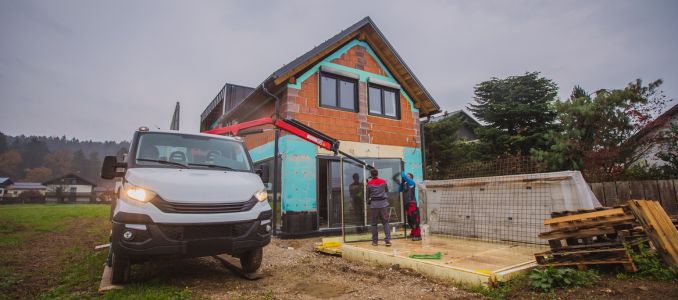
The transition from a small ember to a fully developed structure fire is a process governed by fuel load, distance, and environmental conditions. FSRI engineers Daniel Gorham and Joseph Willi, who led the research, noted that windows are often the "weak link" in a building’s defense. When a window fails, it provides a direct entry point for flames and heat to penetrate the interior, rapidly transitioning an external fire into a catastrophic interior event.
Chronology of FSRI Experimental Research
The data presented at the FGIA conference is the culmination of a multi-year, large-scale experimental program. Since its inception, the FSRI has conducted more than 50 full-scale, structure-to-structure fire spread experiments. This research was initiated in response to the growing frequency and intensity of residential fires, particularly those occurring in closely packed suburban developments and the encroaching wildland-urban interface.
- Phase I (Foundational Research): Initial studies focused on identifying the thermal threshold at which standard residential windows begin to fail. Researchers established a baseline of heat flux intensity required to crack various glass types.
- Phase II (Component Analysis): The research shifted to testing individual materials, including vinyl, aluminum, fiberglass, and wood frames. This phase allowed engineers to isolate the failure points of specific framing materials when exposed to varying degrees of radiant heat.
- Phase III (System Integration): The most recent phase, presented at the conference, examined how the entire building envelope—roof, siding, and fenestration—functions as a singular safety system. This holistic approach recognized that hardening the window is ineffective if the surrounding wall assembly or soffit remains vulnerable.
Technical Analysis of Glazing and Frame Materials
The FSRI study provides a rigorous comparison of material performance. For safety engineers tasked with specifying materials for high-risk buildings, the following findings are central to informed decision-making:
- Vinyl Frames: While cost-effective and common in residential construction, vinyl frames exhibit significant susceptibility to thermal softening. The FSRI data indicates that these frames can lose structural integrity before the glass pane itself fails, potentially leading to the glass falling out and creating an opening for embers.
- Aluminum Frames: These frames offer superior structural stability under heat compared to vinyl. However, they act as high-conductivity heat sinks, which can lead to the rapid transfer of heat to the interior, potentially igniting curtains, blinds, or furniture located near the window.
- Fiberglass and Wood: These materials demonstrate varied performance depending on coatings and moisture content. Fiberglass, while robust, requires specific fire-rated resins to prevent delamination. Wood, if treated with fire retardants, can provide a predictable charring rate, which acts as a thermal insulator, though it remains a combustible fuel source.
The study stresses that the performance of the glazing (the glass itself) is inseparable from the frame. Even tempered glass, which is stronger than standard annealed glass, will eventually succumb to thermal shock if the frame surrounding it buckles, allowing the pane to drop or shatter prematurely.

Implications for Building Codes and Safety Standards
The integration of this data into future safety codes and standards is a top priority for the FSRI and the FGIA. Currently, building codes often treat components in isolation. The FSRI’s research argues for a transition toward performance-based standards that account for the interaction between different building materials.
For OHS professionals, the implications are twofold: immediate risk mitigation and long-term planning. Facility managers overseeing properties in WUI zones are now encouraged to implement "defensible space" protocols that specifically include the removal of vegetation near windows, the use of non-combustible shading, and the potential retrofitting of existing window systems with tempered or fire-rated glazing.
Furthermore, the evidence-based approach provided by FSRI serves as a rebuttal to purely prescriptive building codes. By understanding the "why" behind window failure, designers can move beyond minimum compliance and toward engineering systems that actively resist fire spread.
Reactions from the Fenestration Industry
The presentation at the FGIA Annual Conference was met with significant interest from industry stakeholders, including manufacturers of glazing products and window frames. Many representatives noted that the research provides the necessary justification to invest in higher-performance materials.
"This is the type of data that drives the industry forward," noted a spokesperson for a leading fenestration manufacturer present at the conference. "When we can show a client or a regulatory board exactly how a specific frame material holds up against a 50-kilowatt-per-square-meter heat flux, the conversation shifts from cost-cutting to safety-first construction."
The research is expected to influence upcoming revisions to international building codes, particularly those governing residential construction in fire-prone regions. By establishing standardized testing protocols based on the FSRI experiments, the industry hopes to eliminate the guesswork that has historically surrounded window performance in fire conditions.
Moving Toward a Resilient Future
As climate patterns continue to shift and the wildland-urban interface expands, the necessity for resilient construction becomes more acute. The FSRI’s work suggests that structural hardening is not a luxury but a fundamental requirement for community safety. The transition toward a systems-based approach—where the interface between walls, roofs, and windows is hardened uniformly—represents the most effective strategy for mitigating fire risk.
For the OHS professional, the FSRI data serves as an essential resource for hazard assessment. By evaluating the vulnerability of existing fenestration, safety officers can better prioritize maintenance and capital improvements. In new construction, these findings provide a scientific basis for advocating for materials that exceed current code requirements, ultimately saving lives and protecting assets from the increasing threat of uncontrolled structure fires.
The research presented at the FGIA conference is currently available for review by industry professionals, and the FSRI intends to continue its series of large-scale experiments to further refine its understanding of fire dynamics. Through the marriage of empirical testing and industry collaboration, the building sector is taking a crucial step toward creating environments that are not just compliant, but inherently safer.