


Many business leaders operate under the assumption that a lack of new federal OSHA workplace safety regulations equates to a period of regulatory calm and relaxed enforcement. However, current data and recent administrative shifts suggest that this perspective is a profound miscalculation. While the agency has pivoted toward increased engagement and voluntary compliance programs, OSHA remains fundamentally an enforcement-driven body. Under the leadership of David Keeling, who was confirmed as the Assistant Secretary of Labor for OSHA in October 2025, the agency is signaling a shift from reactive oversight to a more predictive, data-driven enforcement model. For employers, the message is clear: the absence of new legislative burdens does not grant immunity from existing regulatory scrutiny.
The Keeling Doctrine: From Carpet to Concrete
The confirmation of David Keeling marked a significant shift in OSHA’s strategic posture. Drawing on his extensive background as a union package handler at UPS and his subsequent rise to Global Vice President of Health and Safety, Keeling has brought a "boots on the ground" perspective to the agency. In his inaugural address to the Small Business Administration, Keeling framed enforcement not as a bureaucratic exercise in paperwork, but as a moral imperative to ensure worker survival.

Keeling’s background suggests a departure from theoretical rulemaking toward practical, operational accountability. By focusing on the "concrete rather than the carpet," he has emphasized that OSHA inspectors will prioritize the physical realities of the shop floor over the administrative safety documentation that often dominates corporate compliance efforts. For industry leaders, this suggests that inspectors will be more likely to challenge the effectiveness of safety programs rather than merely checking if the required forms are signed and filed.
The Mechanics of Modern Enforcement
Even in the absence of a flurry of new federal rules, OSHA possesses an extensive arsenal of enforcement mechanisms. The agency’s strategy for 2026 relies on a sophisticated combination of legacy programs and modern data analytics.
Central to this effort are the National, Regional, and Local Emphasis Programs (NEPs, REPs, and LEPs). These programs allow OSHA to bypass the traditional requirement of waiting for an employee complaint or a reportable injury to initiate an inspection. Instead, these programs utilize data to target specific industries—such as construction, warehousing, or manufacturing—that exhibit higher-than-average hazard profiles.

Furthermore, the Site-Specific Targeting (SST) program remains a critical tool. By analyzing injury and illness logs reported by employers, OSHA identifies facilities that deviate from industry norms. Once a facility is flagged for an SST inspection, the scope is rarely limited to the initial concern; inspectors are authorized to perform "wall-to-wall" audits. This comprehensive approach allows the agency to investigate not just the specific hazard that triggered the visit, but the entire safety culture and operational infrastructure of the workplace.
Chronology of Escalating Scrutiny
The current climate of intensification did not happen overnight; it is the culmination of a decade-long evolution in regulatory philosophy.
- 2016–2020: The introduction of electronic recordkeeping requirements (the "Improvement to Tracking of Workplace Injuries and Illnesses" rule) provided OSHA with a massive, digitized repository of safety data, enabling more granular targeting.
- 2021–2024: During this period, the agency began experimenting with increased use of instance-by-instance citations, moving away from "grouping" violations together, which effectively multiplied potential penalties for employers.
- 2025: The confirmation of David Keeling signaled the institutionalization of a "predictive enforcement" strategy, moving away from purely reactive, complaint-based inspections.
- 2026: The current year represents the full implementation of these data-integrated strategies, with increased staffing for field inspectors and a broader application of the Severe Violator Enforcement Program (SVEP).
Data-Driven Hazards and Financial Implications
The financial implications of a failed audit are growing. In recent years, OSHA has increasingly utilized its authority to issue "instance-by-instance" citations. Previously, an employer might be cited for multiple instances of a single violation under one fine. Today, the agency is exercising its right to fine for each individual instance, which can turn a manageable penalty into a multi-million-dollar liability.
Furthermore, the use of press releases as a tool for "public shaming" has become a formalized component of the enforcement cycle. OSHA’s public affairs office frequently issues bulletins regarding citations, which can cause significant reputational damage to companies, affecting their ability to bid on contracts, secure insurance, or maintain relationships with stakeholders. The SVEP program remains the most stringent of these tools, placing employers with a history of egregious violations under intense, long-term scrutiny that follows them across different worksites.
Industry Reactions and Compliance Realities
Industry trade groups and safety professionals have noted the increased intensity with concern. While many organizations support the goal of reduced workplace injuries, there is a prevailing sentiment that the "moving goalposts" of enforcement make it difficult for businesses to maintain a state of permanent audit-readiness.
"The challenge for small and medium-sized businesses is the unpredictability," says one industry analyst who requested anonymity. "When OSHA moves toward a predictive model, the employer no longer knows what triggers an inspection. Is it their injury rate? Their industry code? A regional trend? This uncertainty is forcing companies to invest in safety not as a periodic necessity, but as a continuous operational requirement."
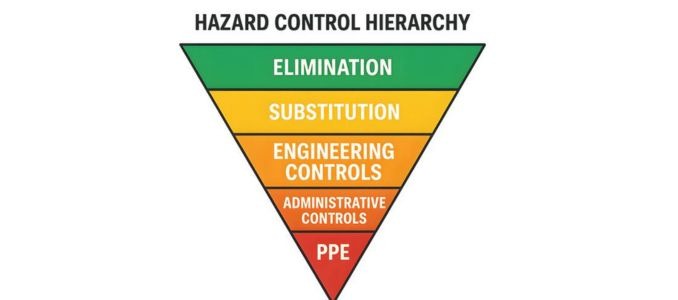
Legal experts have advised that the best defense against this intensified climate is a shift from compliance-based safety to performance-based safety. Compliance ensures the law is met, but performance-based safety focuses on the reduction of actual risk. If a company can demonstrate a proactive, hazard-mitigation program that uses internal data to solve problems before they result in injuries, they are far better positioned to survive a wall-to-wall inspection.
Implications for the Future
The strategic direction under Secretary Keeling is clear: OSHA is moving away from the "compliance checklist" era and into an era of "hazard-based accountability." The implications for employers are twofold.
First, internal safety documentation must be accurate and honest. Because OSHA is increasingly using submitted data to target inspections, any discrepancies between reported injury rates and actual site safety can become the catalyst for an enforcement action.

Second, the threshold for "serious" hazards is lowering. Inspectors are being trained to identify systemic issues—such as inadequate training programs, poor supervision, or a lack of employee engagement in safety committees—rather than focusing solely on physical machine guarding or personal protective equipment (PPE).
As we move deeper into 2026, the regulatory landscape will likely continue to favor the "predictive" model. For the American employer, the days of assuming that "no new rules" equals "no new risks" are officially over. The agency’s ability to analyze data, combine it with regional field intelligence, and deploy targeted inspectors means that safety must be integrated into the daily cadence of business operations. Failure to do so no longer carries the risk of a simple citation; it carries the risk of a comprehensive, company-wide audit that can fundamentally disrupt business continuity.
Ultimately, the intensification of enforcement is a reminder that the regulatory environment is not stagnant. As OSHA refines its tools and broadens its data capabilities, employers who continue to treat safety as an afterthought or a "check-the-box" activity will find themselves increasingly vulnerable to an agency that is better equipped, better informed, and more aggressive than at any point in recent history. The "calm" that many perceived in the regulatory environment was not a sign of retreat, but a strategic pause as the agency modernized its approach to ensure compliance through a more potent and pervasive enforcement apparatus.