

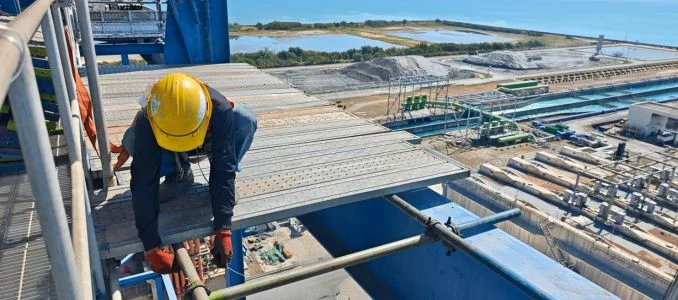
In the modern corporate landscape, the divide between regulatory adherence and true safety excellence remains one of the most significant challenges for industrial operations. While international and local health and safety standards provide a necessary floor for workplace protections, they are rarely designed as a ceiling. Yet, a substantial number of organizations operate under the assumption that meeting the legal minimum is synonymous with a robust safety culture. This reliance on baseline compliance, rather than proactive risk mitigation, often leaves companies vulnerable to preventable accidents, financial liability, and reputational damage.
The paradox of safety compliance is rooted in a fundamental tension: the cost of implementing world-class safety systems versus the immediate, often quantifiable, financial gains of maintaining the status quo. For many executives, health and safety is viewed as a cost center rather than a strategic investment, leading to a "check-the-box" mentality that satisfies inspectors but fails to address the nuanced hazards of day-to-day operations.

The Financial and Structural Barriers to Safety Excellence
The decision to limit safety investment is rarely born of negligence alone; it is often the result of complex fiscal and operational constraints. Implementing high-tier safety protocols requires significant capital expenditure, not only for physical equipment but for the time required to train staff, update standard operating procedures (SOPs), and conduct recurring safety audits.
In competitive global markets, organizations often face pressure to minimize overhead. When safety is viewed through a purely fiscal lens, the return on investment (ROI) for advanced safety technology—such as predictive AI-driven hazard monitoring or redundant safety interlocks—can seem distant compared to the immediate, tangible costs of installation and maintenance. This leads to a scenario where management prioritizes efficiency and output over the continuous improvement of the work environment.
Furthermore, the "minimum requirement" trap is reinforced by the nature of regulatory enforcement. Because the law sets the minimum, companies that comply with those rules are technically in the clear, even if those rules are outdated or ill-suited to modern, high-risk industrial environments. As technology advances, the pace of regulatory updates often lags behind the pace of industrial innovation, creating a dangerous "compliance gap" where an organization is legally compliant but operationally unsafe.

Chronology of Enforcement and Regulatory Bottlenecks
The history of safety regulation is characterized by an ongoing effort to catch up to industrial progress. In the mid-20th century, the shift toward formalized safety legislation—such as the Occupational Safety and Health Act of 1970 in the United States—was designed to provide a uniform standard of protection. However, the enforcement of these standards has faced consistent systemic challenges.
Historically, the timeline of safety enforcement follows a reactive pattern:
- Hazard Emergence: New industrial processes are introduced, bringing novel risks.
- Incident Accumulation: A series of workplace accidents or occupational illnesses occurs over several years.
- Public/Political Pressure: Labor unions, advocacy groups, and media outlets pressure the government to act.
- Legislative Response: New regulations or amendments are drafted and passed, setting the new "minimum."
This cycle inherently creates a lag time. Between the identification of a hazard and the full enforcement of new regulations, organizations that rely solely on current law remain exposed. Additionally, government agencies tasked with enforcement are frequently hampered by staffing shortages and limited budgets. The result is a bottleneck in the judicial system; when an organization fails to meet even the basic standards, the process of investigation, prosecution, and sentencing can take years, weakening the deterrent effect of the law.

Competing Government Priorities and Macro-Economic Factors
The enforcement of safety standards does not exist in a vacuum. Governments must balance the mandate for worker protection with broader national priorities, including economic growth, infrastructure development, and international trade stability. In many instances, the desire to attract foreign investment or lower the barrier to entry for domestic businesses can lead to a softening of regulatory enforcement.
When national economic stability is at stake, safety inspectors may find their authority curtailed or their departments underfunded. This creates a political environment where "regulatory relief" is sometimes framed as a driver for productivity. For organizations, this signal from the top can encourage a culture of minimum compliance. If the state is not prioritizing the rigorous enforcement of safety standards, the incentive for private firms to invest in "beyond-compliance" safety measures diminishes significantly.
Supporting Data: The Cost of Compliance vs. The Cost of Failure
The argument for exceeding minimum standards is supported by a wealth of data regarding the true cost of workplace incidents. According to the National Safety Council (NSC), the cost of work-related injuries and deaths reaches into the hundreds of billions annually when factoring in lost productivity, medical expenses, and administrative costs.

For the individual firm, a single major safety incident can result in:
- Direct Costs: Workers’ compensation premiums, legal fees, and fines.
- Indirect Costs: Project delays, loss of skilled personnel, training costs for replacements, and the significant toll of damaged morale.
- Reputational Costs: The loss of contracts, difficulty in recruiting top talent, and negative brand perception.
Research indicates that companies that invest in "Total Worker Health"—an approach that integrates safety with overall well-being—see higher levels of employee engagement and retention. By moving beyond the minimums, organizations foster a culture where workers feel valued, which directly correlates to higher productivity and lower turnover rates.
The Case for Proactive, Beyond-Compliance Action
As a certified Health, Safety, and Environment (HSE) expert, the transition from reactive to proactive safety management is the defining characteristic of high-performing organizations. Proactive safety involves the use of advanced hazard identification, such as real-time predictive analytics and comprehensive environmental impact assessments.

Organizations that aim for excellence do not wait for a regulatory mandate to update their protocols. Instead, they utilize:
- Dynamic Risk Assessment: Continuously evaluating the environment for new hazards rather than relying on annual audits.
- Employee Empowerment: Creating channels for workers to report near-misses without fear of reprisal, fostering a bottom-up approach to safety.
- Technological Integration: Utilizing Internet of Things (IoT) sensors and Artificial Intelligence (AI) to monitor environmental conditions and worker safety in high-risk zones.
Broader Implications and Future Outlook
The reliance on minimum compliance is increasingly becoming a strategic liability. As ESG (Environmental, Social, and Governance) reporting becomes mandatory for many public companies and a standard expectation for private equity investors, the safety track record of an organization is now a key performance indicator (KPI). Investors are wary of the "hidden debt" associated with companies that have a history of minimal compliance, recognizing that such firms are at a higher risk for catastrophic failures.
Furthermore, the evolution of the global workforce is placing a higher premium on safety. In a competitive labor market, high-skill workers are increasingly prioritizing organizations that can demonstrate a genuine commitment to their health and safety. Companies that stick to the bare minimum may find themselves unable to compete for talent, leading to a degradation in the quality of their workforce and, ultimately, their operational output.

Conclusion
The law provides the floor, but it should not be the ceiling for organizational safety. The transition from minimum compliance to safety excellence requires a shift in mindset: viewing safety as an integral component of operational quality and long-term business sustainability. By recognizing the limitations of the current regulatory environment—including enforcement bottlenecks and the lag between technological innovation and legislative updates—forward-thinking organizations can take ownership of their safety standards.
In the final analysis, the choice is between reacting to the inevitable costs of failure or investing in the proactive systems that secure the future of the workforce. The data is clear: while excellence requires time and capital, the cost of the status quo is ultimately far higher. Organizations that choose to excel do not just protect their workers; they secure their own place in the future of their industry.