

In the Antioquia region of Colombia, a pioneering initiative known as VOZ SOS CAAPAZ is reshaping the landscape of speech therapy and social inclusion for individuals who rely on Augmentative and Alternative Communication (AAC) systems. Spearheaded by Colombian Speech-Language Pathologist and AAC specialist Ángela Marcela Ordóñez, the project has moved beyond the constraints of traditional one-on-one clinical therapy to establish community-based, immersive environments that prioritize neuroaffirmative practices and peer-to-peer connection for non-speaking or minimally speaking individuals.
The Genesis of a Community-Driven Model
The traditional model of speech-language pathology has historically been centered on the development of oral speech, often prioritizing verbalization over other forms of expressive communication. For many individuals with complex communication needs (CCN), this clinical approach has proven insufficient, as it frequently isolates the user from natural, social environments and limits their exposure to the diverse, multimodal communication strategies required for daily life.
Recognizing these limitations, Ángela Marcela Ordóñez began a critical evaluation of her own clinical practices in 2024. This self-reflection was catalyzed by three distinct professional developments. First, her involvement in the "CAAmigos Angelman" program, a virtual, neuroaffirmative educational initiative led by Claudia Marimón and Fast Latam, provided a framework for a "Comprehensive Literacy" model. This experience allowed Ordóñez to observe the efficacy of naturalistic, play-based communication environments that welcome users with varying support needs.
Second, the publication of a seminal 2025 article in the ISAAC journal AAC by non-speaking user Gran Blasko served as a turning point. Titled "Nothing About AAC Users Without AAC Users," the piece argued for the inclusion of AAC users in the research, design, and implementation of the very technologies they rely upon. This resonated with Ordóñez’s growing realization that the expertise of the user must dictate the direction of therapeutic intervention.
Third, the adoption of "Relationship-Based Learning" provided a pedagogical structure for these gatherings. This approach emphasizes horizontal relationships, where communication partners—including therapists and family members—act as co-learners, mastering the AAC systems alongside the primary users.
Chronology of Implementation
The formalization of the VOZ SOS CAAPAZ project occurred in late 2025, marking a shift toward regular, structured community engagement.
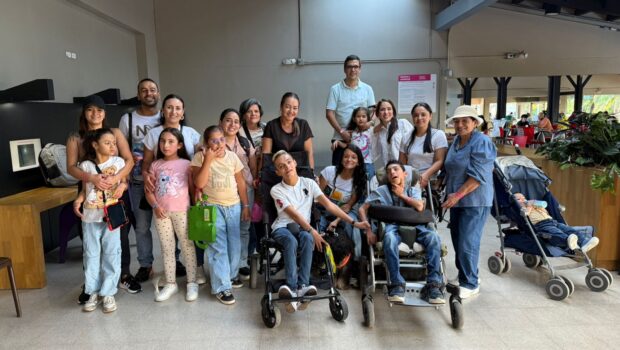
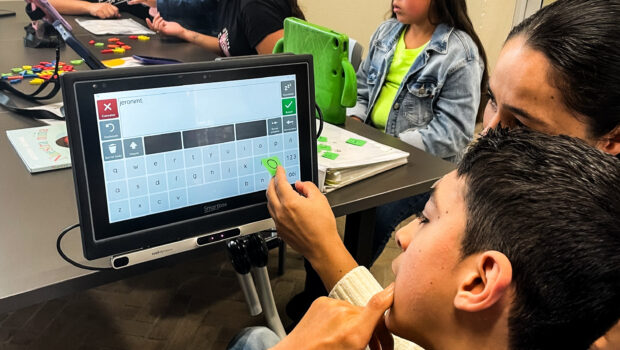
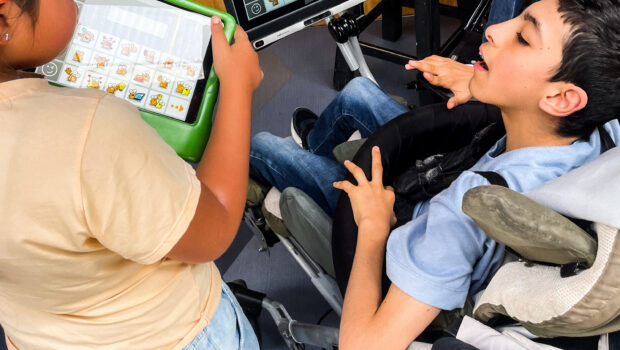
- October 2025: The inaugural in-person gathering took place at the Comfama Rionegro park in Antioquia. The event coincided with International AAC Awareness Month and served as a proof-of-concept for the project. The gathering included six primary AAC users—utilizing diverse systems such as TD Snap, Communicator 5 with eye-tracking, Proloquo2go, and Grid 3—alongside ten family members and professional staff.
- February 2026: Building on the success of the first event, the project moved to a public library in Rionegro for a structured session on shared reading. This event targeted participants at an "emergent" level of literacy, emphasizing the right of every individual to access print knowledge regardless of their primary mode of communication.
Addressing the Communication Rights Gap
The VOZ SOS CAAPAZ project is built on the premise that access to communication is a fundamental human right. By creating spaces that are not restricted to clinical settings, the initiative addresses several systemic gaps in current speech-language pathology:
- The Limitation of Frequency: Traditional therapy sessions, often limited to one or two hours per week, rarely provide the repetition and social variety needed to achieve communicative fluency.
- The "Speaking-Only" Bias: Many therapists are trained in an ableist framework that views speech as the "gold standard." By hosting events in public spaces, VOZ SOS CAAPAZ exposes the general public to alternative methods, normalizing the use of speech-generating devices (SGDs) and visual aids.
- Peer-to-Peer Interaction: Perhaps most importantly, the project creates a space for AAC users to interact with peers who utilize similar modalities. This fosters a sense of community that is often missing for individuals who may be the only AAC user in their school or social circle.
Participant Outcomes and Expert Feedback
The impact of these gatherings is best illustrated by the testimony of those involved. Pablo Andrés Calderón Gómez, an AAC user who attended the initial Rionegro session, noted the profound social benefit of the experience: "I am a Tobii user. The gathering where we were with Angela, I liked it very much because I met other friends. More people need this Right to Communication. I hope for more opportunities."
For families, the initiative provides a roadmap to challenge the "ceilings" often imposed by traditional educational and therapeutic institutions. By focusing on "presuming competence"—the principle that all individuals are capable of learning and communicating if provided with the correct tools and environment—families are empowered to seek more inclusive opportunities for their children.
Broader Implications for Speech-Language Pathology
The emergence of VOZ SOS CAAPAZ signals a broader shift in how AAC services are delivered in Latin America. As the professional community moves toward more inclusive models, the role of the speech-language pathologist is evolving from that of a "clinician" to that of a "communication facilitator."
The project’s focus on the "Comprehensive Literacy" model, as defined by experts like Erin Sheldon, is particularly significant. By integrating literacy instruction into these gatherings, the initiative ensures that participants are not merely "requesting" items through their devices, but are developing the complex language skills necessary for academic and personal growth.
Future Projections and Sustainability
While the current schedule for VOZ SOS CAAPAZ involves monthly sessions, the long-term objective is to foster a self-sustaining network of AAC users and their families across the Antioquia region and beyond. Ordóñez notes that the project will continue to prioritize:
- Autonomy: Ensuring that the user, not the device or the therapist, dictates the content and direction of the interaction.
- Sensory Inclusion: Accounting for the individual sensory needs of participants, which is a core component of a neuroaffirmative approach.
- Systemic Advocacy: Continuing to dismantle the myths surrounding non-speaking individuals through public demonstrations and consistent advocacy for communication rights.
The success of this initiative in Rionegro offers a replicable model for other regions. As the project grows, it highlights a crucial lesson for the global therapeutic community: the most effective intervention for AAC users often occurs not in the sterile environment of a clinic, but in the vibrant, unpredictable, and meaningful interactions of the community at large. By creating these "runways" for communication, professionals like Ordóñez are ensuring that more individuals have the opportunity to project their voices and participate fully in the societal conversation.
The initiative remains open to growth, with organizers actively seeking new, inclusive spaces where literacy, connection, and communication can thrive. As of early 2026, the project serves as a cornerstone for AAC advocacy in Colombia, proving that with intentional, relationship-based design, the barriers to communication can be dismantled one interaction at a time.