

In the Antioquia department of Colombia, a burgeoning movement known as VOZ SOS CAAPAZ is redefining how Augmentative and Alternative Communication (AAC) is integrated into daily life. Spearheaded by Speech-Language Pathologist and AAC specialist Ángela Marcela Ordóñez, this community-driven project seeks to bridge the gap between traditional clinical therapy and real-world social inclusion. By facilitating monthly in-person gatherings for non-speaking and minimally speaking individuals, the initiative challenges long-standing pedagogical norms that have historically prioritized verbal speech over alternative communication modalities.
The Origins of a Paradigm Shift
The conceptual framework for VOZ SOS CAAPAZ began to solidify in October 2025 within the municipality of Rionegro. The project was born out of a critical self-reflection by Ordóñez, who questioned the efficacy of traditional, one-on-one speech therapy sessions. Her inquiry focused on whether isolated, weekly clinical interventions—often conducted by individuals who do not rely on AAC themselves—could provide the necessary social, emotional, and linguistic modeling required for true communicative competence.
Ordóñez identified three major catalysts that informed the development of the project. The first was her participation in the "CAAmigos Angelman" program, a virtual, neuro-affirmative initiative led by Claudia Marimón and Fast Latam. This experience highlighted the benefits of naturalistic, literacy-based learning models for diverse learners. The second catalyst was the publication of Gran Blasko’s 2025 article in the journal AAC, titled "Nothing About AAC Users Without AAC Users." This piece served as a professional call to action, emphasizing the necessity of involving AAC users in the development and evaluation of the technologies they rely on. Finally, the integration of "Relationship-Based Learning" provided the pedagogical foundation for the project, prioritizing horizontal, reciprocal interactions between users and their communication partners.
Chronology of Community Engagement
The VOZ SOS CAAPAZ initiative has successfully executed two primary public events that serve as models for future development:
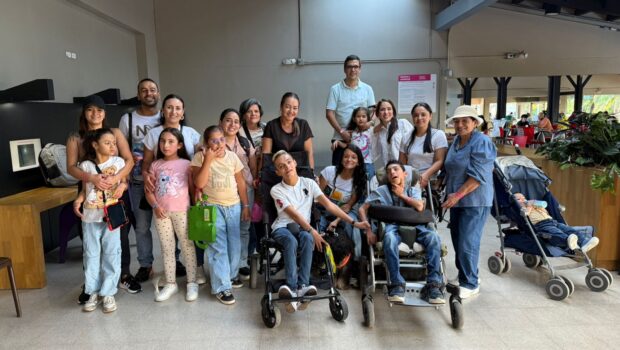
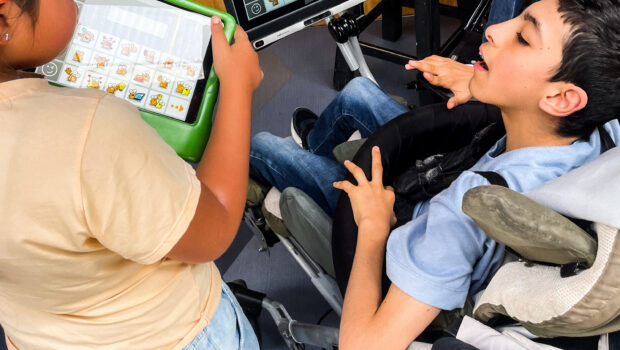
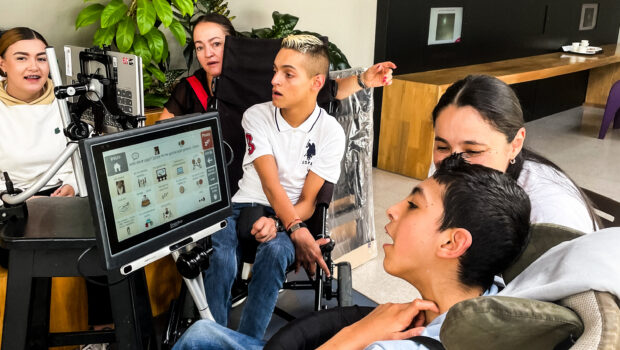
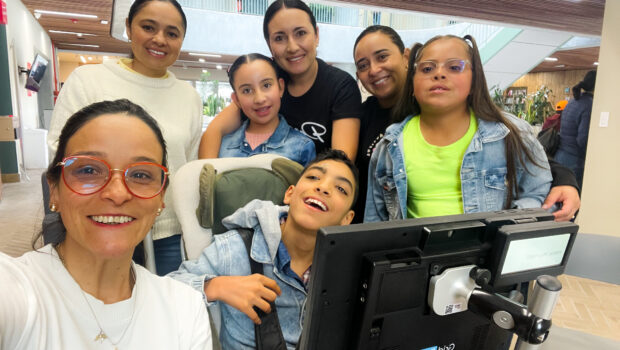
- October 2025 (AAC Awareness Month): The project held its inaugural gathering at the Parque Comfama in Rionegro. This event brought together six AAC users utilizing a diverse range of technologies, including Td Snap, Communicator 5 with eye-tracking access, Proloquo2go, and Grid 3 software. The participants were accompanied by ten family members and professional support staff. The event moved beyond the clinical setting, allowing users to navigate a public amusement park while utilizing their devices in an organic environment.
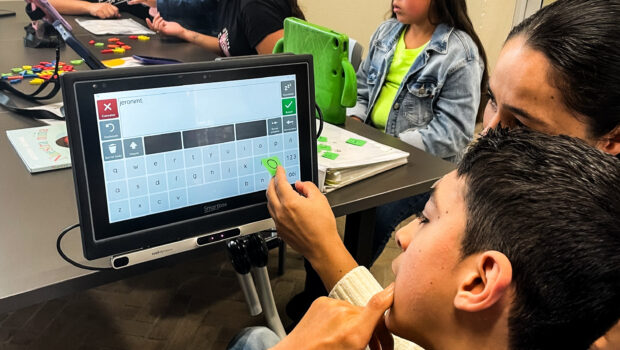
- February 2026: The initiative hosted its first in-person shared reading session at a public library in Rionegro. This session utilized the Comprehensive Literacy model proposed by Erin Sheldon, focusing on developing print knowledge through meaningful, social interaction. Three AAC users at the "emergent" literacy stage participated, supported by their families and professional facilitators.
These gatherings are currently scheduled on a monthly basis, with organizers actively seeking to expand into new public venues that offer greater accessibility for users and their families.
Data-Driven Implications for AAC Therapy
The project represents a shift toward "presuming competence," a neuro-affirmative principle that asserts all individuals have the right to communicate, regardless of their preferred modality. According to recent industry standards, the efficacy of AAC is highly dependent on "communication partner training"—the process by which caregivers and therapists learn to use the AAC system alongside the user.
By creating a community where users can interact with peers who utilize similar communication strategies, VOZ SOS CAAPAZ addresses the social isolation often experienced by non-speaking individuals. Data from the initial gatherings suggest that when AAC users interact with peers, they are more motivated to engage in literacy-based tasks. The feedback from participants, such as Pablo Andrés Calderón Gómez, emphasizes that these events fill a significant gap in the current healthcare landscape: "I met other friends. We need more people with this Right to Communication."
Professional and Clinical Analysis
The movement toward community-based AAC support is gaining traction globally, but its application in the Latin American context is particularly significant. Many clinical environments in the region have historically operated under an ableist framework, where verbal speech is treated as the "gold standard" of success.
The transition to a model that integrates AAC into public, literacy-focused environments carries several implications for the profession:
- Re-evaluating "Success": Clinical outcomes are shifting from the ability to produce vocal sounds to the ability to participate meaningfully in social, academic, and civic life through any available technological or gestural means.
- Resource Accessibility: By utilizing public infrastructure—such as libraries and parks—for therapy, providers are normalizing the presence of AAC in society. This reduces the stigma associated with electronic communication devices and improves the general public’s awareness.
- Horizontal Collaboration: The VOZ SOS CAAPAZ model highlights that the therapist’s role is evolving from a directive "instructor" to a facilitator of connections. This necessitates that families and communication partners undergo continuous training to become proficient in the user’s chosen system.
Challenges and Future Trajectory
Despite the success of the initial gatherings, the project faces ongoing challenges. Scaling these events requires consistent logistics, specialized training for diverse communication partners, and the identification of public spaces that are fully accessible for those with complex physical and sensory needs. Furthermore, there remains a persistent need for advocacy to ensure that insurance providers and public health systems recognize the importance of community-based, long-term support as a valid extension of clinical care.
Ordóñez notes that the ultimate objective is to dismantle the "ceilings" that are often placed on individuals with communication challenges. By limiting access to literacy and naturalistic social experiences, traditional therapeutic models may inadvertently stifle the development of AAC users. The project’s focus on "Comprehensive Literacy" is a direct response to this, ensuring that non-speaking individuals have the same opportunities for education and expression as their speaking counterparts.
Conclusion
VOZ SOS CAAPAZ is more than an event series; it is an evidence-based, social intervention designed to uphold the fundamental right to communication. By moving the conversation out of the clinical office and into the public square, the project is fostering a culture of inclusion in Antioquia.
For families of AAC users, the lesson is clear: communication is a dynamic, evolving process that thrives on shared experience and community connection. As the project continues to grow, it serves as a case study for how speech-language pathology can evolve to be more responsive to the needs of the individuals it serves. The success of the initiative in Rionegro suggests that the future of AAC lies not in the perfection of technology alone, but in the strength of the human connections that that technology enables. As Ordóñez and her team continue their work, they invite more families to engage in this process of mutual learning, reinforcing the principle that every individual has a voice, provided they are given the tools and the community to project it.