

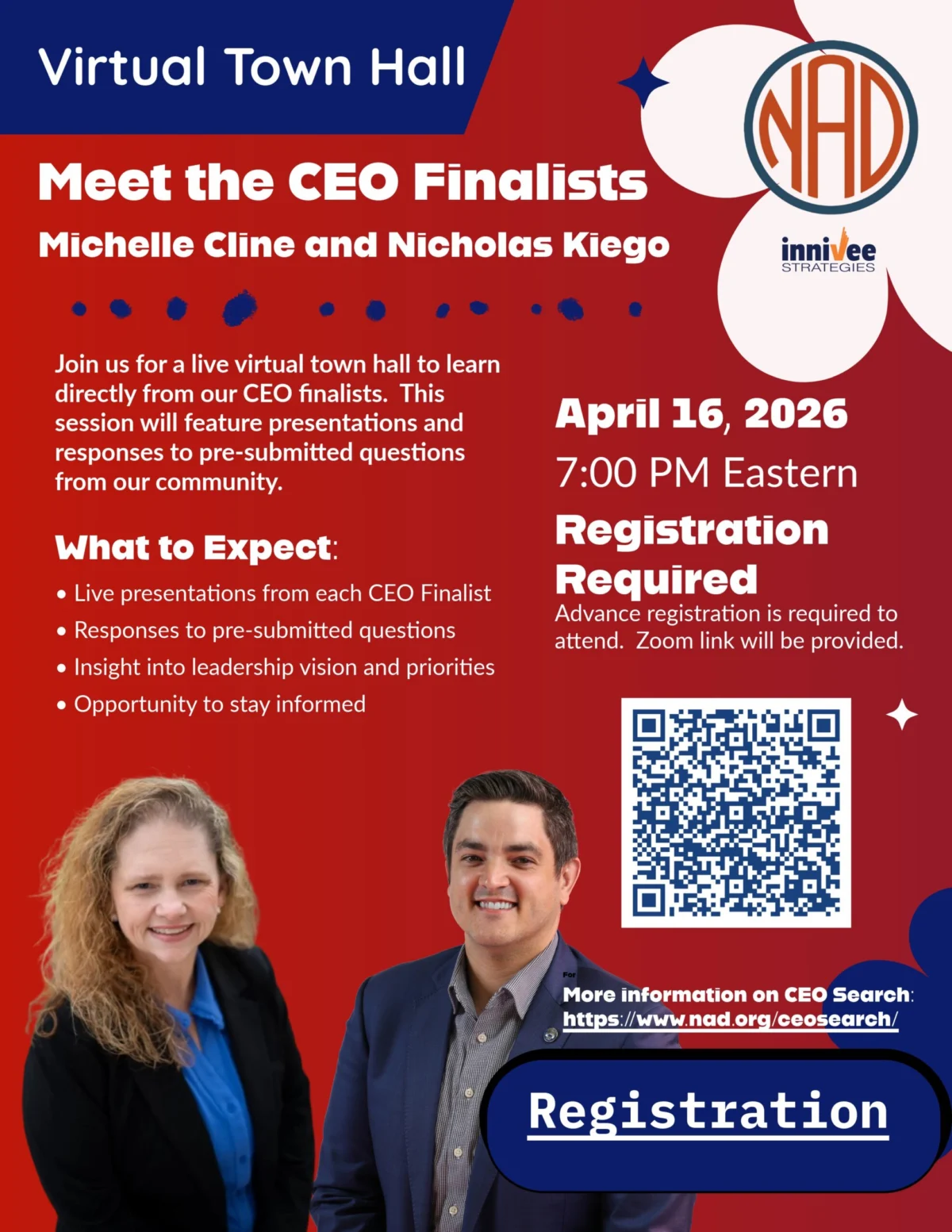
The National Association of the Deaf (NAD) is approaching a pivotal juncture in its organizational history as it nears the conclusion of its search for a new Chief Executive Officer. On April 16, 2026, the organization will host a virtual town hall featuring the two final candidates, Michelle Cline and Nicholas Kiego. This event serves as a critical bridge between the intensive vetting process conducted by the search committee and the final selection that will dictate the future direction of the nation’s premier civil rights organization for deaf and hard-of-hearing individuals.
The Significance of the NAD CEO Selection
For over a century, the NAD has served as the leading advocacy organization for the American deaf community, focusing on legislative lobbying, legal advocacy, and the protection of communication access rights. The selection of a new CEO is not merely an administrative appointment; it is a strategic decision that will influence how the organization navigates contemporary challenges, including the rapid integration of artificial intelligence in communication technologies, the expansion of inclusive education, and the ongoing struggle for equitable healthcare access.
The search process, which has been documented on the organization’s official portal, reflects a rigorous commitment to transparency and community engagement. By opening this town hall to the public, the NAD board is emphasizing the importance of alignment between the future leadership and the grassroots members who rely on the organization’s advocacy work.
Chronology of the Search Process
The path to this town hall began several months ago when the board of directors initiated a nationwide search to identify a successor capable of leading the organization through its next chapter. The process has been characterized by several distinct phases:
- Phase I: Defining the Profile. The board engaged with stakeholders to outline the core competencies required, prioritizing a balance between traditional advocacy experience and modern organizational management skills.
- Phase II: Recruitment and Vetting. A search committee reviewed a diverse pool of applicants, conducting multi-stage interviews to narrow the field to the two finalists, Michelle Cline and Nicholas Kiego.
- Phase III: Public Engagement. The upcoming April 16 virtual town hall represents the final phase of public vetting, allowing the community to observe the candidates in a live, interactive format.
- Phase IV: Deliberation and Appointment. Following the town hall, the board will synthesize community feedback and internal performance evaluations to make a final selection.
Candidate Profiles and Leadership Visions
The two finalists, Michelle Cline and Nicholas Kiego, bring distinct professional backgrounds to the table, each reflecting different aspects of the advocacy spectrum. While specific platform details remain the subject of the upcoming presentations, the community is eager to hear their perspectives on long-term sustainability for non-profit advocacy, the mobilization of state-level associations, and the strengthening of federal policy work.

The virtual town hall is structured to ensure a balanced presentation. Each candidate will be given an equal platform to present their vision for the organization. This will be followed by a structured Q&A session, which will rely heavily on pre-submitted inquiries from the public. This methodology is designed to minimize performative rhetoric and focus on substantive policy priorities.
The Role of Community Participation
The decision to implement a pre-submission deadline for questions—set for April 13, 2026—highlights the organization’s desire to curate a high-quality, focused dialogue. By allowing community members to submit questions via a standardized form, the organizers ensure that the finalists are prepared to address the most pressing concerns of the deaf and hard-of-hearing community, ranging from accessibility in employment to the protection of American Sign Language (ASL) in educational settings.
The requirement for advance registration and the provision of a Zoom webinar link underscores the logistical complexity of hosting such an event for a nationwide audience. The NAD has prioritized accessibility, ensuring that the platform supports the communication needs of its diverse membership, including the provision of sign language interpretation and real-time captioning services.
Contextualizing the Challenges Ahead
The incoming CEO will inherit a complex landscape of challenges. Recent data indicates that while legal protections such as the Americans with Disabilities Act (ADA) have provided a strong foundation, the implementation of these rights remains inconsistent across the country. Key areas of focus for the new leadership will likely include:
- Technological Equity: Ensuring that advancements in telecommunications and video relay services keep pace with the needs of the deaf community.
- Economic Inclusion: Addressing the disproportionate unemployment and underemployment rates faced by deaf individuals, particularly in sectors requiring high-level communication integration.
- Educational Advocacy: Defending the rights of deaf children to have access to high-quality, linguistically rich environments that support both ASL and English development.
Analytical Outlook: Implications of the Selection
The appointment of a new CEO represents a high-stakes moment for the NAD. The organization operates as a focal point for a wide array of state and local affiliates, and its federal advocacy work often sets the tone for civil rights litigation across the country.
Analysts within the non-profit sector note that the transition period is often a time of organizational vulnerability. The ability of either Cline or Kiego to maintain donor confidence and institutional momentum will be a key performance indicator during their first year in office. Furthermore, the selection will signal the board’s current priorities—whether they intend to steer the organization toward more aggressive, confrontational legal tactics or toward collaborative, coalition-building strategies with federal lawmakers and private sector partners.
How to Engage with the Process
For those wishing to observe the proceedings, the NAD has provided clear protocols. The virtual town hall is scheduled for April 16, 2026, at 7:00 PM Eastern. Because the event is being conducted via a webinar format, attendance is capped by the platform’s capacity, making early registration essential.
The link for registration is available through the official NAD website, and the organization has emphasized that no late registrations will be accommodated. Furthermore, the deadline for submitting questions—Monday, April 13, at 12:00 PM Eastern—is a hard deadline. The Google Form provided serves as the central hub for this feedback, and the search committee has encouraged community members to keep their questions concise and relevant to the CEO role.
Looking Toward the Future
As the date of the town hall approaches, the anticipation within the community is palpable. This event is not merely a job interview; it is a public-facing demonstration of the organization’s commitment to its democratic principles. By allowing the members to evaluate the finalists, the NAD is reinforcing its identity as a grassroots-led organization.
Regardless of the eventual outcome, the town hall will serve as a vital data point for the board of directors. The community’s reaction to the candidates—the questions they ask, the concerns they highlight, and the values they emphasize—will inevitably shape the final decision-making process. The next CEO will lead an organization that is both a guardian of history and a vanguard of the future. The transition in leadership marks the beginning of a new chapter that will define the quality of life, access, and equality for millions of deaf and hard-of-hearing Americans for years to come.
For further updates regarding the CEO search and additional resources, the organization continues to direct the public to their dedicated search portal, which serves as the repository for all official communications, candidate statements, and future announcements regarding the final appointment. The success of this transition will ultimately be measured by the new CEO’s ability to unite a diverse constituency behind a common agenda, ensuring that the voice of the deaf community remains strong, influential, and heard in the halls of power.