

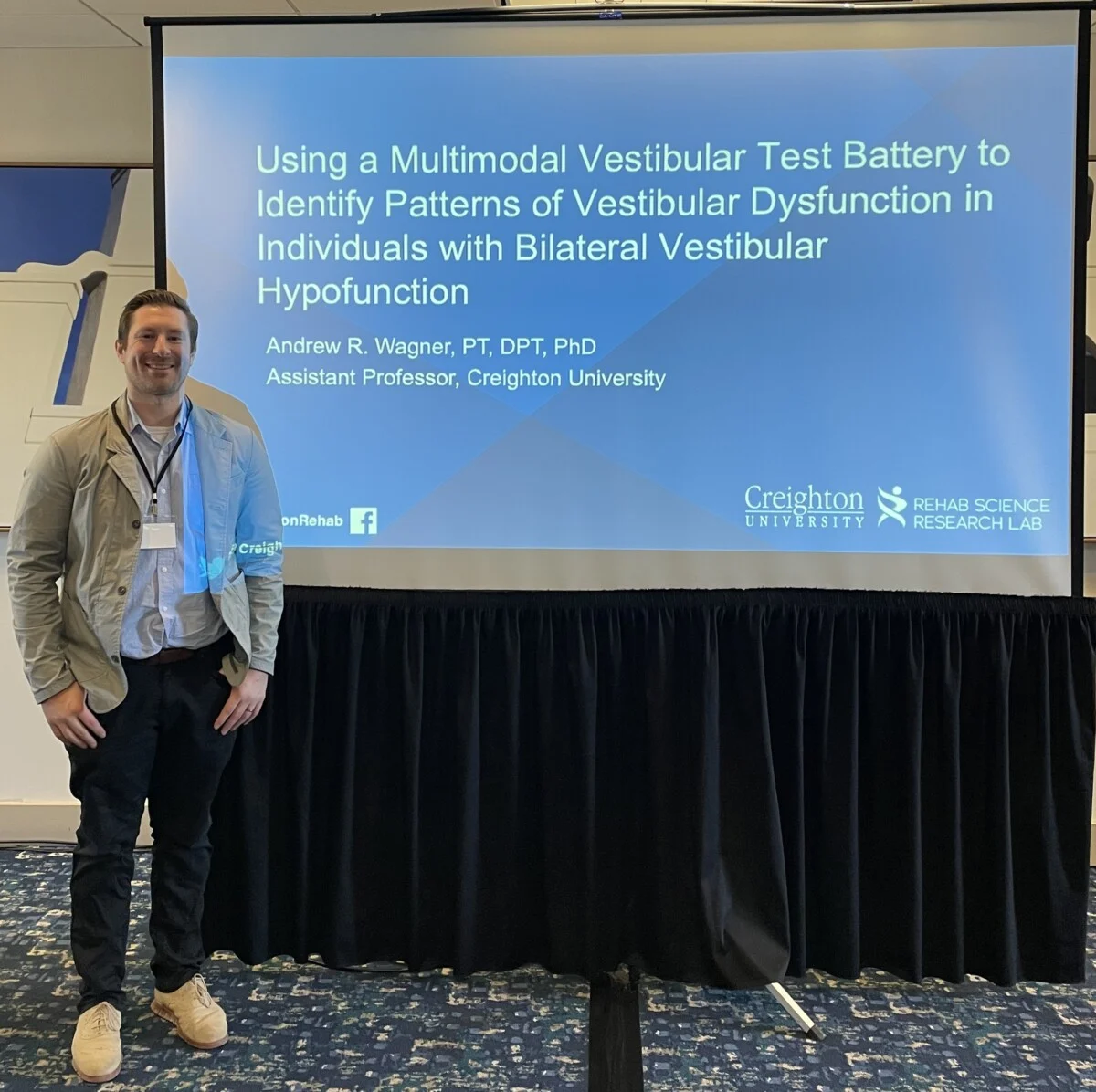
The Vestibular Disorders Association (VeDA) has officially announced the presentation of original research by Andrew Wagner, PT, DPT, PhD, at the American Balance Society (ABS) Annual Meeting. Dr. Wagner, a researcher and clinician from Creighton University, was selected as a recipient of the VeDA Travel Grant, an initiative designed to support investigators whose work focuses on improving patient outcomes and advancing the clinical understanding of vestibular disorders. His research, titled "Multimodal Assessment of Bilateral Vestibular Hypofunction," challenges the traditional reliance on singular diagnostic metrics and advocates for a more nuanced, individualized approach to treating one of the most debilitating balance disorders.
Bilateral Vestibular Hypofunction (BVH) is a complex clinical condition characterized by the partial or complete loss of function in the vestibular organs of both inner ears. These organs are responsible for sending signals to the brain regarding head position and movement, which are essential for maintaining gaze stability and postural control. According to current epidemiological data, BVH affects more than 64,000 adults in the United States alone. Despite its prevalence and the significant burden it places on the healthcare system, BVH remains a condition that is frequently underdiagnosed or mismanaged due to the limitations of standard diagnostic protocols.
The Limitations of Traditional Vestibular Diagnostics
For decades, the gold standard for assessing vestibular health has centered on the vestibulo-ocular reflex (VOR). This reflex is responsible for maintaining clear vision during head movement by triggering compensatory eye movements. While the VOR is a critical component of the vestibular system, Dr. Wagner’s research posits that it is only one piece of a much larger puzzle. The vestibular system does not operate in isolation; it interacts with various neural pathways to manage spatial orientation, motion perception, and balance.
Historically, if a patient’s VOR testing showed significant impairment, clinicians might assume a uniform level of disability across all vestibular-related functions. However, patients with BVH often report a wide spectrum of symptoms—ranging from mild unsteadiness to a total inability to walk in the dark—that do not always correlate directly with their VOR scores. This discrepancy suggests that the brain’s ability to perceive motion and the body’s ability to maintain balance may be preserved or impaired independently of the eye-tracking reflex.
Methodology: A Multimodal Framework for Research
To address these diagnostic gaps, Dr. Wagner and his team at Creighton University implemented a multimodal testing approach. This methodology was designed to capture a holistic view of the vestibular system by assessing several functions simultaneously. The study involved a comparative analysis between healthy control participants and individuals diagnosed with BVH.
The research team utilized a battery of 16 distinct tests, which were categorized into three primary domains:
- Physiological Measures: These tests focused on the biological health of the inner ear organs and the integrity of the reflexes, such as the VOR and the vestibulo-spinal reflex.
- Perceptual Measures: These assessments measured the participants’ subjective awareness of motion. For example, participants might be asked to identify the direction of a tilt or the speed of a rotation without visual cues, testing how the brain interprets signals from the vestibular nerve.
- Functional Measures: These practical tests evaluated how the participants performed in real-world scenarios, such as walking on uneven surfaces, maintaining balance while standing still, and navigating environments that require high levels of coordination.
By cross-referencing data from these three domains, the researchers aimed to determine whether a "standard" profile of BVH exists or if the condition is as diverse as the patients who live with it.
Key Findings: The Heterogeneity of Vestibular Loss
The results of the study, presented at the American Balance Society meeting, revealed a significant level of heterogeneity among the BVH participants. Despite all six subjects sharing the same clinical diagnosis, the researchers found that no two individuals exhibited the same pattern of impairment across the 16 tests.
One of the most striking findings was the lack of correlation between different vestibular pathways. For instance, a participant could demonstrate a severely diminished VOR (physiological impairment) while maintaining a relatively high level of accuracy in motion perception (perceptual preservation). Conversely, another participant might have a functional VOR but struggle significantly with postural stability during the functional tests.
This data indicates that the vestibular system is not a monolithic entity. Instead, it is a collection of distinct pathways that can be damaged or spared in different ways. This "patchwork" of function explains why two patients with the same diagnosis can have vastly different experiences; one may be able to drive a car with relative ease but struggle to walk on grass, while another may find visual environments overwhelming but maintain excellent physical balance.
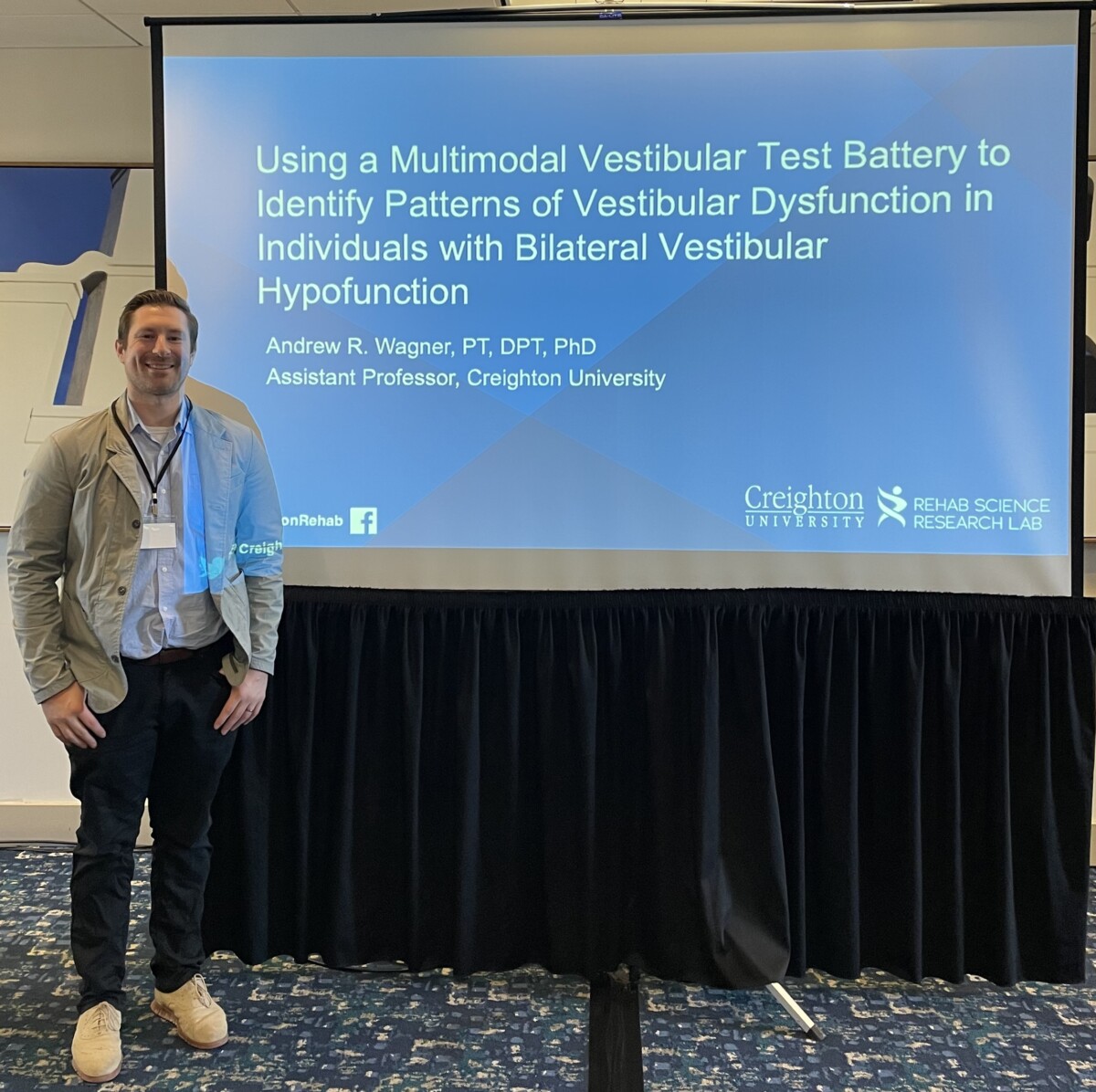
The Role of the VeDA Travel Award and Institutional Support
The presentation of this research was made possible through the VeDA Travel Award. VeDA, a leading non-profit organization dedicated to supporting patients with vestibular disorders, provides these grants to ensure that innovative research reaches the medical community. By covering travel expenses for researchers like Dr. Wagner, VeDA facilitates the exchange of ideas at major conferences, which is essential for translating laboratory findings into clinical practice.
The American Balance Society Annual Meeting serves as a critical forum for this exchange. Attended by audiologists, otolaryngologists, physical therapists, and neurologists, the meeting focuses on the latest advancements in the diagnosis and treatment of balance disorders. The inclusion of Dr. Wagner’s work at this event highlights the growing consensus among experts that the future of vestibular care must move toward personalized medicine.
Chronology of the Research and Clinical Implications
The development of this multimodal approach follows a timeline of increasing sophistication in vestibular science. In the early 2000s, the introduction of the Video Head Impulse Test (vHIT) revolutionized the ability to measure high-frequency VOR. However, it was not until the last decade that researchers began to emphasize the "perceptual" side of the vestibular system—how the cortex of the brain processes balance signals.
Dr. Wagner’s study represents the latest step in this evolution. By integrating functional, perceptual, and physiological data, the research provides a roadmap for a new standard of care. The implications for clinicians are profound. If a single test is insufficient to describe a patient’s condition, the diagnostic process must become more comprehensive.
For patients, this research offers hope for more effective rehabilitation. Currently, vestibular rehabilitation therapy (VRT) often uses a generalized set of exercises designed to habituate the brain to dizziness. However, if a clinician can identify exactly which pathway is impaired—whether it is perception, reflex, or function—they can tailor the therapy to the specific needs of the individual. For example, a patient with perceptual deficits might benefit more from sensory reweighting exercises, while a patient with physiological reflex loss might require more intensive gaze-stabilization drills.
Analysis of Broader Impacts on the Vestibular Community
The findings presented by Dr. Wagner have the potential to influence not only clinical practice but also insurance coverage and disability assessments. Currently, many insurance providers require specific "objective" test results, such as caloric testing or VOR measurements, to authorize treatment. If research continues to prove that these tests do not capture the full extent of a patient’s functional disability, there may be a push for policy changes that recognize a broader range of diagnostic evidence.
Furthermore, the study underscores the importance of the "patient voice." Because BVH is an invisible illness, patients often struggle to explain their symptoms to family, employers, and even doctors. Data that validates the disconnect between different vestibular functions provides a scientific basis for the subjective experiences of patients, potentially reducing the psychological burden of the disorder.
Future Directions in Vestibular Research
As Dr. Wagner continues his work at Creighton University, the study is expected to expand with a larger cohort of participants. Increasing the sample size will allow the researchers to identify potential sub-types of BVH, which could lead to the development of standardized "multimodal profiles." These profiles would help clinicians quickly categorize a patient’s specific type of dysfunction and select the most evidence-based intervention.
The success of this research also highlights the critical need for continued funding. The partnership between researchers and advocacy groups like VeDA is vital for sustaining the momentum of vestibular science. As new technologies such as vestibular implants and advanced virtual reality rehabilitation become more prevalent, the foundational work of understanding how the brain and inner ear interact will remain the cornerstone of patient care.
In conclusion, the research presented by Andrew Wagner at the American Balance Society Annual Meeting marks a significant shift in the understanding of Bilateral Vestibular Hypofunction. By proving that "one test doesn’t tell the whole story," the study paves the way for a more comprehensive, individualized, and effective approach to treating balance disorders, ultimately aiming to improve the quality of life for the thousands of individuals living with the challenges of BVH.