

Degrees of hearing loss are classifications that describe the severity of auditory impairment, ranging from mild to profound. These classifications are determined by measuring the quietest sounds an individual can perceive during a hearing test, quantified in decibels of hearing level (dB HL). This metric is crucial for interpreting audiogram results and understanding their implications for daily life. A thorough comprehension of these degrees empowers individuals to better interpret their hearing test outcomes and explore available support and treatment options.
The Foundation of Hearing Assessment: Measurement and Audiograms
The journey to understanding hearing loss begins with a professional hearing test, typically conducted by an audiologist or a specialized hearing healthcare provider. This diagnostic process involves presenting a series of tones at varying frequencies (pitches) and intensities (loudness) to the individual. The audiologist meticulously records the softest sound level, measured in decibels hearing level (dB HL), at which the person can reliably detect each tone at least 50% of the time. It is vital to understand that dB HL is a measure of sound intensity and does not represent a percentage of hearing ability. For instance, a "40 dB hearing loss" signifies the threshold at which sounds become difficult to perceive, not that 40% of hearing is lost.
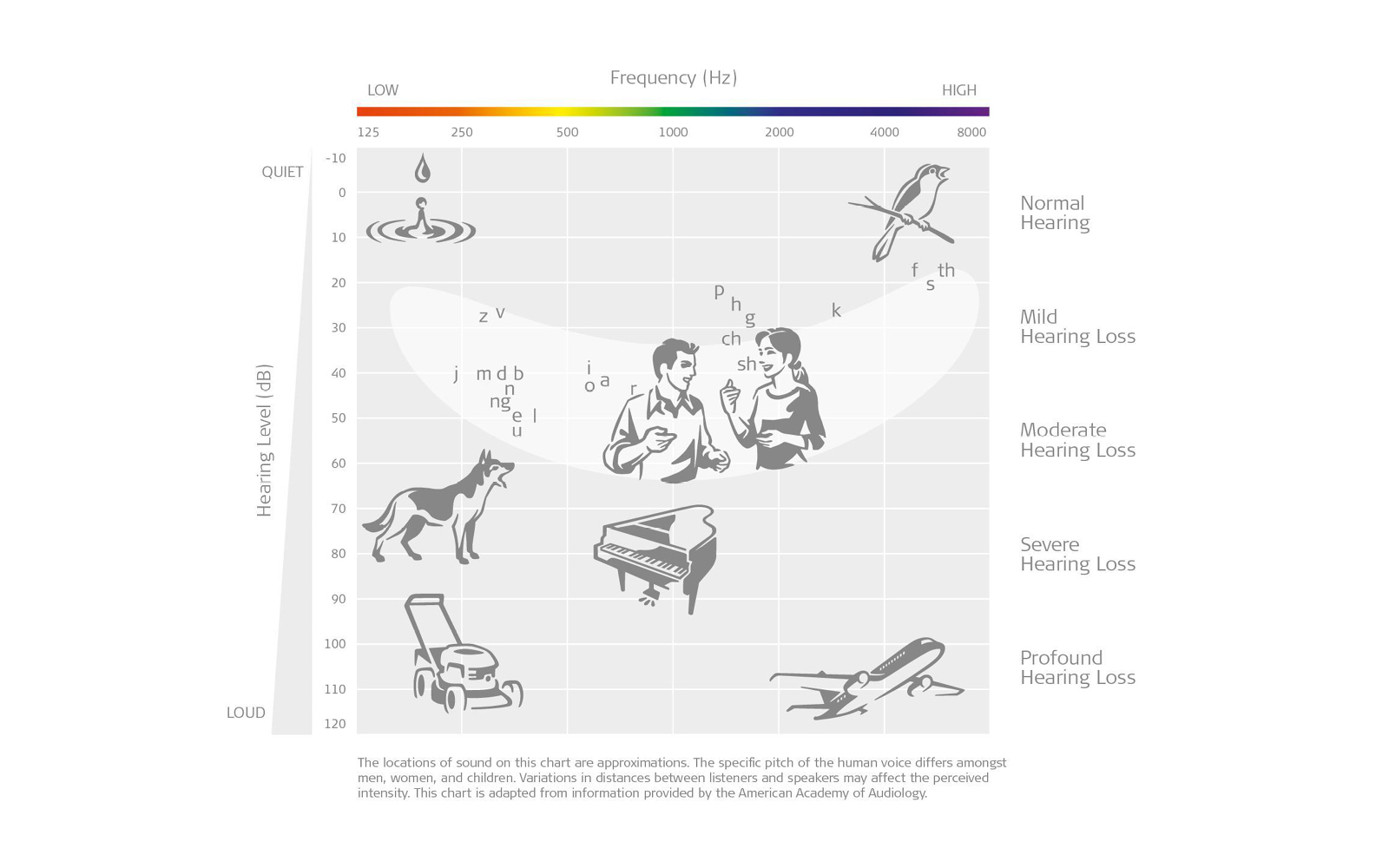
The results of this comprehensive evaluation are visually represented on an audiogram, often referred to as a "hearing chart." This graphical representation maps the individual’s hearing thresholds across the spectrum of human hearing, from low-frequency sounds (like the rumble of thunder) to high-frequency sounds (like a bird’s chirp). Crucially, the audiogram also illustrates the typical range of decibel levels for common speech sounds. This placement is significant because many everyday sounds, particularly soft consonants that convey essential meaning in speech, fall within specific, often higher, frequency ranges. The inability to perceive these sounds can lead to the common experience of hearing voices as "loud but unclear," where the general tone is audible, but the precise details and intelligibility are lost, a phenomenon often associated with sensorineural hearing loss.
Categorizing Auditory Impairment: The Degrees of Hearing Loss
Hearing loss is systematically categorized into distinct degrees, providing a standardized framework for assessing the extent of reduced hearing sensitivity. While the precise decibel (dB HL) cut-off points for each category can exhibit minor variations across different audiological guidelines, the general interpretation and impact on daily life remain remarkably consistent. These degrees are essential for guiding appropriate interventions and technological solutions.
Normal/Typical Hearing: Individuals with normal hearing can perceive sounds at 25 dB HL or better. This means they can clearly hear most everyday speech and environmental sounds without difficulty. Soft conversations, even in moderately noisy environments, are generally understood with ease. This level of auditory acuity is fundamental for seamless communication and engagement with the world.
Mild Hearing Loss: This category encompasses individuals whose hearing thresholds fall between 26 and 40 dB HL. At this level, soft or distant speech may be challenging to discern, and conversations in environments with background noise demand significantly more listening effort. Everyday scenarios like struggling to follow a quiet conversation in a crowded restaurant or missing nuances in a busy café can become common occurrences. While not immediately debilitating, mild hearing loss can lead to increased fatigue and a sense of social withdrawal if left unaddressed.
Moderate to Moderately Severe Hearing Loss: This classification covers a range from 41 to 60 dB HL. Individuals in this group often experience normal conversational speech as muffled or indistinct. Group discussions and environments with significant background noise become particularly challenging, requiring heightened concentration and often leading to misinterpretations or missed information. A common indicator is the tendency to turn up the volume on televisions or telephones to levels that may be uncomfortable for others. This degree of hearing loss can begin to impact professional interactions and social engagement if not properly managed.

Severe Hearing Loss: Falling within the range of 61 to 80 dB HL, severe hearing loss means that only very loud sounds, such as traffic noise or the operation of a vacuum cleaner, are clearly audible. Understanding everyday speech without significant amplification becomes extremely difficult. Even nearby conversations at a normal volume may go unheard, necessitating a greater reliance on visual cues and potentially leading to a significant reduction in spontaneous communication.
Profound Hearing Loss: At the most severe end of the spectrum, profound hearing loss is characterized by thresholds of 81 dB HL or greater. Individuals with profound hearing loss may only perceive extremely loud sounds, such as a fire alarm or a door slamming. In such cases, effective communication often relies heavily on visual cues, lip-reading, and powerful assistive listening devices, including advanced hearing implants. This level of hearing loss represents a significant barrier to auditory communication as it is typically understood.
The Lived Experience: Everyday Impact of Hearing Loss
The real-world consequences of different degrees of hearing loss are multifaceted, influenced not only by the measured severity but also by the complexity of the listening environment.
For those with mild hearing loss, the challenges often manifest subtly. They might find themselves asking for repetitions more frequently, particularly in noisy settings. Environmental sounds that provide important contextual information, such as distant sirens or subtle cues in nature, might be missed. This can lead to a feeling of being slightly out of sync with their surroundings and can contribute to listening fatigue over extended periods.
Individuals experiencing moderate hearing loss encounter more pronounced difficulties. They may struggle to keep up with conversations in group settings, leading to feelings of isolation. The enjoyment of auditory experiences like music or the natural sounds of their environment can be diminished. The effort required to understand speech can be substantial, potentially leading to avoidance of social situations where clear communication is paramount. Increased TV and phone volume are common coping mechanisms, which can sometimes strain relationships.
With severe or profound hearing loss, the impact on daily life is significant and pervasive. Spontaneous conversations become exceptionally challenging, and understanding speech without strong amplification or alternative communication strategies becomes nearly impossible. This can profoundly affect social interactions, employment opportunities, and overall quality of life. A reliance on visual cues, such as lip-reading, becomes essential for navigating the auditory world. The potential for social isolation is high if appropriate support and technology are not utilized.
Recognizing the Signs and Seeking Professional Guidance
Identifying changes in hearing is the crucial first step toward addressing potential issues. If any of the described symptoms resonate, scheduling a professional hearing test is the most prudent course of action. Several indicators warrant prompt consultation with a hearing healthcare professional:
- Difficulty understanding conversations, especially in noisy environments: This is one of the most common early signs.
- Frequently asking others to repeat themselves: This suggests that soft or distant speech is being missed.
- Muffling of sounds or speech: A perception that sounds are not as clear as they used to be.
- Increasing the volume of the television or radio: A common compensatory behavior.
- Experiencing ringing or buzzing in the ears (tinnitus): While not always indicative of hearing loss, it can be a related symptom.
- Withdrawal from social situations: This can be a consequence of the fatigue and frustration associated with trying to communicate.
- Family members or friends noticing hearing difficulties: External observations can be valuable in recognizing changes.
A comprehensive hearing evaluation performed by a qualified audiologist or ENT specialist provides an accurate diagnosis and clear interpretation of results. This professional assessment is vital for understanding not only the degree of hearing loss but also its potential type and cause, which informs the most effective treatment strategy.
While an online hearing test can offer an initial indication and raise awareness, it is crucial to remember that it is not a substitute for a professional audiological examination. These online tools can be a valuable starting point for self-assessment and encourage individuals to seek professional help if concerns are identified.
Tailored Solutions: Treatment Options for Every Degree
The landscape of hearing loss management offers a range of solutions designed to meet the diverse needs of individuals across all degrees of auditory impairment. The optimal treatment plan is always individualized, taking into account the specific hearing test results, personal communication goals, and professional recommendations.
For mild-to-moderate hearing loss, the primary treatment options often involve:
- Hearing Aids: These sophisticated electronic devices amplify sound, making it easier to hear and understand speech. Modern hearing aids come in various styles and feature advanced technologies to adapt to different listening environments, such as noise reduction and directional microphones.
- Assistive Listening Devices (ALDs): These devices can supplement hearing aids or be used independently. Examples include personal amplifiers, amplified telephones, and loop systems in public venues, all designed to improve audibility in specific situations.
- Auditory Training: This involves exercises and strategies to help individuals better interpret and utilize auditory information, enhancing their ability to understand speech, especially in challenging listening environments.
When addressing severe-to-profound hearing loss, more advanced interventions may be necessary:

- Powerful Hearing Aids: For some individuals with severe hearing loss, specially designed, high-gain hearing aids can provide significant audibility.
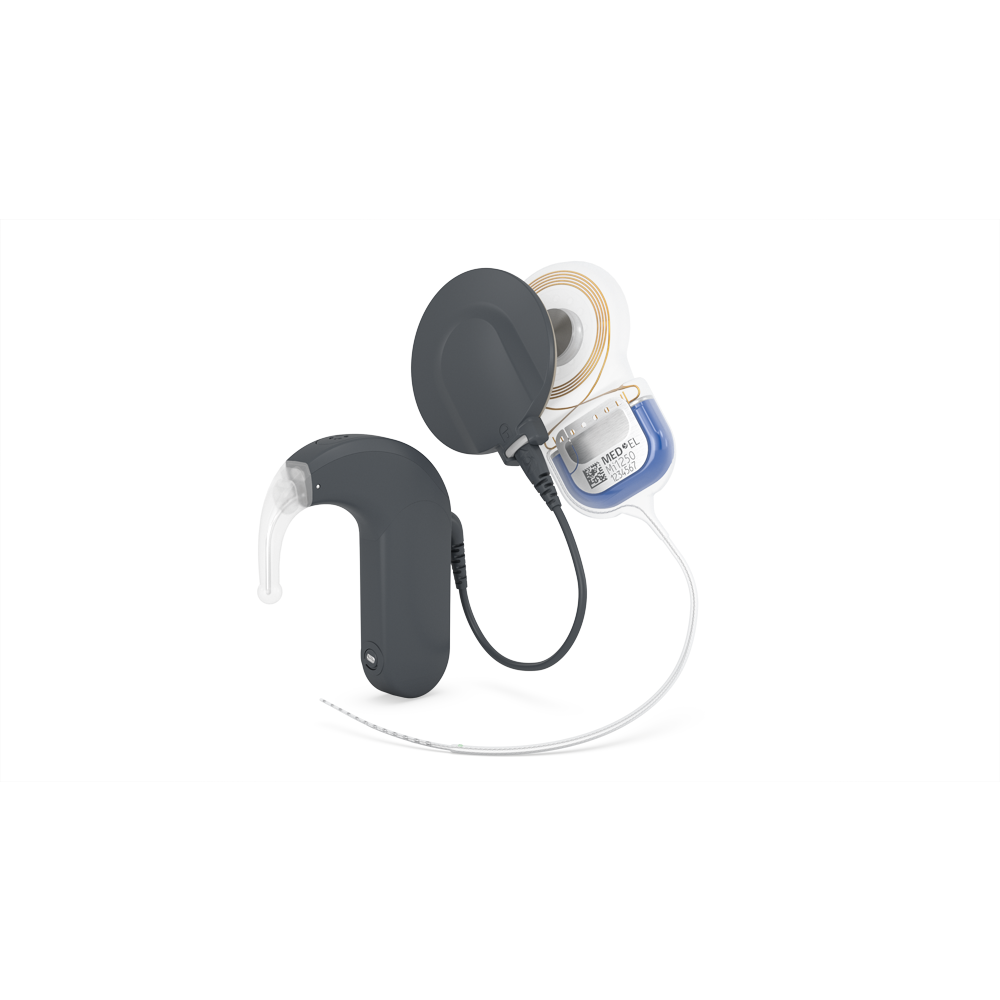
- Cochlear Implants: For those with profound hearing loss where hearing aids offer limited benefit, cochlear implants offer a transformative solution. These surgically implanted devices bypass damaged parts of the inner ear and directly stimulate the auditory nerve, providing a sense of sound. MED-EL is a leading provider of cochlear implant systems, offering a range of technologies designed to optimize hearing outcomes.
- Bone Conduction Implants: These devices are particularly beneficial for individuals with conductive hearing loss or single-sided deafness, where sound is transmitted through the bones of the skull to the inner ear.
- Communication Strategies and Rehabilitation: Alongside technological solutions, comprehensive communication strategies and rehabilitation programs are essential for maximizing the benefits of any intervention and empowering individuals to engage fully in communication.
The Path Forward: Embracing Support and Innovation
The overarching message for anyone experiencing changes in their hearing is one of hope and empowerment. Support is available for individuals at every stage of hearing loss, and technological advancements continue to expand the possibilities for improving auditory function and quality of life.
If you suspect changes in your hearing, or if you have received hearing test results that you do not fully understand, taking proactive steps is crucial. Consulting with a hearing healthcare professional is the most direct route to obtaining accurate information and exploring personalized solutions. They can guide you through the complexities of your diagnosis and present the most appropriate treatment options.
Understanding the degrees of hearing loss is not merely an academic exercise; it is the foundational step toward identifying and implementing the right strategies to support your hearing health and maintain your connection to the world around you. The journey to better hearing is a personal one, and with the right knowledge and support, individuals can navigate their hearing loss journey with confidence and achieve optimal outcomes.
The ongoing dedication to research and development in audiology and hearing implant technology by organizations like MED-EL underscores a commitment to enhancing the lives of individuals affected by hearing loss. This commitment fosters a future where every degree of hearing loss can be effectively managed, enabling individuals to live full, communicative, and engaged lives.