

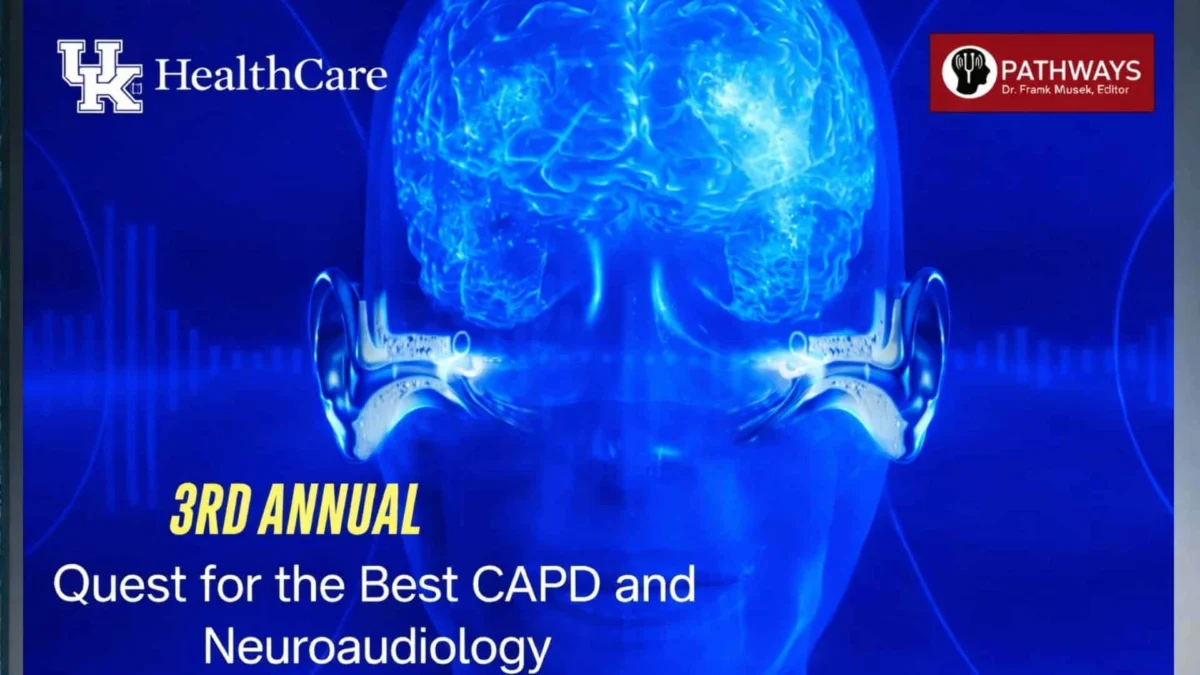
The complex and often misunderstood realm of Central Auditory Processing Disorder (CAPD) is poised for an in-depth exploration at the third annual "Quest for the Best in CAPD and Neuroaudiology" Pathways Symposium. Scheduled as a virtual event on March 28th, this significant gathering aims to illuminate the historical progression and future directions of CAPD assessment and management, offering critical insights for both seasoned professionals and emerging scholars in audiology. Hosted by Bob Traynor of "This Week in Hearing," the symposium will feature a distinguished panel of experts, led by the renowned Dr. Frank Musiek, who will collectively navigate the intricate journey of understanding central auditory function and dysfunction.
Understanding Central Auditory Processing Disorder (CAPD)
Central Auditory Processing Disorder (CAPD), sometimes referred to as Auditory Processing Disorder (APD), is a neurological condition where the brain struggles to process sounds despite normal peripheral hearing. Individuals with CAPD often report difficulties understanding speech, especially in noisy environments, localizing sounds, following multi-step directions, and distinguishing similar-sounding words. These challenges are not attributable to hearing loss, intellectual disability, or attention deficits, though CAPD can co-occur with these conditions. Instead, the issue lies in how the central nervous system utilizes auditory information.
The prevalence of CAPD is estimated to affect approximately 5% of school-aged children and a significant portion of the adult population, particularly older adults. In children, CAPD can profoundly impact academic performance, language development, and social interactions, often leading to mislabeling as having attention deficits or learning disabilities. For adults, it can hinder professional communication, social engagement, and overall quality of life. The subjective nature of its symptoms and the historical lack of universally standardized diagnostic criteria have long contributed to its complexity and frequent misdiagnosis or underdiagnosis, making continuous education and research in this field paramount.
A Historical Lens on Audiological Progress
The symposium’s core theme revolves around the evolution of CAPD assessment and management, tracing its roots from foundational concepts to contemporary clinical applications. Dr. Frank Musiek, a recognized authority in neuroaudiology, emphasized the importance of revisiting and reinforcing key principles that may have been overlooked or forgotten over decades of practice. "We came to the conclusion that one of the best things we could do is highlight some of the things that people have either forgotten about or perhaps never learned that have been key ingredients to appropriate CAPD and neuroaudiology assessment and management," Dr. Musiek stated during his interview with Bob Traynor.

This historical perspective dates back to critical milestones such as Netto Boka’s seminal contributions to central auditory testing in 1954. Boka’s work laid the groundwork for understanding how the brain processes auditory information, setting the stage for subsequent advancements. Another pivotal moment came in 1959 when audiologist Raymond Carhart articulated a fundamental principle: "if the audiogram does not match the symptoms, you must look further." This assertion, decades old, remains profoundly relevant today, underscoring the necessity for clinicians to investigate beyond peripheral hearing thresholds when patients present with persistent hearing complaints, particularly difficulties in understanding speech in complex listening environments, despite having normal or near-normal audiograms. This often points towards a central auditory deficit, necessitating a comprehensive neuroaudiological evaluation.
Symposium Structure: A Comprehensive Four-Part Journey
The "Quest for the Best in CAPD and Neuroaudiology" symposium is meticulously structured into four distinct, yet interconnected, segments, designed to provide a holistic understanding of the disorder. This four-hour virtual event will offer a blend of theoretical foundations, clinical applications, and practical case studies.
The first segment, led by Dr. Frank Musiek, will delve into the evolution of behavioral assessment methodologies. This section will cover the historical development of test procedures, critical interpretation strategies, and the underlying psychophysical and neurological principles that govern central auditory function. Participants will gain insights into how various behavioral tests have contributed to our understanding of CAPD and how to apply them effectively in clinical practice.
Following this, Dr. Jay Hall will present on the crucial role of electrophysiology in CAPD assessment and neuroaudiology. Electrophysiological measures, such as Auditory Brainstem Response (ABR) and Cortical Auditory Evoked Potentials (CAEPs), provide objective insights into the integrity and function of the central auditory pathways. Dr. Hall’s presentation will highlight how these advanced techniques complement behavioral testing, offering a more complete picture of auditory processing deficits and aiding in differential diagnosis.
The third major component will focus on management and rehabilitation strategies for CAPD problems, with insights provided by Bill Keith. This segment is vital for translating diagnostic findings into actionable interventions. It will explore a range of rehabilitative approaches, including auditory training programs, environmental modifications, assistive listening devices, and compensatory strategies, equipping clinicians with practical tools to improve patient outcomes and enhance their daily communication abilities.
Finally, Dr. Jen Shinn, co-director of the symposium from the University of Kentucky, will lead a segment dedicated to case studies. This practical component will be particularly valuable, illustrating real-world referral patterns, diagnostic challenges, and successful intervention strategies. Through detailed case presentations, attendees will learn how to navigate complex clinical scenarios, integrate various assessment findings, and formulate individualized management plans, reinforcing the critical link between research and clinical application.

Expert Voices and Collaborative Vision
The symposium boasts a faculty with extensive experience and profound expertise in CAPD and neuroaudiology. Dr. Frank Musiek, editor of "Pathways for Hearing" at Hearing Health and Technology Matters and co-coordinator with the University of Kentucky, is a towering figure in the field. His career spans decades of groundbreaking research in electrophysiology and central auditory processing, leading to the discovery and implementation of numerous tools now standard in assessing the auditory brainstem and central auditory pathways. With over 140 refereed articles, 220 invited lectures, 300 papers, four developed clinical audiologic tests, nine books, and 35 book chapters, Dr. Musiek’s contributions have fundamentally shaped our understanding of the human auditory system. His dedication to educating students and clinicians is a hallmark of his career, making him an ideal lead for this educational initiative.
Bob Traynor, the host of "This Week in Hearing," brings his own vast experience as a hearing industry consultant, trainer, professor, and author. As an adjunct faculty member at multiple universities, including the University of Florida and the University of Colorado, Dr. Traynor has decades of experience in teaching and training clinicians, particularly in hearing and tinnitus rehabilitation. His role as host ensures a guiding hand through the complex discussions, facilitating a clear and engaging learning environment.
The collaborative spirit among the faculty members is a central tenet of the symposium. As Dr. Musiek noted, the symposium consistently emphasizes the synergy between basic science and clinical practice. "Doing the test is one thing, but the ability to interpret it appropriately requires understanding the physiology and neurology behind it," he explained. This emphasis on foundational knowledge is crucial for addressing what he identifies as historical misunderstandings within the field. The collective wisdom of Dr. Shinn, Dr. Hall, and Bill Keith, each contributing their specialized knowledge, promises a well-rounded and deeply informative program.
Broader Impact and Implications for the Audiological Community
The "Quest for the Best in CAPD and Neuroaudiology" symposium carries significant implications across various facets of the audiological profession and for patients worldwide.
For Clinicians: The symposium offers an invaluable opportunity for practicing audiologists to refine their diagnostic skills and enhance their management strategies for CAPD. By delving into the nuances of behavioral and electrophysiological testing, and exploring effective rehabilitation techniques, clinicians can improve diagnostic accuracy, reduce misdiagnoses, and provide more targeted and effective interventions. The focus on real-world case studies will directly address the challenges of complex referral patterns and equip clinicians to better serve patients who present with normal audiograms but persistent and debilitating hearing complaints, thereby reducing the instances where such patients are dismissed without appropriate follow-up.

For Students and Emerging Professionals: A particular emphasis is placed on encouraging student attendance, with a reduced registration fee of $15. Dr. Musiek highlighted that while AuD programs provide exposure to CAPD, it is often insufficient to achieve true proficiency. This symposium serves as a critical supplement, offering a deeper dive into the complexities of CAPD that are essential for future audiologists. By engaging with leading experts and comprehensive content, students can build a stronger foundation in neuroaudiology, preparing them for the nuanced demands of clinical practice and fostering a new generation of specialists in this challenging area.
For Patients and Public Health: Ultimately, the advancements in professional understanding fostered by such symposiums directly benefit patients. Improved diagnostic precision means fewer individuals suffering from CAPD will go undiagnosed or receive inappropriate care. More effective management and rehabilitation strategies will lead to better communication outcomes, enhanced academic and professional performance, and an overall improvement in the quality of life for those affected by CAPD. Addressing the profession’s responsibility to "look further" when symptoms don’t align with audiometric results is a vital step towards patient advocacy and comprehensive care.
Advancing the Field of Audiology: The recurring nature of this symposium, now in its third year, signifies a sustained commitment to advancing the collective knowledge base in CAPD and neuroaudiology. By fostering dialogue between researchers and clinicians, revisiting historical insights, and exploring cutting-edge techniques, the event contributes to the ongoing evolution of audiological science and practice. It encourages further research into the underlying mechanisms of CAPD, the development of more standardized diagnostic tools, and the innovation of new rehabilitative approaches, thereby solidifying CAPD as a central and well-understood area within audiology.
The "Quest for the Best in CAPD and Neuroaudiology" Pathways Symposium is scheduled for March 28th, commencing at 12 PM Eastern Time (11 AM Central, 10 AM Mountain, 9 AM Pacific). As a virtual event, it offers convenient access to professionals and students globally. Registration is priced at $45 for professionals and $15 for students. For further information and registration details, interested parties can contact [email protected]. This event represents a crucial platform for deepening the understanding of a critical audiological condition, promising to equip attendees with the knowledge and tools necessary to navigate the complexities of CAPD with greater confidence and expertise.