

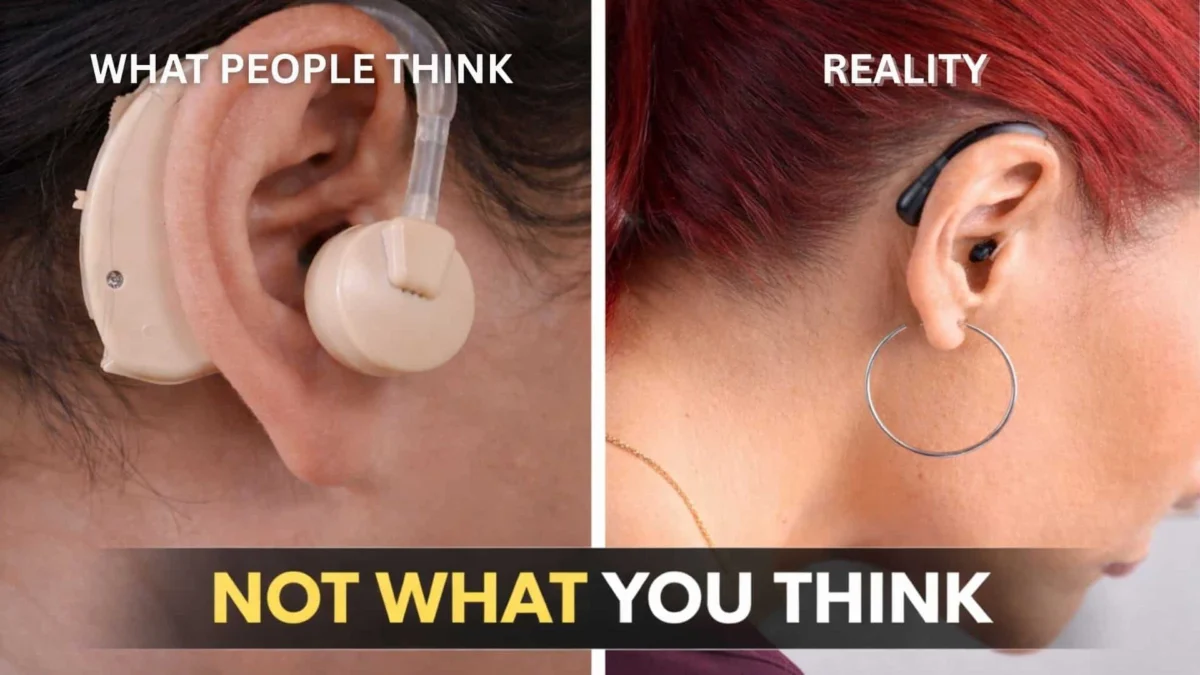
Hearing loss impacts millions worldwide across all age demographics, yet its presence in mainstream media remains startlingly scarce and frequently misconstrued. Recent comprehensive data from a multi-country YouGov survey has brought into sharp focus the pervasive absence of hearing aids and cochlear implants in everyday cultural narratives, alongside the often-inaccurate and outdated portrayals that reinforce damaging stereotypes. This significant disconnect between reality and representation not only skews public perception but also profoundly influences individuals’ willingness to acknowledge their own hearing challenges and seek timely intervention.
The findings, discussed in depth by Andrew Bellavia on "This Week in Hearing" with Ceri Whittaker, Senior External Relations Manager at GN, and John Lucchese, founder of NS Audiology, underscore a critical public health issue. Their conversation, building upon the insights gleaned from the GN-commissioned YouGov survey, delves into how media representation — or the lack thereof — actively shapes societal views of hearing loss, from perpetuating anachronistic stereotypes to fostering a sense of invisibility for those affected. Improving visibility, they argue, is not merely a matter of social equity but a strategic imperative to encourage earlier recognition and support for hearing health.
The Stark Reality: Survey Data Unveils Media Blind Spots
The YouGov survey, conducted across Australia, the United Kingdom, and the United States, meticulously gathered responses from 3,000 individuals, including nearly 1,000 people living with hearing loss. The objective was dual-pronged: to quantify the frequency with which hearing loss is depicted in general media and to assess the subsequent impact on public perception and behavior. The results, strikingly consistent across all three diverse markets, paint a concerning picture of media neglect.
In Australia, a significant 41% of respondents could not recall a single instance in the preceding 12 months where they had seen someone wearing a hearing aid or cochlear implant in mainstream media, unless the content was explicitly focused on hearing loss or hearing technology. This alarming figure escalated to 49% in the UK and a staggering 55% in the US, indicating a widespread global pattern of exclusion. These statistics are particularly poignant because they reflect the observations of the general public, not just those directly affected by hearing loss, highlighting a societal blind spot.
Beyond mere absence, the quality of representation also proved deeply problematic. A substantial 77% of Australians with hearing loss reported that media portrayals misrepresent them, often depicting them as elderly, frail, or dependent. This stands in stark contrast to the lived realities of many, as respondents in this demographic were typically aged 20 to 60, actively working, raising families, and leading vibrant lives. Such reductive and ageist depictions alienate those who do not fit the narrow stereotype, making it difficult for them to identify with characters or narratives that could otherwise normalize their condition.
The implications of this representational vacuum extend directly to public health. Over half of Australians surveyed acknowledged that the scarcity of everyday media representation makes it harder for individuals to recognize hearing loss in themselves or others, thereby delaying the crucial step of seeking professional help. As Ceri Whittaker of GN highlighted, "If you don’t see yourself, it’s difficult to recognize it. And when hearing loss is portrayed, it’s often unrealistic—elderly, frail, dependent—which makes it harder for people to relate and take action." This sentiment was echoed by Andrew Bellavia, who noted that such negative portrayals often create an aversion, as people do not want to associate themselves with the stigmatized image.
The Global Burden of Hearing Loss: A Silent Epidemic
The media’s misrepresentation and underrepresentation become even more critical when viewed against the backdrop of the global prevalence of hearing loss. According to the World Health Organization (WHO), over 1.5 billion people worldwide experience some degree of hearing loss, with at least 430 million requiring rehabilitation services. Projections indicate that by 2050, nearly 2.5 billion people will have some level of hearing loss, and at least 700 million will require hearing rehabilitation. This makes hearing loss one of the most widespread chronic health conditions globally.
Contrary to popular belief, hearing loss is not exclusively a condition of old age. While prevalence does increase with age, a significant portion of the affected population includes children, adolescents, and working-age adults. Approximately 34 million children worldwide live with disabling hearing loss. The causes are diverse, ranging from genetic factors, congenital infections, and birth complications to chronic ear infections, noise exposure, and ototoxic drugs.
The societal and economic costs of untreated hearing loss are immense. Globally, unaddressed hearing loss is estimated to cost USD $980 billion annually due due to direct healthcare costs (excluding the cost of hearing devices), loss of productivity, and broader societal impacts. Individuals with untreated hearing loss often face communication difficulties, social isolation, cognitive decline, mental health issues such as depression and anxiety, and reduced educational and employment opportunities. Early intervention and effective management are crucial for mitigating these negative outcomes, making the normalization of hearing devices and the timely seeking of support paramount.
Industry Responds: GN’s "New Norm" Campaigns
Recognizing the urgent need to challenge prevailing stereotypes and foster a more inclusive narrative, the GN Group, a global leader in hearing technology, launched its "New Norm" initiative. Ceri Whittaker, a veteran of over two decades in the hearing aid business, leads the communications efforts around these campaigns. The initial "New Norm" campaign was launched two years prior to the current discussion, coinciding with World Hearing Day, and aimed to proactively counter stigmatizing messages.
The latest iteration, "New Norm 2," is directly informed by the robust data gathered from the multi-country YouGov survey. "We wanted to find out two things, essentially," Whittaker explained. "We wanted to see how often people see hearing loss represented in the general media and what impact that then has on how we think and how we behave." The survey results, particularly the consistent findings across Australia, the UK, and the US, provided compelling evidence that the media’s portrayal directly hinders public recognition and the seeking of support.

The "New Norm 2" campaign builds on the foundation of its predecessor by advocating for realistic, diverse, and positive portrayals of individuals using hearing technology. The campaign emphasizes that modern hearing aids and cochlear implants are sophisticated, often discreet, devices that enable people of all ages to live full, active, and connected lives. It seeks to highlight the vast spectrum of experiences within the hearing loss community, moving beyond the tired tropes of infirmity and dependence. By featuring individuals who are professionals, parents, artists, and athletes, the campaign strives to dismantle the negative associations that have historically deterred many from embracing hearing solutions.
Perspectives from the Front Lines: The Audiologist’s View
The impact of media misrepresentation is acutely felt in clinical settings, where audiologists routinely encounter patients grappling with the stigma associated with hearing loss. John Lucchese, founder of NS Audiology in Sydney, Australia, with nearly two decades of clinical experience, provided an invaluable perspective on how these broader societal perceptions manifest in his daily practice.
Lucchese emphasized that many patients arrive at his clinic having delayed seeking help for years, often due to internalised shame or a reluctance to be perceived as "old" or "disabled." He noted that the media’s stereotypical portrayals contribute significantly to this hesitancy. "When people only see hearing aids associated with extreme old age or frailty, it creates a barrier," Lucchese observed. "They don’t see themselves in those images, even if they’re struggling significantly with their hearing. It makes them think, ‘I’m not like that, so my problem can’t be hearing loss,’ or ‘I don’t want to be seen like that, so I’ll put off treatment.’"
He further explained that this reluctance extends beyond initial consultation, often influencing patient adherence to treatment plans and their willingness to wear their devices publicly. Patients, particularly younger individuals or those in active professional roles, express concerns about how hearing aids might affect their social standing or career prospects. "We have to spend a lot of time in consultations not just on the technical aspects of hearing aids, but on deconstructing years of societal conditioning," Lucchese stated. "Patients need reassurance that modern devices are not only effective but also often invisible or even fashionable, and that wearing them signifies proactive health management, not infirmity."
The audiologist’s role, therefore, transcends mere diagnosis and fitting. It involves extensive counseling to combat the psychological burden of stigma, a burden largely exacerbated by the lack of realistic media representation. Lucchese strongly advocates for media to showcase the diversity of people with hearing loss – from children to young professionals and active seniors – to normalize the use of hearing technology and encourage earlier intervention, which is critical for better outcomes.
Shifting Perceptions: The Power of Media and Normalization
The power of media in shaping societal norms and perceptions cannot be overstated. From fashion trends to social attitudes, what is seen and heard in popular culture significantly influences public consciousness. For a condition as prevalent as hearing loss, and for devices as life-altering as hearing aids and cochlear implants, accurate and frequent media representation is not just desirable; it is essential for public health.
Increased visibility of hearing devices in everyday contexts – on television shows, in movies, in advertisements, and across social media – can contribute to a profound cultural shift. When children see characters with hearing aids as heroes or peers, it normalizes the experience for them and their families. When adults see successful professionals or vibrant individuals confidently wearing their devices, it challenges the outdated notion that hearing loss equates to weakness or diminished capacity.
This normalization process can lead to several positive outcomes. Firstly, it can significantly reduce the stigma associated with hearing loss, making individuals more comfortable acknowledging their symptoms and seeking help. Secondly, it can educate the broader public about the prevalence and diversity of hearing loss, fostering greater empathy and understanding. Thirdly, it can encourage innovation within the hearing technology industry, as devices become more integrated into modern lifestyles and design aesthetics. Finally, and perhaps most crucially, it can accelerate the rate at which people seek care, leading to earlier diagnosis and intervention. Early intervention is critical not only for preserving hearing function but also for mitigating the cognitive decline and social isolation often linked to untreated hearing loss.
Path Forward: Collective Responsibility for a More Inclusive Narrative
The findings of the YouGov survey and the insights shared by industry leaders like Ceri Whittaker and clinical practitioners like John Lucchese underscore a collective responsibility. Media producers, advertisers, content creators, and the hearing health industry itself all have a role to play in constructing a more accurate and inclusive narrative around hearing loss.
For media outlets, this means a conscious effort to integrate characters with hearing loss into diverse roles, ensuring that their hearing devices are visible but not necessarily the sole focus of their identity. It means moving beyond tokenistic or stereotypical portrayals to present authentic, multi-dimensional individuals. For advertisers, it involves featuring people with hearing aids in mainstream product campaigns, further embedding these devices into the fabric of everyday life.
The hearing health industry, spearheaded by organizations like GN with its "New Norm" campaigns, must continue to advocate for these changes, providing data, resources, and compelling narratives that demonstrate the positive impact of hearing technology. Collaborative efforts between industry, advocacy groups, and media organizations can facilitate workshops, provide consultation, and offer guidance on best practices for representation.
Ultimately, the goal is to reach a point where seeing a hearing aid or cochlear implant in mainstream media is no longer a notable event, but an unremarkable aspect of a diverse and inclusive portrayal of humanity. This normalization will not only empower individuals with hearing loss to live more fully but will also contribute to a healthier, more understanding, and more accessible society for all. The journey towards this "new norm" is ongoing, driven by data, advocacy, and the unwavering commitment to dismantle barriers to hearing health.