

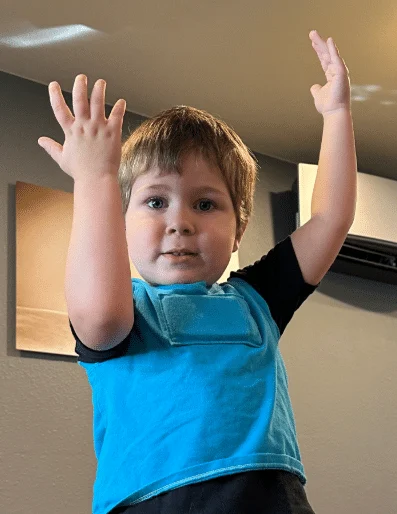
The developmental trajectory of a child’s language skills is fundamentally shaped by the quality and quantity of the verbal interactions they experience during their first three years of life. As researchers and clinicians continue to emphasize the "word gap" and the vital role of conversational turns, technology has emerged as a cornerstone for parental guidance. Among these innovations, the Language Environment Analysis (LENA) device has become a gold standard in early intervention, providing families with empirical data to cultivate language-rich home environments. Recently, the success of families participating in the Listen and Talk B3 program has highlighted the transformative potential of this technology, showcasing how objective feedback can empower caregivers to bridge developmental gaps.
Understanding the LENA Technology
The LENA system functions as a sophisticated audio processor designed to capture and analyze the daily language environment of a child. Unlike simple audio recorders, the device utilizes proprietary software to distinguish between adult speech, child vocalizations, and background noise. It then calculates "conversational turns"—the back-and-forth exchanges between a child and an adult—which are widely considered by developmental psychologists to be a stronger predictor of future language proficiency than the total number of words a child hears.
While the technology was initially calibrated for English and Spanish, its utility has expanded globally. It has been validated for use in several languages, including French, Mandarin, Korean, and Swedish. For families who speak languages not yet fully validated, the system remains a highly effective analytical tool. Experts note that even if the absolute word count varies slightly due to linguistic nuances, the device maintains a consistent error rate. This consistency allows practitioners and caregivers to track progress, identify trends, and measure improvements over time, effectively democratizing access to high-quality language data regardless of the primary language spoken in the home.
A Case Study in Success: The Wright Family
The efficacy of the LENA device was recently exemplified by the Wright family, who participated in the Listen and Talk B3 program. Throughout their tenure in the program, the family completed 19 recordings, setting a new benchmark for engagement. This longitudinal approach allowed them to move beyond anecdotal observations and into the realm of data-driven parenting.
For the Wrights, the most significant revelation provided by the LENA device was the visualization of their daily communication habits. By reviewing the reports, they were able to identify "high-value" interaction windows. For instance, the data revealed that their most productive conversational exchanges were occurring during mealtimes. By analyzing these specific timestamps, the parents were able to identify the environmental and behavioral factors that fostered these high-quality interactions—such as the absence of background television noise or specific seating arrangements—and replicate those conditions throughout other parts of the day.
Data-Driven Parenting: Moving Beyond Intuition
The integration of LENA data into the daily routine acts as a behavioral prompt. For many parents, the presence of the device serves as a reminder to slow down and prioritize active listening. In a high-paced, modern household, intentionality in communication often falls by the wayside. The Wrights reported that the mere act of using the recorder encouraged them to be more mindful of their tone, the frequency of their questioning, and their willingness to wait for their child to respond.
The data provided by the device is multidimensional. It categorizes the auditory landscape of the home into granular segments:
- Conversational Turns: The primary metric for tracking social-communicative development.
- Adult Word Count: A measure of the total linguistic input provided to the child.
- Background Noise Levels: A critical factor in assessing the auditory clarity of the child’s environment, which is particularly important for children with hearing loss or auditory processing challenges.
By reviewing this data, parents can make micro-adjustments to their environment. For example, if a report indicates a high volume of background noise during a specific period, a caregiver might choose to move a play session to a quieter room, thereby increasing the signal-to-noise ratio and improving the child’s ability to process speech.

Insights from the Frontline: Specialist Perspectives
Shelby Vincent, M. Ed., CED, and Meghan Trocinski, M.S., CCC-SLP, both Birth to Three Specialists at Listen and Talk, emphasize that the value of LENA lies in its ability to remove the guesswork from early intervention. In many traditional clinical settings, therapists rely on parent reports, which are often subject to memory bias or an incomplete understanding of what constitutes a "conversational turn."
"When we provide parents with objective data, we are providing them with a map," says Trocinski. "It shifts the conversation from ‘I think I’m doing a good job’ to ‘I can see that my efforts at 4:00 PM are yielding more engagement than at 10:00 AM, and I can now adjust my routine to build on that success.’"
The data also serves to validate the efforts of parents, who often feel overwhelmed by the responsibilities of early intervention. Seeing a graph that demonstrates a steady increase in conversational turns provides a psychological boost, confirming that their active involvement is producing tangible, measurable results.
Broader Implications for Early Childhood Education
The application of LENA technology extends beyond the home and into the broader landscape of public health and early education policy. Studies have consistently shown that the first three years of life are a period of unparalleled neuroplasticity. During this window, the brain is primed for language acquisition. When this window is supported by high-frequency, high-quality verbal input, the child is better prepared for the cognitive demands of formal schooling.
The implications for addressing systemic educational disparities are significant. By providing families in diverse socioeconomic backgrounds with tools to monitor and improve language input, programs like Listen and Talk B3 are effectively leveling the playing field. The data suggests that when caregivers are equipped with the right information, they can significantly alter the trajectory of their child’s development, regardless of their own educational or professional background.
Addressing Barriers and Encouraging Adoption
Despite the clear benefits, some families may initially feel intimidated by the prospect of "data-tracking" their home life. However, graduates of the program, including the Wrights, are quick to dispel these concerns. They emphasize that the device is user-friendly and that the granularity of the data—which many initially feared would be invasive—is actually its greatest strength. The ability to see exactly where and how they can improve makes the process of parenting feel more like a manageable, actionable project rather than a vague, abstract goal.
Furthermore, the accessibility of the LENA device through public programs removes financial barriers to entry. By offering these resources as part of a comprehensive support package, organizations are ensuring that technology is not a luxury for the few, but a standard component of developmental care.
Future Directions
As artificial intelligence and machine learning continue to evolve, the capacity for tools like LENA to provide even deeper insights is growing. Future iterations of this technology may include real-time feedback loops or more sophisticated analysis of the content of the speech, rather than just the frequency. However, even in its current state, the technology stands as a testament to the power of combining modern engineering with the timeless necessity of human connection.
For parents and caregivers interested in exploring this technology, the first step is to contact a local Birth to Three Specialist. These professionals are trained to interpret the data, guide families through the initial setup, and translate the reports into daily strategies. By moving toward a more data-informed approach to language development, families can ensure that they are providing their children with the strongest possible foundation for the future—one conversation at a time. The success of the Wright family serves as a blueprint for others: with the right tools, the right support, and a commitment to daily engagement, every child can be given the opportunity to reach their full linguistic potential.