

The early years of a child’s life represent a critical window for neurodevelopment, particularly regarding language acquisition. As experts in speech-language pathology and early intervention continue to explore ways to optimize these formative years, the LENA (Language Environment Analysis) device has emerged as a cornerstone technology. By providing objective data on the auditory landscape of a child’s home, LENA is helping families transition from intuitive parenting to evidence-based communication strategies. Recent success stories from the Listen and Talk B3 program illustrate how this technology, which transcends linguistic barriers, is fundamentally changing the trajectory of early childhood language development.
Understanding the LENA Technology and Its Global Applicability
At its core, the LENA device is a compact, wearable digital language processor designed to capture the "conversational turns" that occur between a child and their caregivers. While early iterations of the technology were primarily optimized for English and Spanish, ongoing validation studies have confirmed its utility across a diverse range of languages, including French, Mandarin, Korean, and Swedish.
The implications of this cross-linguistic capability are profound. Even in languages where the automated word-count precision may vary, the device maintains a consistent error rate. This consistency allows practitioners to track longitudinal trends, identifying periods of high-frequency interaction and meaningful engagement. For families regardless of their native tongue, the device provides a reliable mirror of the home environment, enabling caregivers to identify patterns that foster linguistic growth. By focusing on conversational turns—the back-and-forth exchanges that are widely considered the "gold standard" of language learning—LENA empowers parents to cultivate an environment rich in verbal responsiveness.
A Case Study in Success: The Wright Family’s Journey
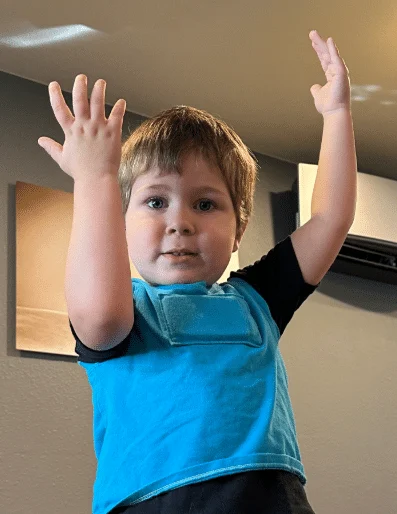
The effectiveness of this technology was recently highlighted by the experience of the Wright family, participants in the Listen and Talk B3 program. Their engagement with the program serves as a model for how data-driven feedback can refine parenting strategies. During their time in the program, the family completed 19 individual recordings, a record-setting benchmark that provided them with a comprehensive dataset of their child’s daily language environment.
For the Wrights, the value of the device lay in its ability to strip away the subjectivity of daily parenting. By reviewing their LENA data, the parents were able to identify "high-value" activities—specific routines, such as mealtimes, where their conversational engagement was at its peak. By isolating these successful moments, the family could analyze the specific variables—such as reduced background noise or increased eye contact—that contributed to the success, effectively reverse-engineering their most productive interactions to apply them to other times of the day.
Chronology of Data-Informed Intervention
The process for families enrolled in the Listen and Talk program follows a structured, evidence-based progression. Upon initiation, families are introduced to the LENA device as a diagnostic tool rather than a corrective one. The chronology of the intervention typically unfolds as follows:
- Baseline Assessment: Families record a standard day to establish a baseline of existing conversational patterns, background noise levels, and adult-to-child word ratios.
- Data Review: Specialists and parents meet to review the generated reports. This phase is critical, as it transforms raw data into actionable insights, such as identifying "dead zones" in the day where language engagement is minimal.
- Strategic Adjustment: Based on the insights, parents implement changes. This may involve turning off televisions or background music to improve the signal-to-noise ratio, or intentionally scheduling "talk-heavy" activities during high-energy periods.
- Iterative Refinement: As families complete subsequent recordings, they track their progress. The data serves as a feedback loop, reinforcing successful habits and highlighting areas that require further modification.
Data-Driven Perspectives on Parental Engagement
The feedback from the Wright family reflects a common theme among participants: the data acts as a form of "auditory accountability." The father, in particular, noted the utility of the hourly breakdown of conversational turns. This granular view allowed him to observe how his son’s responses fluctuated based on external stimuli or specific activity types, providing a level of insight that is rarely captured through observation alone.
The mother emphasized the value of the detailed audio feedback, which provided an objective record of the daily environment. By analyzing metrics related to overlapping conversations and background noise, she was able to adjust her own communication style to ensure her son received clear, unobstructed language input. This level of detail has proven to be a significant departure from traditional parenting guidance, which often relies on qualitative advice rather than quantitative evidence.

The Broader Impact on Early Intervention
The professional consensus among speech-language pathologists is that the quality of the language environment is a primary predictor of future academic and social success. According to researchers, the "30-million-word gap"—a theory suggesting that children from different socioeconomic backgrounds hear drastically different numbers of words by age four—has shifted focus toward the importance of conversational turns over mere word count.
LENA addresses this by focusing on the "serve and return" nature of human interaction. When a child vocalizes and a parent responds, the brain’s neural pathways associated with language are significantly strengthened. By utilizing LENA, programs like Listen and Talk B3 are essentially providing parents with a "fitness tracker" for communication. Just as a step-counter encourages physical activity, the LENA report encourages verbal interaction.
Addressing Barriers and Misconceptions
One of the most persistent hurdles in early intervention is the perceived complexity of new technology. Many parents initially feel intimidated by the prospect of "data-driven parenting." However, participants frequently report that the device is surprisingly user-friendly and that the data is far more accurate and granular than they initially anticipated.
By removing the guesswork, LENA alleviates the anxiety that often accompanies concerns about a child’s development. It shifts the burden from "am I doing enough?" to "here is what is working." This transition is essential for building parental self-efficacy. When parents can see the tangible results of their efforts—whether through an increase in the number of conversational turns or a decrease in distracting background noise—they are more likely to sustain the necessary behaviors that lead to long-term language proficiency in their children.
Implications for the Future of Speech Therapy
The integration of technology into the home-based speech therapy model represents a significant shift in the field of pediatrics and early education. As tools like LENA become more accessible, the standard of care for children with hearing loss or speech delays is evolving.
The future of this field lies in the ability to deliver personalized, objective feedback directly to the family unit. Specialists Shelby Vincent and Meghan Trocinski, both Birth to Three Specialists, underscore that the goal is not perfection, but progress. By leveraging the analytical power of LENA, families can create environments where language is not just present, but intentional and responsive.
For families navigating the complexities of early language development, the message is clear: data is a powerful ally. Whether it is identifying the impact of background noise or recognizing the most effective times for interaction, the LENA device provides the roadmap for success. As more families utilize these resources through programs like Listen and Talk, the collective body of evidence continues to grow, further validating that the most profound impacts on a child’s language journey are often found in the simplest of interactions—one conversation at a time.
For those interested in exploring how such tools might be integrated into their own journey, connecting with a local Birth to Three Specialist remains the most effective first step. By combining the expertise of trained professionals with the precision of modern data analysis, families are better equipped than ever to navigate the critical milestones of early childhood.