

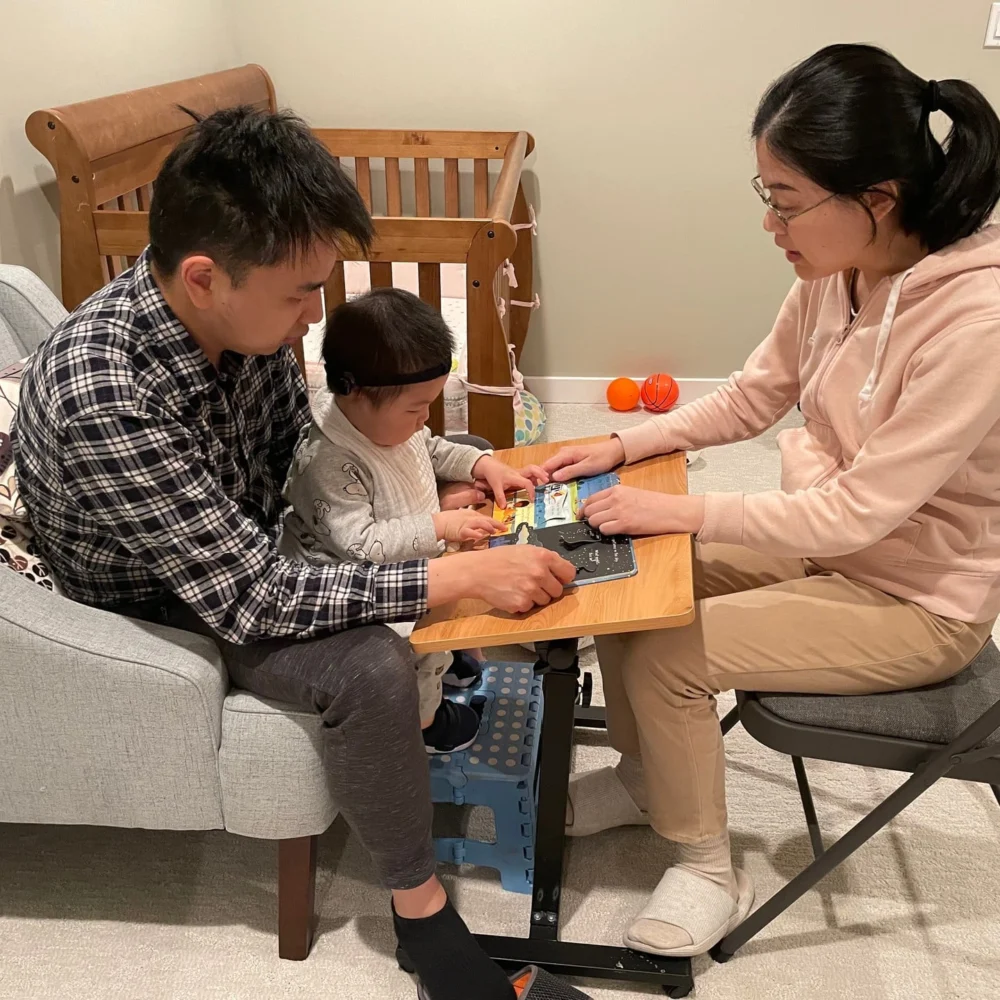
Early childhood intervention for children who are deaf or hard of hearing (DHH) represents one of the most critical frontiers in pediatric development. The window of opportunity for linguistic acquisition during the first three years of life is narrow, making the need for accurate, frequent, and family-centered assessment tools paramount. A recent study conducted by Listen and Talk, a leading organization in early intervention, has provided compelling evidence that the LENA Developmental Snapshot—an electronic, parent-administered assessment—is a highly effective instrument for monitoring language growth in children who are DHH. This discovery addresses a long-standing gap in clinical practice, where traditional standardized assessments have often proven too rigid or infrequent to capture the nuances of a child’s progress in their natural home environment.
The Evolution of Early Intervention Monitoring
Historically, the evaluation of linguistic milestones in infants with hearing loss has relied heavily on clinical settings. Professionals would administer standardized tests, which often required significant time, specialized training, and a controlled environment that rarely reflected the chaotic, authentic reality of a family’s daily life. While these tests provide a snapshot of a child’s performance against normative data, they suffer from limited ecological validity. Because they are labor-intensive, they cannot be administered with the frequency required to track the rapid, week-to-week changes typical of early childhood development.
The current consensus in pediatric audiology and speech-language pathology emphasizes a move toward "authentic assessment." As noted by researchers such as Moeller et al. (2013), best practices dictate that monitoring should be strengths-based and occur at regular intervals. By engaging families as active participants in the assessment process rather than passive observers, practitioners can gain a more accurate understanding of a child’s communication skills. This paradigm shift recognizes that parents are, fundamentally, the primary experts on their child’s unique developmental trajectory.
The Mechanics and Advantages of the LENA Snapshot
The LENA (Language Environment Analysis) Developmental Snapshot emerged as a technological solution to the logistical bottlenecks of traditional testing. Unlike conventional assessments that require a clinician’s presence, the LENA Snapshot is delivered as an electronic questionnaire. This digital-first approach allows for several distinct advantages:
- Ecological Validity: Because it is completed by parents in the home, it measures communication in the child’s natural setting.
- Remote Accessibility: The tool is ideally suited for tele-intervention, a modality that has become increasingly vital in reaching families in rural or underserved regions.
- High-Frequency Monitoring: Unlike traditional tests that might be administered once or twice a year, the LENA Snapshot can be completed as often as once a month.
- Instantaneous Data: Automated scoring provides immediate feedback, enabling parents and therapists to adjust intervention strategies in real-time.
Until the study led by Listen and Talk, the validity of this tool was well-established for children with typical hearing, but its application within the DHH population remained largely anecdotal or under-researched.
A Longitudinal Analysis: The Listen and Talk Study
Since 2018, Listen and Talk has integrated the LENA Snapshot into its birth-to-three program. This implementation has resulted in a robust dataset, allowing for a retrospective analysis of 115 children with bilateral hearing loss. The research team applied strict inclusion criteria to ensure data integrity, focusing on children whose primary language is English, given that the tool’s current validation is most extensive for that language.
The participants ranged in age from 6 to 35 months, with a mean age of 22 months. The results were telling: the average standard score for the cohort was 87.98. While this sits within the "low average" range—defined typically as scores between 85 and 115—the individual variance was significant, with scores spanning from 64 to 128.
This wide distribution is critical to the study’s findings. It confirms that the LENA Snapshot is sensitive enough to capture the broad spectrum of developmental outcomes seen in children with varying degrees of hearing loss and diverse intervention backgrounds. The consistency of these findings with prior research—such as the studies by Ching et al. (2013) and Yoshinaga-Itano et al. (2017)—provides a foundation of confidence for practitioners looking to adopt this tool in clinical practice.
Validating the Data: A Comparative Analysis
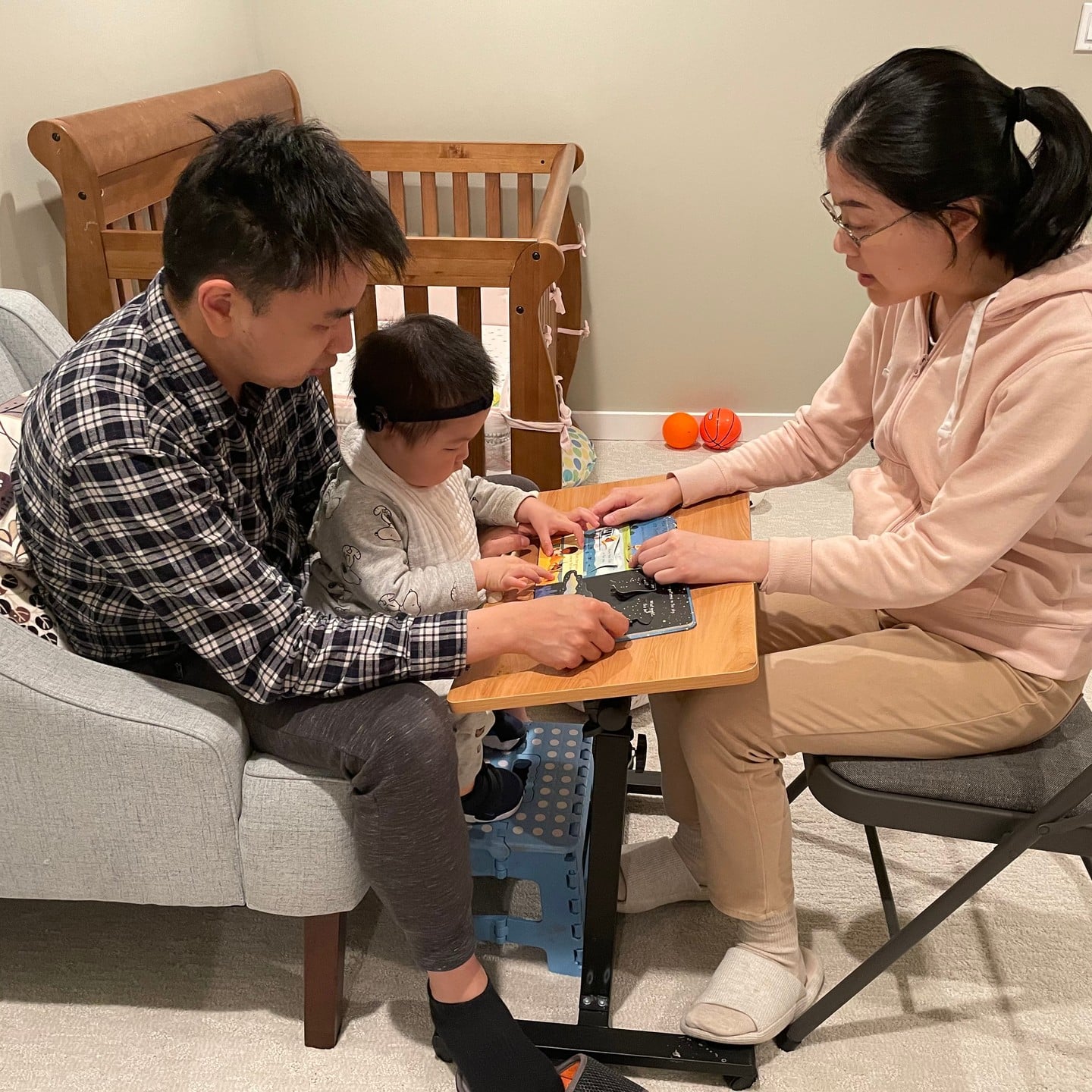
To confirm that the LENA Snapshot was not merely generating data but reflecting actual linguistic proficiency, the research team performed a cross-validation against industry-standard benchmarks. They compared LENA scores with the MacArthur-Bates Communicative Development Inventories (CDI) and the Preschool Language Scale (PLS).
For the 48 children who had completed the CDI and the 35 who had completed the PLS, the correlations were high. This strong statistical relationship suggests that the LENA Snapshot is not merely a proxy for language development but is substantively aligned with the gold-standard assessments used in the field today. The ability to achieve similar clinical insights through a more frequent, parent-friendly interface represents a significant leap forward in pediatric care.
Implications for Clinical Practice and Policy
The implications of this research are twofold: they affect how clinicians monitor progress and how they intervene when that progress plateaus.
The birth-to-three period is characterized by exponential neurological and linguistic growth. When a child’s progress is only measured annually, the "gap" between their skills and their hearing peers can widen significantly before a clinician ever becomes aware of the stall. Frequent, monthly monitoring serves as an early-warning system. It allows for the identification of potential issues, such as changes in hearing status—perhaps due to a device malfunction or a shift in the child’s physiological hearing—or the potential presence of co-occurring conditions that were not previously identified.
By providing a more granular view of the child’s development, the LENA Snapshot empowers families to take the lead. It transforms the "assessment" from a stressful, test-like experience into a collaborative conversation between the family and their intervention team. As Dr. Mona Oster, the study’s lead and Education and Research Director at Listen and Talk, emphasizes, the findings have been submitted for formal scientific peer review in the Journal of Early Intervention, signaling the intent to shift the standard of care across the broader DHH community.
Future Directions in Early Intervention
The success of the LENA Snapshot at Listen and Talk suggests that the future of pediatric audiology lies in the integration of technology that bridges the gap between home and clinic. While further research is needed to validate the tool for non-English speakers and children with more complex medical histories, the current evidence is a major step forward.
As the field of early intervention continues to evolve, the focus must remain on tools that are not only accurate but also sustainable. The burden on families—who are often balancing intensive therapy schedules, medical appointments, and the daily demands of raising a child—cannot be ignored. By reducing the logistical hurdles of assessment, the LENA Snapshot allows families to focus on what matters most: interacting with their children and fostering the language-rich environment necessary for success.
This study underscores a vital truth in education and clinical science: when we give families the right tools, they become the most effective advocates and participants in their child’s development. The data supports the conclusion that the LENA Developmental Snapshot is a reliable, valid, and highly useful instrument that should be considered a staple in any modern, evidence-based birth-to-three program for children who are deaf or hard of hearing. By adopting such measures, the professional community can ensure that no child falls through the cracks, and every child receives the timely, individualized support required to reach their full potential.