

A powerful coalition of nine leading safety organizations has formally petitioned the Occupational Safety and Health Administration (OSHA) to overhaul its regulatory references concerning personal protective equipment (PPE). The move, spearheaded by the International Safety Equipment Association (ISEA), seeks to bridge a widening gap between current federal mandates and the rapid evolution of safety technology, materials science, and testing protocols that have occurred over the past three and a half decades.
The petition centers on the urgent need to modernize federal references for eye and face protection, head protection, and workplace first aid requirements. While these categories are fundamental to the safety of over 125 million American workers, the current regulatory framework relies heavily on consensus standards that have remained stagnant since 1989. Proponents of the change argue that by failing to incorporate the most recent versions of ANSI/ISEA standards—specifically Z87.1 for eye and face protection, Z89.1 for head protection, and Z308.1 for first aid kits—OSHA is inadvertently allowing outdated protective measures to remain the baseline for the modern industrial environment.
A Legacy of Stagnation: The 1989 Benchmark
To understand the gravity of this petition, one must look at the regulatory landscape of the late 1980s. When many of the current OSHA standards were codified, the manufacturing sector looked fundamentally different than it does today. Since that era, the global economy has seen a surge in complex biological hazards, advanced nanotechnology, and high-velocity automated machinery that presents risks that the standards of 1989 were never designed to mitigate.
For thirty-five years, while the industry has evolved, the regulatory anchor has remained fixed. In professional safety circles, this phenomenon is often referred to as "regulatory lag." When government agencies fail to incorporate updated consensus standards, it creates a confusing environment for employers. Employers are tasked with the legal requirement to provide a safe workplace under the General Duty Clause, yet the specific PPE standards they are instructed to follow in the Code of Federal Regulations (CFR) are often functionally obsolete.
The Technical Case for Modernization
The petition highlights that the proposed updates are not merely cosmetic; they represent a significant advancement in how workers are protected on the front lines. Modern standards, such as the ANSI/ISEA Z87.1, provide more rigorous impact testing, improved optical quality, and better coverage requirements for eye protection.
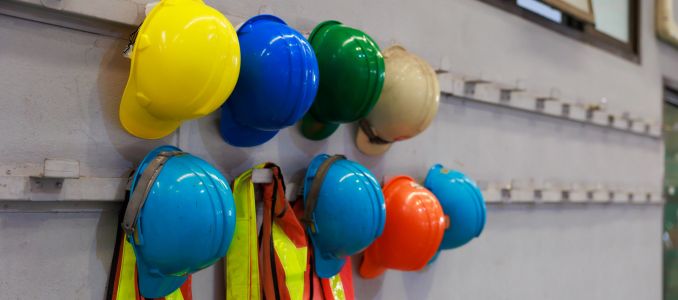
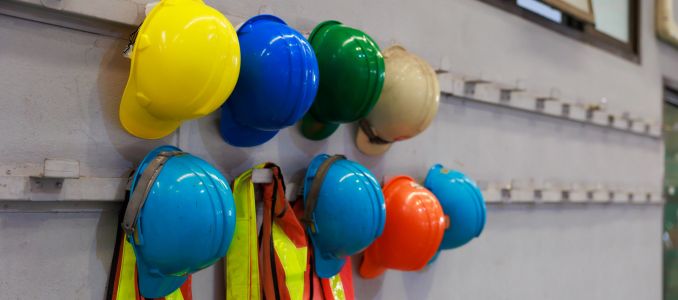
Similarly, the evolution of head protection standards (ANSI/ISEA Z89.1) has moved beyond simple impact resistance. Modern hard hats and industrial helmets now frequently incorporate features for lateral impact protection and improved retention systems—features that were not standard or even contemplated in the late 1980s. By updating the reference, the coalition aims to provide OSHA inspectors with the authority to hold employers to the current "state of the art," rather than a standard that has been superseded by three decades of engineering breakthroughs.
Regarding workplace first aid (ANSI/ISEA Z308.1), the current federal requirements are notoriously vague compared to modern consensus standards. Updated guidance offers specific protocols for treating common modern workplace injuries, including trauma-specific supplies and clear, color-coded packaging that reduces the time it takes for a first responder to identify the correct equipment in a high-stress, life-threatening situation.
Economic and Regulatory Impact
One of the most compelling arguments presented by the ISEA is the economic neutrality of the request. A common barrier to regulatory updates is the fear of "compliance costs"—the notion that forcing companies to upgrade their equipment will place an undue financial burden on small and medium-sized enterprises.
However, the petition notes that the industry has already self-regulated. Because manufacturers want to provide the most effective equipment possible, the vast majority of PPE currently available on the commercial market is already manufactured to meet the modern ANSI/ISEA standards. In essence, most American employers are already buying the "up-to-date" gear; they are simply doing so without the mandate of a federal regulation that confirms their compliance. By updating the references, OSHA would be aligning the law with the existing market reality, ensuring that all employers—even those who may opt for cheaper, outdated stock—are held to the same high standard of protection.
Industry Reactions and Expert Perspectives
Cam Mackey, president and CEO of the ISEA, articulated the urgency of the matter during the filing. "Safety regulations should reflect the best knowledge and protective practices available today, not from decades ago," Mackey stated. He emphasized that the petition is a "straightforward step" for the agency. By simply updating the incorporated references, OSHA could significantly improve the safety posture of millions of workers without the lengthy and expensive process of rewriting entire sections of the federal code from scratch.
Safety advocates have long pointed out that while OSHA is a massive agency with a broad mandate, it is often hindered by the sheer volume of its regulatory library. The "low-hanging fruit" of this petition allows the agency to achieve a massive safety victory through a relatively simple administrative action.
The Broader Implications for Workplace Safety
The implications of this potential shift extend far beyond the technical specifications of a hard hat or a face shield. If OSHA grants the petition, it will signal a shift in how the agency interacts with private-sector consensus bodies. By deferring more frequently to updated consensus standards, OSHA can effectively outsource the technical heavy lifting of safety science to the experts who spend their lives testing and improving equipment.
Furthermore, this update would have a cascading effect on safety training. Training programs across the country—from vocational schools to internal corporate safety orientations—are built around OSHA requirements. If those requirements are updated to reflect modern standards, the training curriculum will naturally follow suit. This ensures that the next generation of industrial workers is trained on the most advanced equipment and protocols available.
Looking Ahead: The Regulatory Process
As the petition moves into the review phase, the safety community is expected to provide overwhelming support. The coalition of nine organizations represents a diverse cross-section of the safety industry, ranging from manufacturers and distributors to professional associations and consulting firms.
The next steps in the process will involve an official review by OSHA’s Directorate of Standards and Guidance. Should the agency decide to proceed, it will likely initiate a formal rulemaking process, which will include a period of public comment. Given that the manufacturers themselves are the ones pushing for this change, there is expected to be little pushback from the private sector.

For the 125 million workers who depend on PPE, this is a moment of potential transformation. It is a reminder that safety is not a static state, but an ongoing process of improvement. As technology continues to push the boundaries of what is possible in workplace protection, the regulations that govern those workplaces must, by necessity, evolve at the same pace. Whether this petition will be the catalyst for that evolution remains to be seen, but for the professionals who navigate hazardous environments every day, the message from the ISEA and its partners is clear: it is time for the law to catch up to the science.