

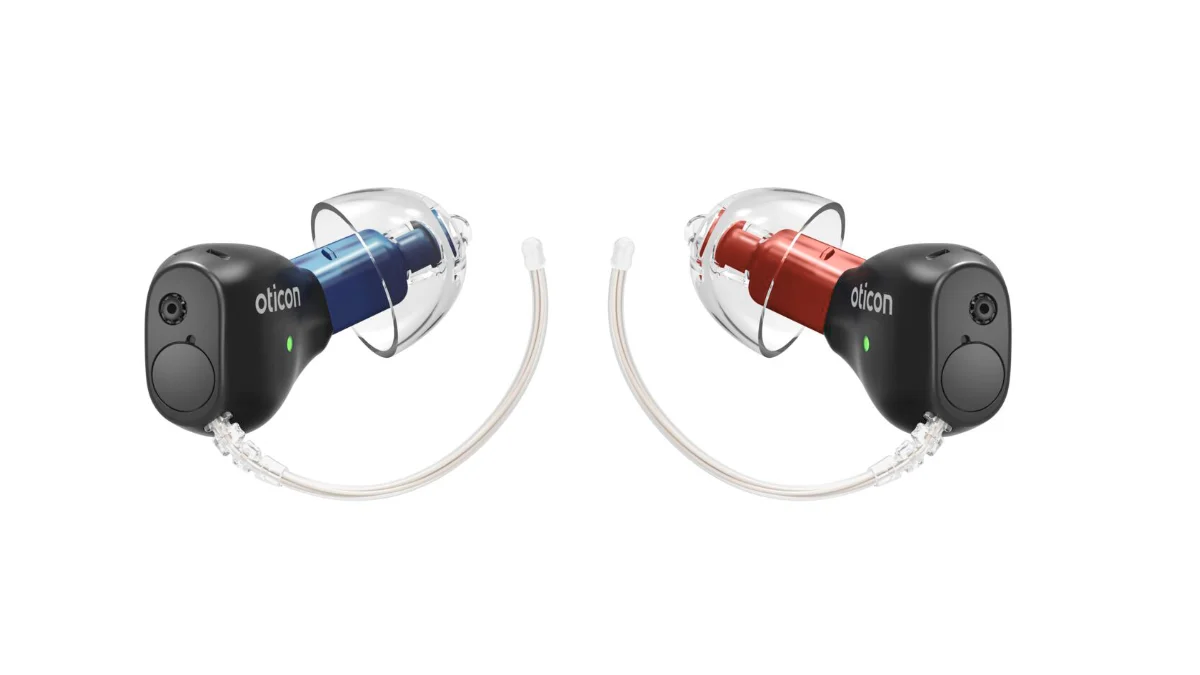
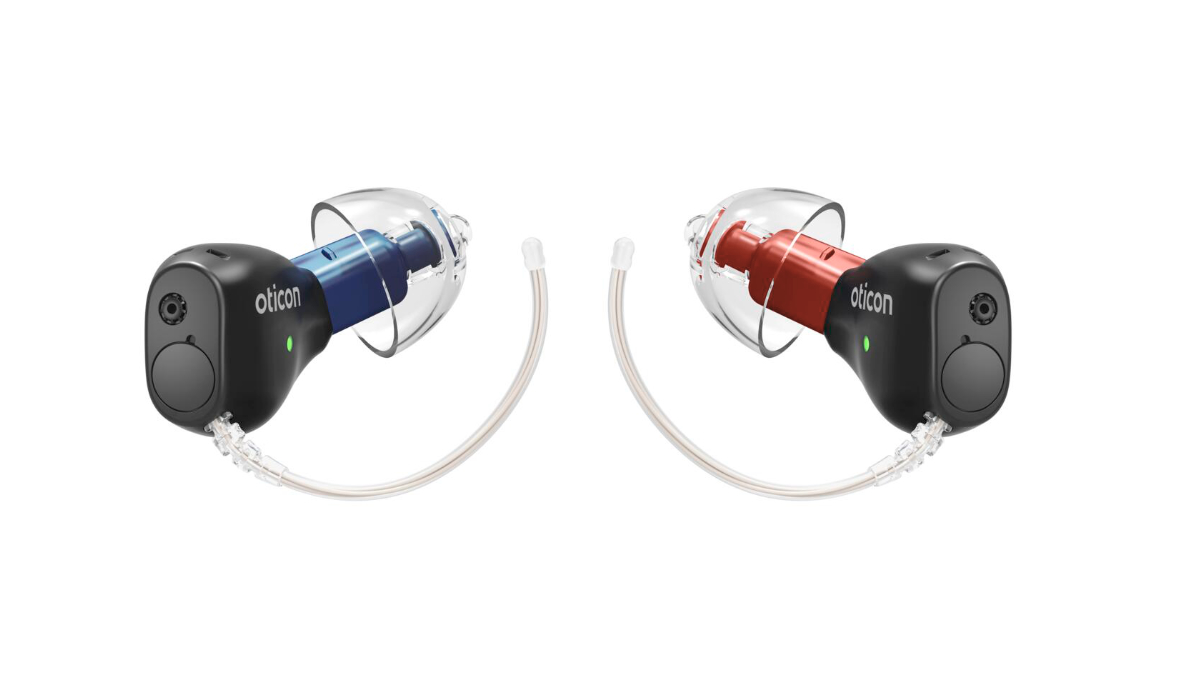
The realm of hearing aid technology witnessed a significant leap forward as Oticon unveiled its latest innovation, the Oticon Zeal, to approximately 700 audiologists and hearing aid specialists at a pivotal industry event held in Phoenix from January 23-25. This miniature, AI-powered, and Bluetooth-enabled in-ear device represents a bold redefinition of what is achievable in compact hearing solutions, challenging long-standing compromises between discretion and functionality. While its initial appearance might suggest a return to traditional instant-fit completely-in-canal (CIC) designs, Oticon has emphatically stated that Zeal is not merely a nostalgic offering but a declaration that invisible hearing aids no longer demand diminished performance.
A New Paradigm in Hearing Technology
The launch event, themed "Changing the Game," served as a powerful platform for Oticon, a brand under the Demant Group, to articulate its ambitious vision. Søren Nielsen, Demant President & CEO, set the tone in his opening keynote, emphasizing that "changing the game is not just about being better, it’s about imagining a whole new set of rules and a whole new playing field." This ethos resonated throughout the presentations, positioning Oticon Zeal as a foundational product in this paradigm shift.
Ole Asboe Jørgensen, Oticon Global Brand President, a veteran instrumental in the success of previous breakthroughs like Oticon Opn and the DNN-powered Oticon More, underscored the magnitude of Zeal’s introduction. "Opn and More were game-changers for us. But I think Zeal is bigger; the technology, the value to consumers, all the innovation that went into this. It’s bigger," Jørgensen stated, highlighting the extensive technological advancements embedded within the device. Ty Lee, Oticon U.S. President, reinforced the company’s commitment, telling attendees, "We are driven by a singular purpose: life-changing hearing health," a mission achieved through innovation combined with the clinical expertise of hearing care professionals.
Overcoming Historical Limitations of In-Ear Solutions
Historically, the design of completely-in-canal (CIC) and invisible-in-canal (IIC) hearing aids has been plagued by inherent trade-offs. Miniaturization often necessitated compromises in battery runtime, gain and feedback margins, physical comfort and occlusion, moisture durability, and the reliability of wireless connectivity and app control. Patients were often forced to choose between a highly discreet device and one offering advanced functionality.
Lisbeth Meng Collignon, Oticon VP of Marketing, articulated this dilemma during her presentation: "So far, a patient coming into your clinic would have to make either a compromise on discreteness or functionality… As of now, with Zeal, this compromise no longer exists." Oticon asserts that Zeal, through radical design changes, transcends these limitations, delivering a comprehensive feature set in an ultra-compact form factor. This includes AI-driven sound processing, robust rechargeability, seamless Bluetooth LE Audio streaming, and an instant-fit option, all within a discreet in-ear device.
)
The Oticon Zeal was first teased at the annual German EUHA Congress in October 2023, where initial details of its core attributes were revealed. However, the Phoenix "Changing the Game" event provided a deeper dive into the engineering marvels and clinical implications that truly set Zeal apart. HearingTracker Audiologist Matthew Allsop further elucidated Zeal’s unique positioning, describing it as "the perfect middle ground between a receiver-in-canal and a custom in-the-ear hearing aid," in a video overview accompanying the launch. The Phoenix conference aimed to reveal precisely how Oticon managed to solve these entrenched problems, culminating in what they proudly tout as "the world’s most discreet, complete hearing aid," and what this means for both clinicians and hearing aid users.
Introducing the "NXT" Category: A Form Factor Evolution
Central to Oticon’s narrative is the classification of Zeal not merely as another CIC device, but as a new category altogether: NXT. Virginia Ramachandran, AuD, PhD, Oticon VP of Audiology (U.S.), explained this during the core audiology session: "Oticon Zeal is a new category of hearing aids that we refer to as NXT… we’ve never really had a category for a flexible-fit ITE style before… something that has everything in the ear, but can have that same flexibility as a receiver-in-ear (RIC) device." This distinction is critical, as it aims to break the traditional mental association clinicians might make between "tiny in-canal" and "smaller expectations."
Thomas Behrens, MSc, Oticon’s Global VP of Audiology, elaborated on this, acknowledging that while non-custom in-ear solutions have existed, the integration of such flexibility with a full suite of modern features demanded a "completely reimagining our approach to hearing aid design, including an entirely new manufacturing process." This "reimagining" forms the engineering backbone of Zeal, justifying Oticon’s deliberate effort to distance the product from the historical baggage of traditional small in-canal devices.
)
Micro-Encapsulation: The Foundation of Zeal’s Breakthrough
The true innovation enabling Zeal’s compact yet powerful design lies in its novel manufacturing process, particularly its advanced micro-encapsulation technology. Behrens vividly illustrated this with an analogy to amber, describing how ancient resin perfectly encases objects, leaving "no hollow spaces" and sealing them from environmental elements. He directly linked this natural phenomenon to Zeal’s internal architecture: "The components are completely covered by the hardened encapsulation material, and all spaces inside the device are filled. As a result, the components are fixed and protected in a specific location."
This encapsulation technology offers several critical advantages beyond mere durability. It ensures remarkable space efficiency, allowing for a larger, completely sealed lithium-ion rechargeable battery within the tiny form factor. Furthermore, it guarantees manufacturing repeatability. Unlike traditional custom hearing aids where component placement can vary significantly with individual ear canal shapes, Zeal’s encapsulation process ensures "no variance," allowing Oticon to position every component in "the most optimal way." This precision is a cornerstone of its consistent performance.
Søren Nielsen, Demant CEO, highlighted this encapsulation as a standout feature for him, stating, "We are typically talking about innovation in the area of signal processing… but encapsulation is a big thing for hearing aids. It has been super difficult and has taken numerous iterations to get it right." Jørgensen echoed this, explaining that to bypass the logistical challenges of fully custom impressions and the inability for same-day fittings, Oticon needed a standardized yet exceptionally small solution. This was achieved by packing electronics "completely, compactly around the battery," then encasing the entire system in a protective material—a technology he likened to those used in high-stakes industries like pacemakers and spacecraft, emphasizing its sophistication and reliability.
)
AI-Driven Processing with Uncompromised Rechargeability
The integration of advanced Artificial Intelligence (AI) into a tiny device like Zeal is only meaningful if it can be powered effectively and maintain acoustic integrity in real-world conditions. Oticon’s presentations in Phoenix argued that encapsulation is not just a durability story but a crucial enabler for packing sufficient battery and electronics into a CIC-sized device without sacrificing modern processing power. Dr. Ramachandran directly connected rechargeability to the "all day, always on, AI signal processing" that users now expect as a baseline.
Zeal leverages the same cutting-edge AI-driven chip found in Oticon Intent, yet it employs a sophisticated single-microphone design that diverges from traditional dual-mic beamforming. Instead, it capitalizes on the natural pinna effect for spatial cues and relies on its continuously active Deep Neural Network (DNN) for primary speech-in-noise enhancement. Behrens detailed that this DNN is trained on millions of diverse noisy speech samples to "clean up" speech effectively. The newer DNN 2.0 further refines this, trained with even more varied real-world scenarios and a finer analytical resolution (256 channels versus the previous 24). This allows Oticon to be "more assertive" with noise reduction, achieving up to approximately 12 dB in complex environments while preserving a natural soundscape. To quantify Zeal’s single-mic performance, Ramachandran cited output SNR enhancement measurements showing around 4.8 dB improvement at default settings, escalating to roughly 6 dB at maximum, importantly measured against an open unaided ear, thus effectively canceling out the pinna advantage.
Addressing the power demands of AI, Behrens noted that Oticon meticulously trained the DNN and built a platform "purpose-built for specific speech in background sound challenges… without consuming excess power." The device features a lithium-ion "312 plus" battery, essentially a slightly thicker version of the standard 312, capable of delivering more power. Ramachandran confirmed that Zeal provides "up to 20 hours of battery life with typical streaming." The charging system is equally robust, offering 4 hours of use from a mere 15-minute charge, or 8 hours from 30 minutes. Behrens further added that the battery is designed to support "around 2000 charging cycles… well over 5 years" of service, thanks to a smart charger that optimizes charging processes. The portable SmartCharger case itself holds enough power for at least three full charges, ensuring users remain powered throughout their day.
)
Advanced Connectivity: Bluetooth LE Audio, Fast Pair, and Auracast
One of the most challenging features to integrate into a CIC-like form factor has traditionally been robust Bluetooth audio streaming. Oticon showcased Zeal’s advanced connectivity not just as a bragging right, but as a critical response to patient expectations and a way to alleviate the "smartphone support tax" often faced by clinics.
Dr. Ramachandran candidly expressed the clinical perspective: "As an audiologist, becoming an expert in smartphone menus is not what I signed up for, but connectivity has become incredibly important to patients… They fully expect it to be available in any device that they have on or in their ears… [but] it only works if the usability is good—and it cannot create barriers for the audiologic care needed to support patients." Oticon’s collaboration with Bluetooth SIG and major consumer electronics manufacturers aims to simplify this experience. Heidi Gade, Senior Project Manager for connectivity at Oticon A/S, described the objective as "seamless, reliable connections without compromising audiology."
Key connectivity features include Google’s Fast Pair, designed for instant pairing with Android phones and devices, eliminating the need for users to navigate complex phone menus. For those with older phones and tablets, Oticon provides the Easy LE Adapter, offering an elegant USB plug-in solution for LE Audio streaming.
)
The future of broadcast audio, Auracast, was also prominently featured. Positioned as the next practical leap in shared audio environments, Gade explained the transmitter/assistant/receiver model. Crucially, the Oticon Companion app can function as the Auracast Assistant, bridging compatibility for phones that don’t natively support LE Audio, including older Android devices and even iPhones.
Zeal’s unique wrap-around antenna is far more than a cosmetic element. This innovative 3-in-1 cord leverages in-ear physics and the body’s conductive properties, serving multiple vital functions. It acts as both a retention arm and an extraction cord, molding naturally to the user’s ear after about a day of use to ensure a secure and comfortable fit. Most importantly, it functions as a Bluetooth LE Audio antenna, enabling direct streaming, hands-free calls, and compatibility with the Oticon Companion app for on-the-fly adjustments of volume, treble, bass, and program settings. Behrens elaborated on the engineering, stating that the antenna’s stiffness and bend are precisely designed to maintain skin contact. He explained that "when you have at least 50% of the length of the antenna touching the skin, then you have much better antenna range and stable connection." While replaceable if needed, the design aims for longevity and reliability.
Expanding Candidacy and Streamlining Workflow
For hearing care professionals, a primary concern with small in-the-ear (ITE) devices is candidacy, often dictated by the fit within the ear canal. Oticon offers a conservative but promising fit expectation: "a good fit in two out of three people" with an instant-fit dome, according to Behrens.
)
Zeal delivers approximately 40 dB of gain, comparable to the 41 dB of the Oticon Intent microRITE. This translates to a fitting range of roughly 55-65 dB HL with the instant-fit domes, extending to about 75 dB HL with custom micromolds. Practically, Zeal’s instant-fit options can accommodate moderate to moderately severe hearing losses, with custom earmolds pushing into the lower end of severe losses, depending on the specific audiogram configuration and other factors.
Behrens detailed that "fit" was assessed across multiple criteria, including comfort, retention, optimal microphone exposure, and proper antenna seating. Regarding the device’s invisibility, a visibility assessment from a "plus or minus 30 degree" viewing angle relative to the tragus showed that Zeal was "not visible in nearly three-quarters" of cases overall, and "either not visible or slightly visible in 94%" of ears where a good fit was achieved.
Beyond patient suitability, Zeal promises to significantly enhance practice workflow. Ramachandran highlighted a common challenge for clinics: custom-only ITEs create barriers to demos and same-day fittings. With Zeal, she noted, "you can fit the same day with a dome… or you can start with the dome and move to a custom mold. Or you can just do a custom mold to start with. The choice is yours." This flexibility mirrors the workflow of popular receiver-in-canal (RIC) devices. Behrens added that Zeal is compatible with "the same domes that you use for Intent, so you don’t have to worry about stocking anything new." For cases requiring a more controlled acoustic fit, Oticon also offers Zeal-specific "micro molds" in various materials. The core benefit is shifting the decision of when a custom solution is necessary from a mandatory initial step to a provider- and patient-driven choice.
)
Market Context: Addressing Adoption and Stigma
The launch of Oticon Zeal comes at a critical time for the U.S. hearing aid market, which has experienced slower-than-normal sales. Adam Fitzsimmons, Oticon U.S. General Manager and VP, noted that industry growth typically ranges from 3% to 6%, but 2023 saw flat or even slightly negative growth depending on the segment. Søren Nielsen characterized the U.S. market as "more subdued or below normal," attributing the softness to broader political and economic uncertainty that often leads consumers to postpone discretionary purchases.
In this context, Fitzsimmons positioned Zeal and the NXT form factor as a powerful "adoption lever," not merely a niche product. He pointed to long-term progress in hearing aid adoption, which has nearly doubled since the early 1990s to approximately 39% in the U.S. However, he emphasized that the fundamental challenge persists: fewer than two in five people who could benefit from hearing aids actually use them. Fitzsimmons highlighted that stigma remains a significant barrier, particularly for new users, underscoring the necessity for clinicians to "meet people where they are"—often meaning offering a discreet or invisible solution.
Zeal thus represents a broader ambition for Oticon: not just "trying to take a bigger piece of the pie," but "trying to make a bigger kind of pie" by offering a solution that hesitant patients might finally want to use. This strategy aims to expand the overall market by appealing to a segment of potential users previously deterred by the visibility or perceived limitations of traditional hearing aids.
)
Will Zeal "Change the Game"?
The Phoenix launch event provided a comprehensive overview for attending hearing care professionals, including presentations on patient counseling by Jessica DeFauw, detailed marketing materials by Lisbeth Meng Collignon, a personal perspective on hearing loss by Matt Hay, and an insightful roundtable featuring clinicians already fitting Zeal in their practices.
Fundamentally, Oticon Zeal is an attempt to rewrite the historical equation for in-the-canal hearing aids: where small size traditionally meant significant compromises, Zeal aims to deliver advanced AI, full connectivity, rechargeability, and durability within a discreet form factor. The success of Zeal’s "NXT" design in truly changing the category will ultimately be determined by real-world clinical outcomes: the extent of its candidacy boundaries, the effectiveness of comfort and occlusion management, feedback control, streaming quality, and long-term repair rates and returns. The independent HearAdvisor lab has yet to test Zeal, but future reports are anticipated to provide objective validation of Oticon’s claims.
However, the Phoenix event unequivocally conveyed Oticon’s firm stance: the era of "small ITE" implying "small expectations" is over. If Zeal performs as Oticon envisions, "changing the game" will transcend a conference theme, becoming a tangible solution for patients who consistently walk into clinics with one critical question: "Do you have a hearing aid that nobody will see?" Zeal’s innovative blend of discretion and advanced technology positions it as a compelling answer to this enduring patient desire.