

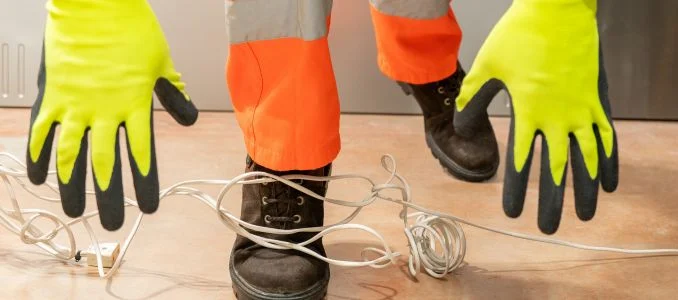
Electrical hazards remain one of the most persistent and lethal threats in modern industrial environments, yet a prevailing misconception persists that such dangers are exclusive to those within the electrical trades. A new toolbox talk released by the Occupational Safety and Health Administration (OSHA) underscores a sobering reality: the vast majority of workplace electrical fatalities occur among workers who are not trained as electricians. From construction laborers and roofing crews to HVAC technicians and delivery drivers, employees across a spectrum of industries are increasingly falling victim to preventable electrical accidents. This shift in the demographic of electrical fatalities has prompted the agency to advocate for a broader, more integrated approach to safety that prioritizes awareness and standardized protection protocols across all job sites.

The Scope of the Crisis: Understanding the Data
The statistical reality of workplace electrical incidents provides a clear mandate for the agency’s recent guidance. According to data from the Bureau of Labor Statistics (BLS) and OSHA’s own incident reporting archives, electrical fatalities consistently rank among the "Fatal Four" in construction—a group of hazards that account for more than half of all construction-related deaths. While the primary victims in the past were often master electricians or utility workers, the modern trend shows a diversification of risk.
Analysis of incident reports reveals that laborers, carpenters, and even landscaping professionals are frequently exposed to energized equipment, damaged power cords, and overhead utility lines. In many instances, these workers lack the specialized training required to recognize the subtle indicators of an electrical hazard. Unlike a veteran electrician who is conditioned to scan for phase-to-ground risks or current leakage, the average non-electrical worker may view a frayed cord or a wet work surface as a minor nuisance rather than a potential site of electrocution. This knowledge gap is where the danger becomes fatal.

A Chronology of Risk and Regulation
The evolution of OSHA’s stance on electrical safety has been a long-term project rooted in decades of industry experience. In the mid-20th century, electrical safety was viewed primarily as a matter of specialized engineering. However, as the complexity of construction sites increased and the use of portable electric power tools became ubiquitous, the risk profile shifted.
Throughout the 1990s and early 2000s, OSHA began integrating specific electrical safety requirements into the 29 CFR 1910 (General Industry) and 29 CFR 1926 (Construction) standards. These regulations established the foundational concepts of the "Qualified Person" versus the "Unqualified Person." While these definitions were designed to keep untrained workers away from high-voltage switchgear, they also inadvertently created a culture where non-electricians felt that electrical safety was "someone else’s problem."

In recent years, the agency has moved to dismantle this mindset. By releasing targeted "Toolbox Talks"—short, actionable safety briefings meant to be delivered by foremen or site supervisors at the start of a shift—OSHA is attempting to weave electrical safety into the daily fabric of general labor. This marks a departure from purely regulatory enforcement toward a more proactive, preventative education strategy.
Essential Safeguards and Best Practices
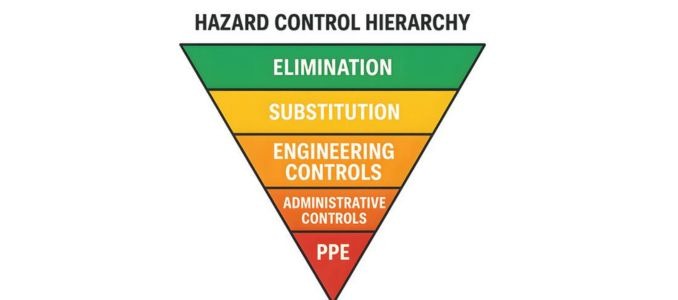
OSHA’s latest guidance emphasizes a hierarchical approach to hazard mitigation. At the top of the priority list is the concept of de-energization. The agency maintains that the only way to be 100% safe from an electrical hazard is to remove the energy source entirely. This is achieved through strict Lockout/Tagout (LOTO) procedures. For the average worker, this means verifying that a machine is not just turned off, but isolated from its power source and tagged to prevent accidental reactivation.
Beyond LOTO, the agency highlights several core practices that should be considered standard operating procedure:
- Visual Inspections: Before any tool is plugged into an outlet, the worker must inspect the cord for nicks, exposed wires, or damaged insulation. Even a minor defect can lead to a ground fault in damp or conductive environments.
- GFCI Utilization: Ground-Fault Circuit Interrupters (GFCIs) are mandatory in many environments, but they are frequently ignored or bypassed. GFCIs act as a life-saving barrier by detecting imbalances in electrical current and cutting power in milliseconds.
- Environmental Awareness: Electrical work should never be conducted in wet or standing water. OSHA reminds workers that even non-conductive materials like wood or concrete can become conductive when saturated, creating a path for electricity to flow through a worker’s body.
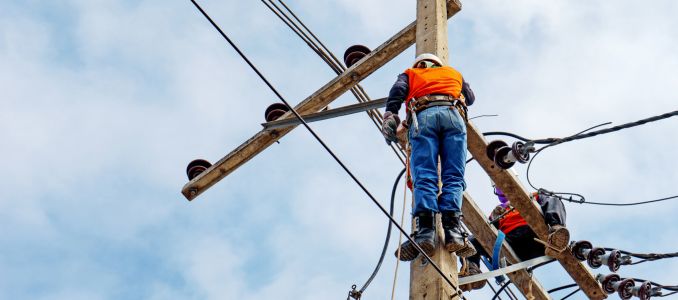
- Distance Requirements: For workers operating cranes, forklifts, or even long-handled tools near overhead lines, maintaining a mandatory 10-foot minimum distance is critical. Fatalities involving overhead power lines remain a leading cause of death for non-electrical workers, particularly those in the roofing and landscaping industries.
The Role of Management in Mitigation
The responsibility for these fatalities does not lie solely with the individual worker. OSHA’s policy reflects an institutional expectation: employers are responsible for providing the necessary training, equipment, and environment to ensure safety. This includes the provision of appropriate Personal Protective Equipment (PPE), such as insulated gloves and flame-resistant clothing, as well as regular, documented training sessions that go beyond a simple "don’t touch the wires" warning.

Safety experts often point out that a "safety culture" is only as strong as its weakest link. If a supervisor encourages a worker to "hurry up and finish the job" by using an extension cord that is known to be damaged, the entire safety protocol is undermined. The agency’s new materials stress that supervisors must be empowered to halt work if environmental conditions—such as sudden rainstorms or exposed cabling—make the site unsafe.
Broader Implications for the Workforce
The implications of this heightened focus are significant. As construction and industrial sectors grapple with labor shortages and the entry of younger, less experienced workers into the field, the risk of electrical injury is projected to rise unless intervention occurs.
There is also the financial and legal impact to consider. Beyond the tragic human cost, electrical accidents result in massive regulatory fines, work stoppages, and skyrocketing insurance premiums. A single incident can permanently damage a company’s reputation and lead to prolonged litigation. By standardizing safety practices for all trades, companies are not just protecting their employees; they are ensuring the operational continuity of their business.
Furthermore, the integration of safety technology is becoming a focal point. New tools that include built-in voltage sensors and automatic shut-off features are gaining traction. While these innovations are welcome, OSHA maintains that they cannot replace the fundamental requirement for human vigilance. Technology is an aid, not a substitute for the training and situational awareness that the agency is now promoting with renewed urgency.
Conclusion: A Collective Responsibility
The transition from a siloed approach to electrical safety toward a comprehensive, cross-trade strategy is a necessary evolution. As the lines between different construction tasks continue to blur, and as the use of electricity in the field becomes more complex, the mandate for all workers to possess at least a baseline understanding of electrical safety is clear.
By focusing on the basic, daily habits—inspecting cords, respecting clearances, and utilizing GFCIs—employers and workers can drastically reduce the incidence of preventable fatalities. OSHA’s latest initiative serves as a timely reminder that while electricity is a vital component of modern productivity, it remains an unforgiving hazard that demands respect from everyone on the site, regardless of their trade or experience level. The goal is simple: to ensure that at the end of every shift, every worker goes home, a goal that requires the constant, collective vigilance of the entire industrial community.