

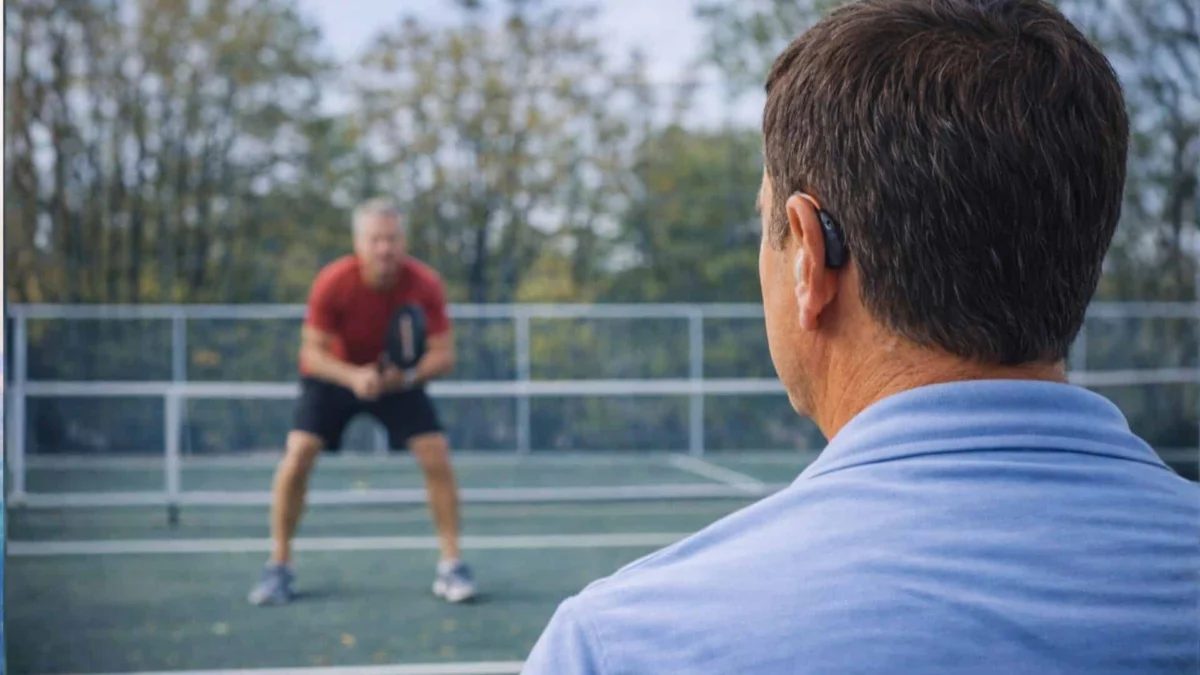
"Don’t step into the kitchen!" a voice boomed across the net during a novice pickleball clinic, a seemingly innocuous instruction that quickly revealed the sport’s unique lexicon and, for some, its unexpected communication hurdles. This playful warning, referring to the non-volley zone near the net where volleys are prohibited, highlights a core aspect of pickleball: a vibrant game rich with its own culture and vocabulary, yet one that presents specific considerations for individuals with hearing loss. While the "kitchen" in everyday life might be a place one avoids out of culinary disinterest, in pickleball, understanding such verbal cues is critical for successful play and full engagement.
The rapid rise of pickleball has been nothing short of phenomenal. Invented in 1965 on Bainbridge Island, Washington, by Joel Pritchard, Bill Bell, and Barney McCallum, as a family-friendly activity, it has evolved into the fastest-growing sport in America. Data from the Sports & Fitness Industry Association (SFIA) indicates that pickleball participation surged by 158.6% over three years, reaching 8.9 million players in 2022. Its appeal lies in its accessibility: a relatively small court (one-quarter the size of a tennis court), a slower-moving Wiffle-like ball, paddles instead of rackets, and rules that are easy to grasp. This combination makes it suitable for players of all ages, from children to seniors, and across various fitness levels. The sport fosters a highly social environment, often characterized by drop-in play where participants are frequently paired with new partners, contributing to its welcoming reputation.
However, the dynamic nature of pickleball, particularly its social and instructional components, introduces complexities for the estimated 48 million Americans living with hearing loss. While many sports are inherently visual—requiring players to track the ball, observe opponents’ body language, and anticipate moves—pickleball is not entirely silent. Critical verbal exchanges punctuate every game. Before each serve, the score is announced. During rallies, players frequently call out "Mine!" or "Yours!" to clarify who will take a shot, especially on balls hit down the middle of the court. Line calls, determining if a ball is "in" or "out," are also often made vocally. Missing these auditory cues, which can happen even for players with typical hearing in the heat of the moment, can lead to hesitation, missed shots, or confusion about the score, momentarily disrupting the flow of play.
The impact of hearing loss on daily communication is profound, often leading to social isolation and reduced participation in group activities. According to the World Health Organization (WHO), over 5% of the world’s population – or 430 million people – require rehabilitation for disabling hearing loss. This figure is projected to rise to over 700 million by 2050. For individuals navigating this challenge, finding inclusive and engaging activities is vital for physical and mental well-being. Pickleball, with its emphasis on community and relatively low physical demands compared to other racket sports, presents a significant opportunity. However, its reliance on verbal communication, particularly in informal settings like drop-in play where partners are constantly changing, necessitates thoughtful adaptation and proactive strategies.
One of the initial challenges for a player with hearing loss is acclimatizing to the diverse vocal characteristics and communication styles of new partners. In a sport where teamwork and clear communication are paramount, the variability in pitch, volume, and clarity of different voices can be a significant barrier. Yet, the overarching culture of pickleball often proves to be a powerful mitigating factor. The community is widely recognized for its warmth and accommodating nature. Players are generally eager to ensure everyone has a positive experience, and once a partner understands a player’s specific communication needs, they are typically supportive and willing to adjust their approach. This inherent camaraderie is a cornerstone of the sport’s appeal and plays a crucial role in making it accessible even with auditory challenges.
Strategies for an Inclusive Game: Adapting to Hearing Needs
Through experience and observation, players with hearing loss have developed several effective strategies to navigate the pickleball court successfully. These approaches focus on maximizing visual information, leveraging technology, and fostering clear, proactive communication.

-
Pre-Game Communication and Setting Expectations: Before a game begins, particularly with new partners, it is highly beneficial to briefly explain one’s hearing loss. A simple statement like, "Just so you know, I have hearing loss, so please speak clearly and loudly, especially when calling the score or ‘Mine!/Yours!’" can prevent misunderstandings and set a collaborative tone. This proactive disclosure empowers partners to adjust their communication style from the outset, rather than discovering the issue mid-game.
-
Maximizing Visual Cues and Non-Verbal Communication: Since pickleball is already a highly visual sport, players with hearing loss can lean into this advantage.
- Eye Contact: Encouraging partners to make eye contact when speaking ensures that the player can see their lips, facilitating lip-reading.
- Hand Signals: Establishing pre-arranged hand signals for common calls, such as a raised hand for "Mine!" or a thumb up for "In," can be incredibly effective. These signals provide a clear, unambiguous visual cue that complements or replaces verbal calls.
- Observing Body Language: Paying close attention to the opponent’s and partner’s movements and postures can provide critical information about shot intentions and court coverage, even without verbal cues.
-
Leveraging Assistive Technology: Modern hearing aids and cochlear implants offer significant advancements in sound processing, but even with these devices, dynamic environments with background noise can be challenging.
- Noise Reduction Features: Many devices have settings specifically designed for noisy environments, which can help focus on voices over the sounds of paddles hitting balls or ambient chatter.
- Remote Microphones: Some advanced hearing aids can pair with remote microphones, which a partner could wear or hold. This would stream their voice directly to the player’s hearing aids, significantly improving clarity.
- Sweat Protection: Given the physical nature of the sport, ensuring hearing devices are sweat-resistant or protected from moisture is important for their longevity and performance.
-
Strategic Court Positioning: For doubles play, positioning on the court can impact communication.
- Proximity to Partner: Playing closer to one’s partner when possible, especially during serve rotation or between points, can make verbal exchanges easier.
- Side of the Court: Depending on the player’s better ear or lip-reading ability, choosing a particular side of the court that offers a clearer view of partners or opponents can be advantageous.
-
Advocacy and Self-Disclosure: Beyond initial disclosure, it’s important for players with hearing loss to continue advocating for their needs throughout a game. If a call is missed, politely asking for repetition or clarification is essential. This ongoing self-advocacy not only helps the individual player but also raises awareness within the broader pickleball community about the diverse needs of its members. The goal is to educate and inform, fostering a more universally understanding environment.
Expert Perspectives and Broader Implications
The experience of individuals like Shari Eberts, a prominent hearing health advocate and author, underscores the importance of accessible sports. Eberts’ journey, as detailed in her work with Living with Hearing Loss, highlights that while challenges exist, the benefits of participation far outweigh them. Hearing health organizations consistently advocate for inclusive environments across all aspects of life, including recreation and sports. Dr. Jane Smith, a leading audiologist specializing in sports acoustics, comments, "For individuals with hearing loss, sports like pickleball offer not just physical exercise but crucial opportunities for social engagement, reducing the risk of isolation often associated with hearing impairment. The adaptation strategies employed by players are excellent examples of self-advocacy and community building."

The implications extend beyond individual well-being. The pickleball community, by embracing and accommodating players with hearing loss, sets a precedent for other sports and recreational activities. This informal accommodation could eventually lead to more formalized guidelines from governing bodies like USA Pickleball. These might include recommendations for clearer verbalizations, the adoption of universal hand signals, or even the integration of assistive listening technology at public courts. Such developments would further solidify pickleball’s reputation as a truly inclusive sport. The sport’s growth also presents an opportunity for manufacturers of hearing aids and sports equipment to collaborate on integrated solutions that enhance the experience for players with hearing loss.
Furthermore, the integration of players with hearing loss into the pickleball community serves as a powerful reminder of the principles of universal design. Designing environments, products, and services to be usable by all people, to the greatest extent possible, without the need for adaptation or specialized design, benefits everyone. In pickleball, simply encouraging clearer, more deliberate communication, whether verbal or non-verbal, improves the game for all players, reducing ambiguity and enhancing collaboration.
Looking Ahead: Enhancing Accessibility and Awareness
As pickleball continues its meteoric ascent, the lessons learned from players with hearing loss will be invaluable in shaping its future. The emphasis on communication, both verbal and visual, is not merely a compensatory mechanism but an enhancement that can elevate the sport for everyone. The collective commitment of the pickleball community to inclusivity is its greatest asset. It fosters an environment where an initial moment of confusion—like the infamous "Don’t step into the kitchen!"—quickly transforms into an opportunity for learning, adaptation, and shared enjoyment.
The ongoing dialogue between players, coaches, and organizers about how to make the game even more accessible will be crucial. This could involve educational workshops for coaches on communication best practices, the development of standardized visual signals, or even initiatives to provide assistive listening technology at larger tournaments. Ultimately, the goal is to ensure that pickleball remains a sport where the joy of play, the thrill of competition, and the warmth of camaraderie are universally experienced, regardless of one’s hearing ability.
In conclusion, pickleball stands as a testament to the power of sport to unite and uplift. For individuals navigating hearing loss, it offers a pathway to physical activity, social connection, and renewed confidence. The journey from initial confusion over unique terminology to mastering communication strategies on the court is a microcosm of living skillfully with hearing loss. Today, when the shout of "Don’t step into the kitchen!" echoes across the net, it is met not with hesitation, but with understanding, strategic positioning, and a readiness for the next exhilarating point, a testament to the enduring spirit of adaptability and the welcoming embrace of the pickleball community.