

Tinnitus, the perception of sound in the absence of an external source, is rarely just about the sound itself. For the vast majority of individuals affected, it profoundly impacts their quality of life, manifesting as increased stress, disrupted sleep patterns, and a persistent state of fight-or-flight. In 2026, the landscape of tinnitus management has been significantly shaped by advanced digital therapeutics, with the best tinnitus apps offering far more than mere white noise. These innovative applications now integrate sophisticated sound therapy, evidence-based cognitive-behavioral techniques, targeted sleep regulation protocols, and increasingly, AI-driven personalization, marking a pivotal shift in how individuals approach relief.
The Evolving Landscape of Tinnitus Management: A Paradigm Shift
Tinnitus affects an estimated 10-15% of the global adult population, with its impact ranging from mild annoyance to severe, debilitating distress. Historically, management options were limited, often focusing on masking the sound or simply learning to live with it. However, the last decade has seen a revolution in understanding tinnitus not merely as an auditory phenomenon but as a complex neurophysiological condition involving the brain and nervous system. This deeper understanding has paved the way for digital health solutions that address the multifaceted nature of the condition.
The year 2026 stands as a testament to this evolution, showcasing apps that leverage cutting-edge technology to offer comprehensive, accessible, and often personalized support. These aren’t just sound generators; they are integrated platforms designed to retrain the brain’s reaction to tinnitus, mitigate associated psychological distress, and improve overall well-being. The core principle underpinning these advancements is habituation – teaching the brain to filter out the tinnitus sound, reducing its perceived intrusiveness and emotional impact.
Behavioral Adaptation Technology: The Core Innovation of 2026
The most significant technological shift in tinnitus apps is not merely about producing louder or more varied masking sounds. It’s about behavioral adaptation technology. This innovative approach moves beyond passive sound exposure to actively guide users through processes that foster psychological and neurological changes. Modern tinnitus apps in 2026 are primarily focused on:
- Guiding cognitive restructuring: Helping users identify and challenge negative thought patterns associated with their tinnitus.
- Teaching nervous system regulation: Employing techniques to calm the body’s stress response, which often amplifies tinnitus perception.
- Promoting sound habituation: Strategically exposing users to sounds that encourage the brain to perceive tinnitus as less significant.
- Integrating sleep hygiene and relaxation: Addressing one of the most common and debilitating comorbidities of tinnitus.
- Leveraging AI for personalization and support: Tailoring programs and offering real-time guidance based on individual user data and responses.
This direction is strongly supported by robust clinical research. Studies published in reputable journals such as Frontiers in Audiology and Otology and JMIR mHealth and uHealth have consistently documented that internet-based cognitive behavioral therapy (iCBT) significantly reduces tinnitus distress, anxiety, and depression. These studies often involve randomized controlled trials (RCTs) where participants are assigned to an iCBT group or a control group (e.g., waiting list or general information). Outcomes are typically measured using standardized questionnaires like the Tinnitus Handicap Inventory (THI) and the Tinnitus Reaction Questionnaire (TRQ), which quantify the perceived burden and emotional impact of tinnitus. The consistent findings highlight that by changing how the brain processes and reacts to the internal sound, individuals can experience substantial and lasting relief, even if the sound itself doesn’t disappear. This behavioral shift is precisely what the leading apps of 2026 aim to facilitate.
As one patient, Elisa, powerfully articulates, "Treble Health helped me turn down the sound of my tinnitus. Now I can breathe, and get on with my life!" This sentiment encapsulates the goal of these advanced apps: not a cure, but a profound reduction in the intrusiveness and psychological burden of tinnitus, enabling individuals to regain control and improve their daily lives. After extensive work with thousands of tinnitus patients through both clinic-based and remote care, the pattern is clear: the right app can significantly reduce how intrusive tinnitus feels, improve sleep quality, calm anxiety, and crucially, help the brain stop treating the sound as a threat.
The selection of the "best" tinnitus app in 2026 is highly individualized, depending on the specific drivers of a person’s symptoms and their personal preferences. However, some apps consistently deliver superior results due to their comprehensive, brain-centric approach, rather than treating tinnitus as a standalone ear issue. Below is an in-depth look at the tinnitus apps making the biggest real-world impact in 2026, evaluated based on clinical research, usability, and reported patient outcomes.

The Leading Tinnitus Apps of 2026: A Detailed Analysis
1. Oto – Best Overall Tinnitus App in 2026
- App Store Rating: 4.7 stars
- Google Play Rating: 4.4 stars
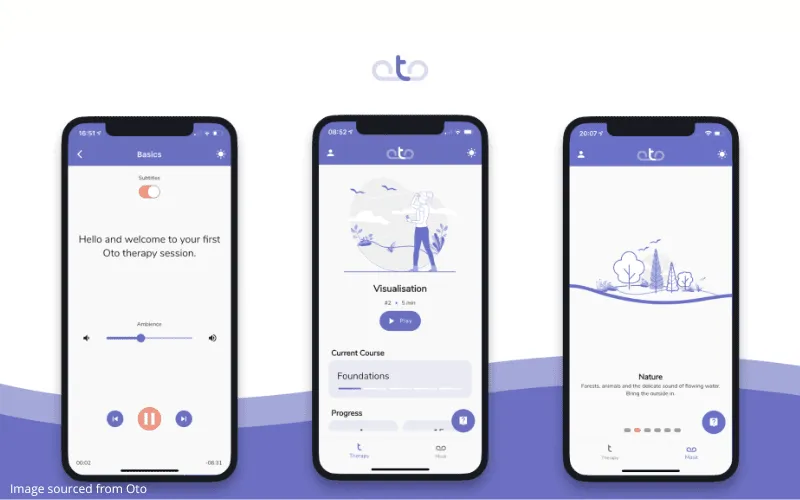
Oto consistently ranks as the number one overall tinnitus app in 2026, primarily due to its exemplary balance of structured guidance, user-friendly simplicity, and robust clinical evidence. Its foundational approach is built around short, digestible daily sessions, typically lasting about 10 minutes. These sessions are carefully designed to integrate key therapeutic modalities: Cognitive Behavioral Therapy (CBT), mindfulness practices, relaxation techniques, and targeted sound therapy. This structured, consistent engagement is paramount in tinnitus treatment, as many users tend to abandon apps that feel overwhelming or lack clear progression.
The clinical efficacy of Oto is not merely anecdotal; it is substantiated by a randomized controlled trial conducted by Flinders University. This study, involving a significant cohort of tinnitus sufferers, demonstrated statistically significant improvements in tinnitus distress among participants using Oto compared to a waiting-list control group. The research typically measures outcomes using validated instruments such as the Tinnitus Handicap Inventory (THI) and Visual Analog Scales (VAS) for distress, showing a measurable reduction in the perceived burden of tinnitus. Clinician-facing data and detailed findings are transparently available on the Oto clinical research page, underscoring its evidence-based foundation.
Oto proves particularly beneficial for individuals grappling with:

- High levels of anxiety and stress related to their tinnitus.
- Persistent feelings of intrusiveness and hypervigilance towards the sound.
- Difficulty in disengaging from the tinnitus, leading to a constant focus on it.
- Challenges in sleeping due to the perceived loudness or presence of tinnitus.
Oto’s success lies in its ability to empower users to retrain their brains to respond differently to tinnitus. Instead of promoting a futile struggle against the sound, it teaches adaptive coping mechanisms, ultimately fostering a state of habituation where the tinnitus fades into the background of daily awareness.
2. ReSound Relief – Best Sound Therapy Customization
- App Store Rating: 4.7 stars (from 15.2K ratings)
- Google Play Rating: 4.7 stars (from 11.5K reviews)
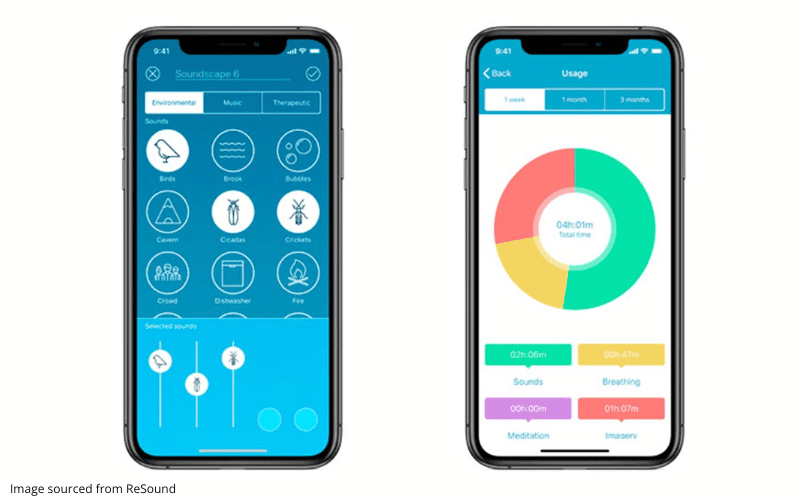
ReSound Relief distinguishes itself through its exceptionally customizable sound therapy options, making it the top choice for users prioritizing tailored auditory experiences. The app provides a rich library where users can meticulously blend various types of white noise, immersive nature sounds, and therapeutic tones. This allows for the creation of highly personalized soundscapes that can be adjusted and evolved throughout the day to match changing environments, stress levels, or tinnitus perception. For instance, a user might combine a gentle rainfall with a specific therapeutic frequency during periods of high awareness, or opt for a subtle pink noise mixed with ambient forest sounds for relaxation.
Beyond its sophisticated sound generation capabilities, ReSound Relief integrates additional therapeutic components, including guided breathing exercises, meditation practices, comprehensive educational content about tinnitus, and practical weekly planning tools to help users manage their condition proactively.
The effectiveness of ReSound’s underlying tinnitus sound generator technology has been subject to long-term research. Published outcome data, utilizing Tinnitus Handicap Inventory (THI) and Tinnitus Reaction Questionnaire (TRQ) scores, has demonstrated that when this technology is combined with professional counseling, improvements in tinnitus perception are sustained for up to 18 months. This indicates that while the app provides a powerful tool, its maximal benefit is often realized within a broader, professionally guided management strategy. For individuals whose primary tinnitus management strategy is built upon sound therapy, ReSound Relief offers one of the most refined and adaptable experiences available on the market.
3. BetterSleep – Best App for Sleep-Related Tinnitus
- App Store Rating: 4.8 stars (from 369K ratings)
- Google Play Rating: 4.5 stars (from 380K+ reviews)
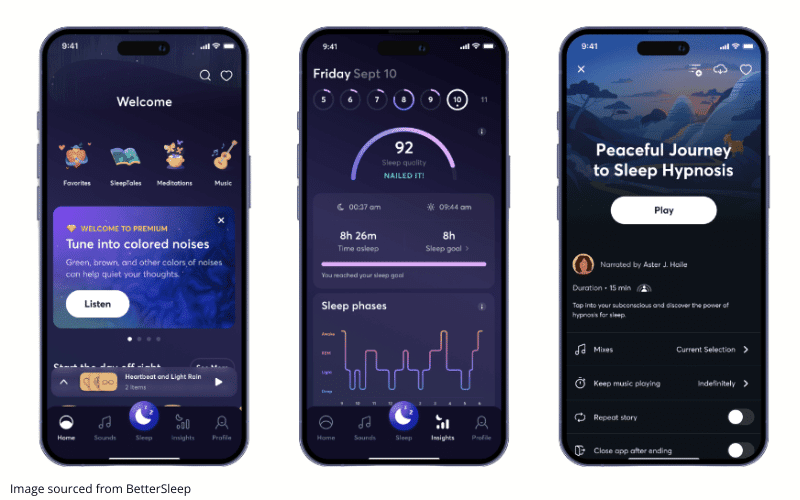
For a significant number of individuals, tinnitus becomes most intrusive during the quiet hours of the night, severely disrupting sleep. BetterSleep earns its prominent position by directly addressing this critical intersection, as improving sleep quality often leads to an indirect but profoundly positive impact on tinnitus distress. When the body and mind are well-rested, the nervous system is calmer, and the brain is less likely to perceive the tinnitus as a threat, thereby reducing its overall intrusiveness.
The app is a comprehensive sleep aid, featuring:
- A vast library of calming sounds and melodies: Users can create custom sound mixes to mask tinnitus or simply promote relaxation.
- Guided meditations and sleep stories: Narrated content designed to gently guide users into a state of relaxation and prepare them for sleep.
- Breathing exercises: Techniques to slow the heart rate and calm the mind, essential for unwinding before bed.
- Sleep tracking features: While not directly for tinnitus, monitoring sleep patterns can help users identify triggers or patterns that exacerbate their nocturnal tinnitus.
While many of BetterSleep’s impressive claims regarding user improvement are derived from internal user data rather than peer-reviewed clinical trials specifically on tinnitus, the broader scientific consensus on sleep is undeniable. Restoring consistent, quality sleep is consistently shown to lower anxiety levels and significantly improve an individual’s tolerance and habituation to chronic conditions like tinnitus. This app is an invaluable resource for anyone experiencing insomnia or significant sleep disturbances that are fueling their tinnitus spiral, offering a robust set of tools to reclaim peaceful nights.
4. MindEar – Best AI-Powered CBT Tinnitus App
- App Store Rating: 4.5 stars
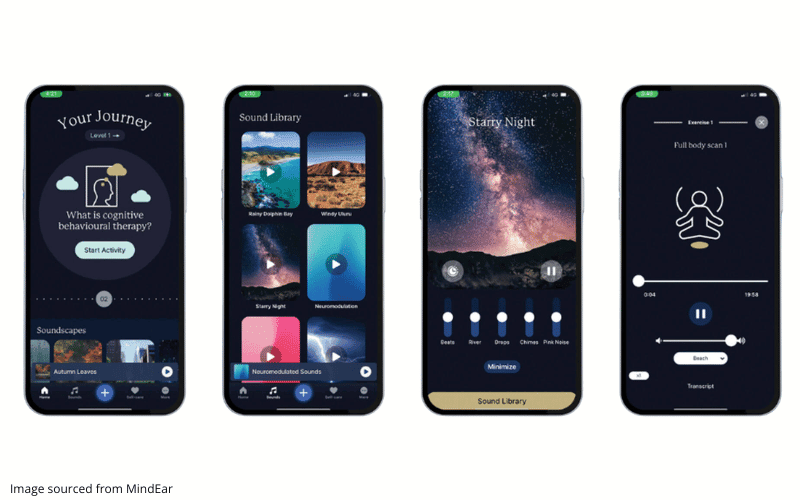
MindEar represents the vanguard of a new generation of tinnitus apps, harnessing Artificial Intelligence (AI) not just for basic personalization but for real-time emotional support and adaptive coaching. The app delivers a structured 8-week CBT-based tinnitus management program, uniquely guided by an AI-powered chatbot. This intelligent assistant coaches users through challenging moments, offering immediate support during anxiety spikes, guiding them through breathing exercises, facilitating relaxation techniques, and assisting with cognitive reframing – helping users alter their perception and reaction to tinnitus.
A foundational clinical study, published in Frontiers in Audiology and Otology, provided compelling evidence for MindEar’s effectiveness. The study reported that nearly two-thirds of participants experienced clinically significant improvement, particularly when the chatbot-based CBT was augmented with telepsychology support. "Clinically significant improvement" in this context typically refers to a reduction in tinnitus distress scores (e.g., THI) that exceeds a predefined threshold, indicating a meaningful change in the patient’s condition. The full peer-reviewed publication details the methodology and results, highlighting the potential of AI in scalable mental health interventions.
MindEar is optimally suited for individuals whose tinnitus is primarily driven by psychological factors such as fear, hypervigilance, and profound emotional distress, rather than solely by the perceived volume of the sound. Its AI-driven, conversational interface makes evidence-based CBT accessible and personalized, offering a novel pathway to relief.
5. myNoise – Best Free Tinnitus App for Sound Control
- Google Play Rating: 4.1 stars (from 4.16K reviews)
- (Note: App Store rating not provided in original content, focusing on Google Play as provided)
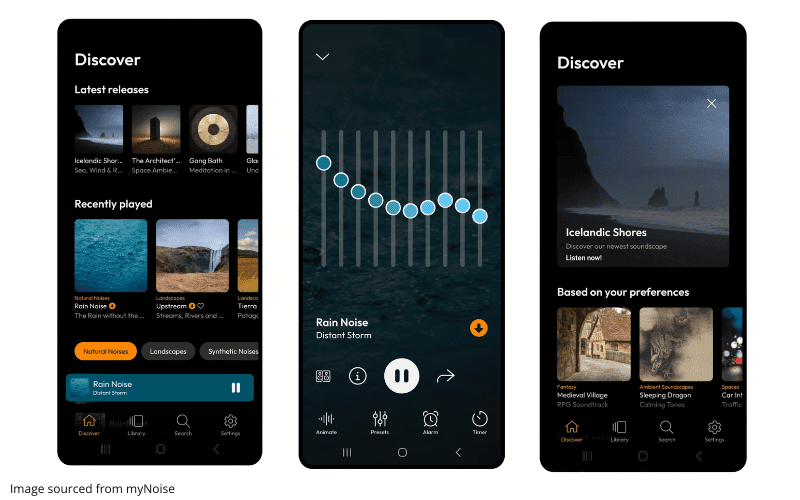
myNoise continues to be recognized as one of the most powerful and versatile free sound therapy apps available in 2026. Its immense popularity stems from its extensive library, offering over 300 diverse soundscapes. These range from traditional white, pink, and brown noise to immersive nature sounds, specialized binaural beats, and ambient environments designed for focus or relaxation.
The defining characteristic of myNoise is its unparalleled level of customization. Each soundscape is equipped with 10 adjustable sliders, allowing users to precisely tune and layer sounds to create an auditory environment that perfectly matches their specific tinnitus profile and preferences. This granular control enables users to subtly mask their tinnitus without overpowering it, finding the optimal balance for their comfort. The app also supports offline listening and operates on a flexible model, offering many features for free with optional one-time purchases for additional soundscapes, making it both practical and widely accessible.
However, it is crucial to understand myNoise’s specific role. While exceptional for sound therapy, it does not provide structured habituation protocols, cognitive behavioral therapy guidance, or educational modules inherent in more comprehensive, clinically validated programs. Therefore, myNoise functions optimally as a dedicated sound therapy tool rather than a standalone, complete tinnitus treatment program. It serves as an excellent supplementary resource for individuals who primarily seek advanced sound environment control.
6. Widex Zen – Best for Hearing Aid Users
- App Store Rating: 4.4 stars
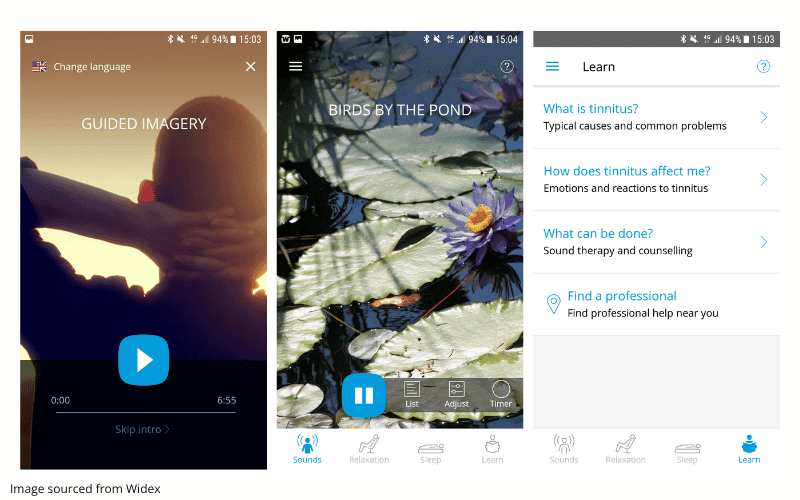
Widex Zen is specifically engineered for individuals who utilize Widex hearing aids, providing an integrated approach to tinnitus management. The app’s core therapeutic mechanism is fractal tone therapy. This unique form of sound therapy involves the generation of random, musical-like tones that are designed to be both pleasant and unpredictable. The rationale behind fractal tones is to engage the auditory system in a non-distressing way, encouraging the brain to shift its attention away from the constant tinnitus sound and promoting a process of habituation.
Clinical studies evaluating fractal tones, particularly when combined with professional counseling and hearing amplification (via hearing aids), have yielded positive results. These studies demonstrate clinically significant reductions in tinnitus distress after six and twelve months of consistent use. The improvements are typically measured using standardized outcome measures and support its integration as a key component within a broader, professionally managed tinnitus treatment plan.
The Widex Zen app is most effective when its use is overseen and guided by a licensed hearing healthcare professional who possesses specialized training in tinnitus therapy. This ensures that the fractal tone therapy is optimally configured for the individual’s specific hearing profile and tinnitus characteristics, maximizing its therapeutic benefit.
7. Quieten – Best Mind-Body Tinnitus App
- App Store Rating: 4.5 stars (from 31 ratings)
- Google Play Rating: 3.7 stars (from 149 reviews)
Quieten offers a distinct approach to tinnitus management, adopting a holistic mind-body framework developed by Julian Cowan Hill, an individual who personally navigated tinnitus for over two decades. This app deviates from purely auditory or cognitive-behavioral interventions by emphasizing the profound connection between the mind, body, and the perception of tinnitus.
The program within Quieten centers on several key pillars:
- Nervous system regulation: Techniques designed to calm an overactive nervous system, which is often implicated in the heightened perception of tinnitus.
- Fear reduction: Strategies to diminish the anxiety and fear responses that frequently accompany tinnitus.
- Reassurance and emotional safety: Content aimed at fostering a sense of security and reducing the threat response associated with the sound.
- Experiential practices: The app incorporates a variety of videos, guided relaxation techniques, and yoga-based practices to facilitate a deeper mind-body connection.
- Recovery stories: Sharing personal narratives from other tinnitus sufferers who have found relief, providing hope and validation.
Quieten is particularly valuable for users who describe feeling "stuck," overwhelmed, or caught in a cycle of constantly monitoring their tinnitus. Its emphasis on self-compassion, emotional healing, and bodily awareness provides a complementary pathway to relief for those seeking an alternative or adjunct to more traditional sound or CBT-focused therapies.
Free Apps for Tinnitus: Expectations and Limitations
While the market offers an array of sophisticated paid applications, free tinnitus apps can still provide considerable benefit, particularly for initial exploration of sound therapy and basic relaxation techniques. Apps like myNoise exemplify the power of free, customizable sound environments. However, it is important to manage expectations. Long-term, sustained improvement in tinnitus often necessitates structured guidance, personalized intervention, and significant behavioral change, which are typically the hallmarks of comprehensive, clinically validated paid programs. Free tools are best viewed as supportive resources rather than standalone, complete treatment solutions. They can be excellent for temporary relief or for discovering preferred sound profiles, but for a deeper, more enduring impact, a more integrated approach is often required.
Tinnitus Apps for Android and iPhone: Accessibility and Engagement
In 2026, the vast majority of leading tinnitus apps are developed for cross-platform compatibility, ensuring availability on both iOS (iPhone) and Android devices. Any minor differences in platform-specific features or performance are generally negligible when compared to the overriding factor in their effectiveness: user engagement and consistency. The most technologically advanced app will yield limited results if it is not consistently used. Therefore, the "best" app for any individual is ultimately the one they find most intuitive, engaging, and are committed to integrating into their daily routine.
Beyond Apps: The Importance of Integrated Care and Professional Guidance
While tinnitus apps have undeniably revolutionized accessible self-management, providing powerful tools for relaxation, sound exposure, and cognitive reframing, they often serve as one component of a broader, more effective treatment strategy. If apps have provided some relief but have not fully addressed the intrusiveness or underlying distress, it signifies that a more comprehensive and personalized approach may be necessary. Individuals are not limited to navigating this complex condition on their own.
Long-term improvement, and indeed lasting relief, frequently stems from a meticulously crafted plan tailored to an individual’s unique hearing profile, lifestyle factors, and specific nervous system responses to tinnitus. This personalized approach may involve combining app-based therapies with other advanced interventions. For instance, advanced hearing aids in 2026 with integrated neural masking capabilities offer a sophisticated technological solution that goes beyond basic sound generators, actively working to retrain the auditory cortex and reduce tinnitus awareness. These devices, often coupled with professional audiological support, can provide a level of integration and personalization that standalone apps cannot.
To explore these advanced options and understand how a personalized clinical habituation plan can move beyond basic white noise towards truly lasting relief, individuals are encouraged to seek professional consultation. Booking a free 20-minute telehealth consultation with a tinnitus specialist, such as those offered by Treble Health, can provide invaluable insights. During such a session, an expert can discuss individual symptoms, assess the suitability of advanced hearing aids with integrated neural masking, and outline how a tailored clinical habituation plan can be developed. This holistic approach, combining the best of digital innovation with expert human guidance, represents the most effective path to significantly reducing tinnitus’s impact and improving overall quality of life in 2026.