

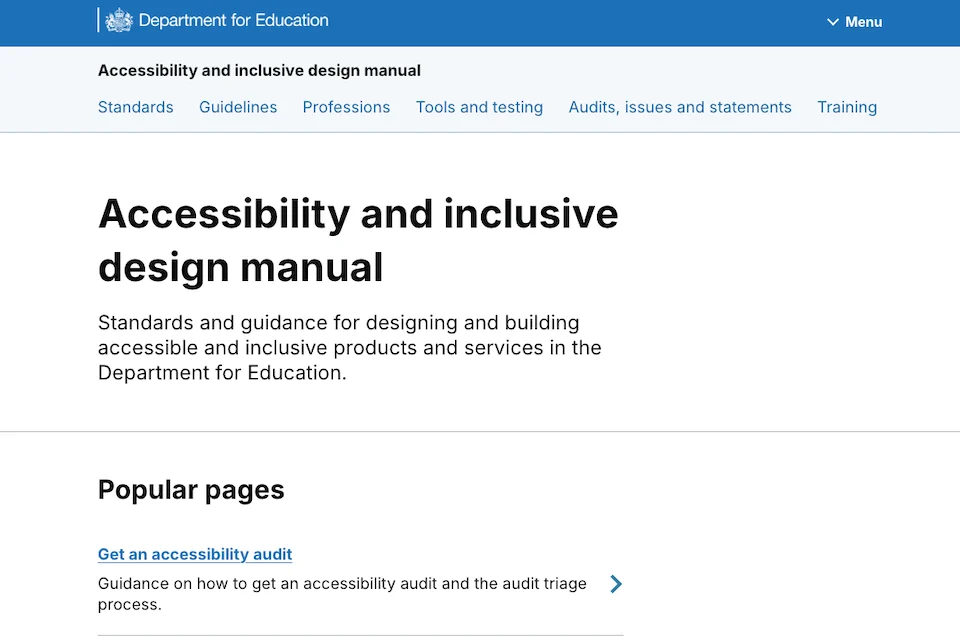
The Department for Education (DfE) has completed a significant overhaul of its Accessibility and Inclusive Design Manual, marking a pivotal shift in how the organization approaches digital inclusivity. Following an extensive period of user research and iterative testing, the updated manual went live on July 21, 2025. This move follows the initial publication of the manual in September 2024 and represents a strategic effort to transition from a repository of information to a functional, user-centric tool for civil servants and the broader public sector. The redesign addresses critical feedback regarding information architecture, tool utility, and homepage navigation, ensuring that accessibility is not merely a compliance checkbox but a foundational element of the digital delivery lifecycle.
Context and Background of the DfE Accessibility Initiative
The UK Government has long been a proponent of digital accessibility, catalyzed by the Public Sector Bodies (Websites and Mobile Applications) (No. 2) Accessibility Regulations 2018. These regulations mandate that all public sector websites and apps meet the Web Content Accessibility Guidelines (WCAG) 2.1 AA standards. As the DfE manages a vast array of services ranging from student loans and teacher training applications to school performance data, the need for a unified, departmental standard for inclusive design became paramount.
In September 2024, the DfE launched the first iteration of the Accessibility and Inclusive Design Manual. While the initial reception was positive and internal data indicated consistent traffic, the DfE’s accessibility team recognized that high usage did not necessarily equate to high utility. To move beyond surface-level engagement, the department initiated a deep-dive research phase targeting the primary users of the manual: designers, product managers, and delivery leads. This research sought to identify friction points and ensure the manual supported the specific workflows of multidisciplinary teams.
The Research Phase: Identifying User Friction
The 2025 update was grounded in qualitative research that focused on three primary areas: findability, clarity of guidance, and practical application. Researchers engaged with staff across various DfE digital delivery teams to observe how they interacted with the manual during active project phases.
The findings revealed a central paradox: while users valued the depth of the content, they struggled with its organization. The "Knowledge Hub," originally intended as a comprehensive resource center, was frequently described by users as a "dumping ground." Information was often buried under generic headings, making it difficult for time-pressed delivery teams to find specific answers to technical questions. Furthermore, the guidance regarding accessibility tools was found to be overly technical regarding installation but lacking in context regarding application. These insights provided the roadmap for the July 2025 relaunch.
Structural Reorganization and the Removal of the Knowledge Hub
The most significant structural change in the updated manual is the complete removal of the "Knowledge Hub" section. In its place, the DfE team has redistributed content into a structure that mirrors the user journey of building a digital service. This approach aligns with the "Search, Find, Act" philosophy prevalent in modern Information Architecture (IA).
By reorganizing the content based on how people think and search for information, the DfE has reduced the cognitive load on its users. For instance, instead of looking for "Alternative Text" under a generic "Images" tab in a central hub, a developer might now find it within a specific "Coding for Accessibility" section, while a content designer finds relevant guidance within a "Writing for Inclusion" module. This contextual placement ensures that the right information reaches the right person at the appropriate stage of the development sprint.
Enhancing Tool Guidance: Moving Beyond Installation
A recurring theme in the user research was the inadequacy of the previous "Tools" section. Prior to the update, this section functioned primarily as a directory—a list of software and browser extensions with instructions on how to install them. However, users reported that knowing how to install a tool was less important than knowing why and how to use it effectively.
The revised manual shifts the focus toward people’s needs and project outcomes. The updated guidance now addresses critical questions such as:
- Which tool is most appropriate for a specific task (e.g., contrast checking vs. screen reader testing)?
- At what stage of the project should a specific tool be utilized?
- What do the results provided by these tools actually mean for the user experience?
By providing clearer, outcomes-focused content, the DfE aims to empower non-specialists to conduct basic accessibility audits, thereby identifying issues earlier in the design process when they are less expensive and complicated to fix.
Streamlining the User Interface: The Homepage Redesign
The visual and navigational entry point of the manual—the homepage—underwent a radical simplification. The original design was characterized by a high volume of icons, images, and a "long scroll" format that users found overwhelming. Feedback indicated that the top navigation was unclear, leading to a "pogo-sticking" behavior where users would click back and forth between pages trying to find the correct path.
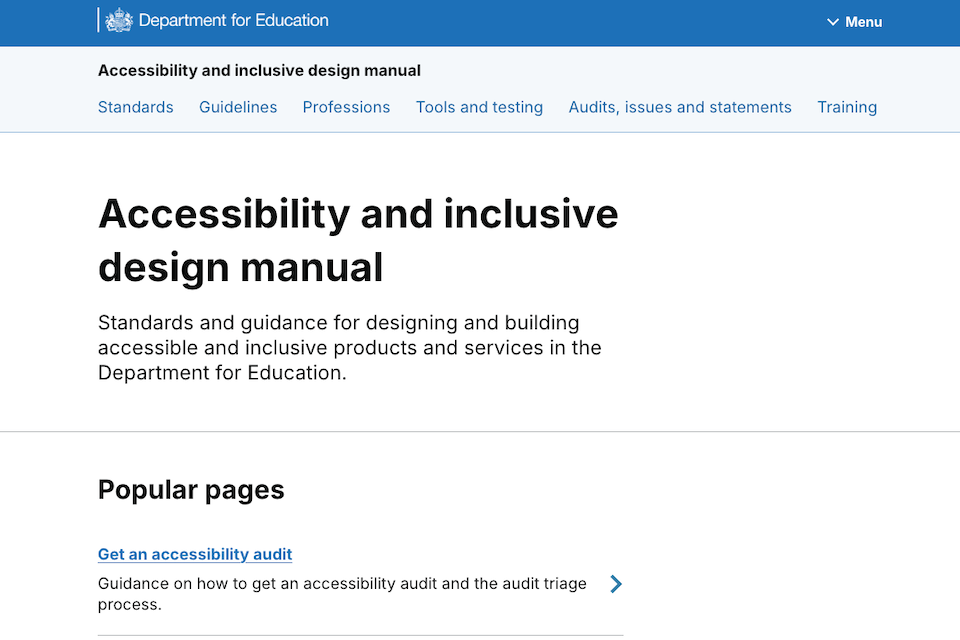
The July 2025 update introduced a minimalist homepage that prioritizes clarity over visual density. Key changes included:
- The removal of non-essential icons and decorative imagery that distracted from core navigation.
- A revised top navigation menu with clearly defined categories.
- The implementation of a more intuitive search function.
- A reduction in page length to highlight the most frequently accessed resources immediately.
These UI improvements are intended to facilitate a "self-service" model, where teams can find the answers they need without requiring direct intervention from the DfE’s central accessibility specialists.
Chronology of the Manual’s Development
The evolution of the DfE Accessibility and Inclusive Design Manual follows a structured timeline of continuous improvement:
- Late 2023 – Early 2024: Internal development of the initial manual framework, consolidating existing DfE and GOV.UK accessibility standards.
- September 2024: Official launch of the DfE Accessibility and Inclusive Design Manual (Version 1.0).
- January – March 2025: User research phase, involving interviews and usability testing with designers, developers, and product managers.
- April – June 2025: Content auditing and reorganization. This period saw the decommissioning of the Knowledge Hub and the rewriting of tools guidance.
- July 21, 2025: The updated manual (Version 2.0) is officially published and made live.
- August 2025 and beyond: Ongoing monitoring of user data and feedback to inform future iterative updates.
Supporting Data and Technical Standards
The DfE’s commitment to accessibility is backed by broader data regarding the impact of inclusive design. According to the UK’s Office for National Statistics (ONS), approximately 1 in 5 people in the UK have a disability. In the context of education, this includes students with special educational needs and disabilities (SEND), teachers with physical or cognitive impairments, and parents who may use assistive technologies.
The manual specifically aligns with the WCAG 2.2 standards, which were finalized shortly before the manual’s initial development. These standards introduced new criteria focused on mobile accessibility, such as "Target Size" (ensuring buttons are large enough to be pressed) and "Dragging Movements" (providing alternatives to complex gestures). By integrating these technical requirements into the manual’s guidance, the DfE ensures that its services are robust across all devices and input methods.
Official Responses and Strategic Impact
While the manual was primarily designed for internal DfE teams, the department has emphasized that the resource is "open by default." This means that local authorities, educational institutions, and private sector contractors can utilize the manual to improve their own digital offerings.
Accessibility experts within the government have noted that this update reflects a broader trend toward "Design System" maturity. By moving away from static documentation and toward a living, breathing manual, the DfE is setting a standard for other departments to follow. The implication is that accessibility should not be a separate department or an afterthought, but a core competency for every individual involved in digital delivery.
Broader Implications for Digital Governance
The overhaul of the DfE Accessibility and Inclusive Design Manual has implications that extend beyond the Department for Education. It signals a shift in digital governance within the UK Civil Service toward "radical transparency" and "user-centered policy."
From a fiscal perspective, prioritizing accessibility from the design phase is a cost-avoidance strategy. The "Shift Left" philosophy—moving testing and quality assurance to earlier in the development cycle—significantly reduces the cost of remediating accessibility barriers post-launch. For a large government department, this can result in substantial savings in both developer hours and potential legal costs associated with non-compliance.
Furthermore, the manual serves as a critical component of the DfE’s social responsibility. As education services become increasingly digitized, the risk of "digital exclusion" grows. By ensuring that the tools used to access education and support services are inclusive, the DfE is directly contributing to the government’s broader mission of "leveling up" and providing equal opportunities for all citizens, regardless of their physical or cognitive abilities.
The July 2025 update to the DfE Accessibility and Inclusive Design Manual represents a milestone in the department’s digital transformation. By listening to its users and ruthlessly pruning ineffective content, the DfE has created a resource that is more than just a guide—it is a functional blueprint for the future of inclusive public services.