

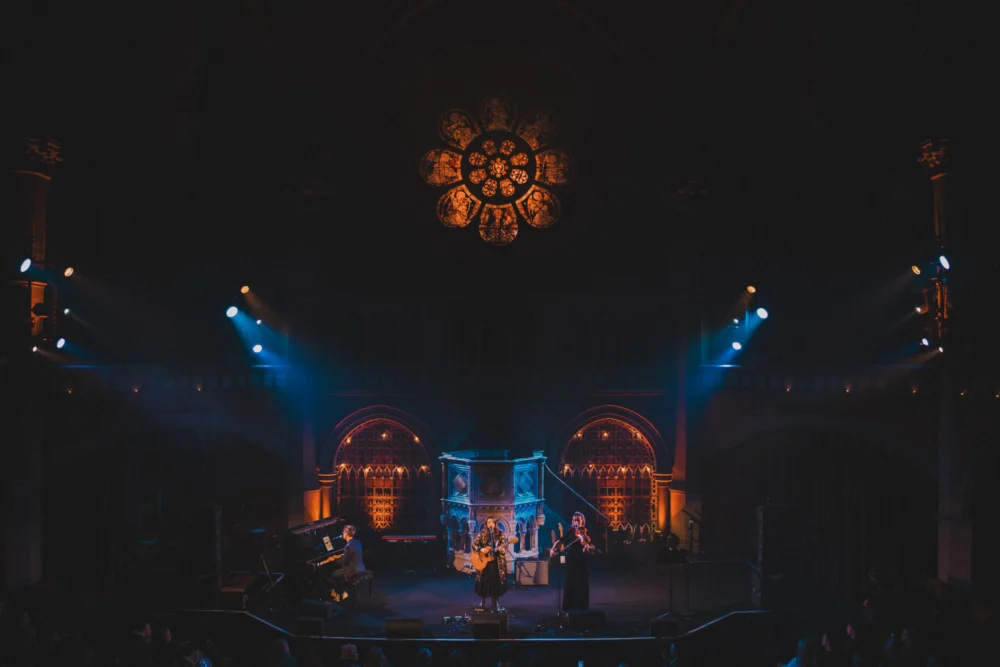
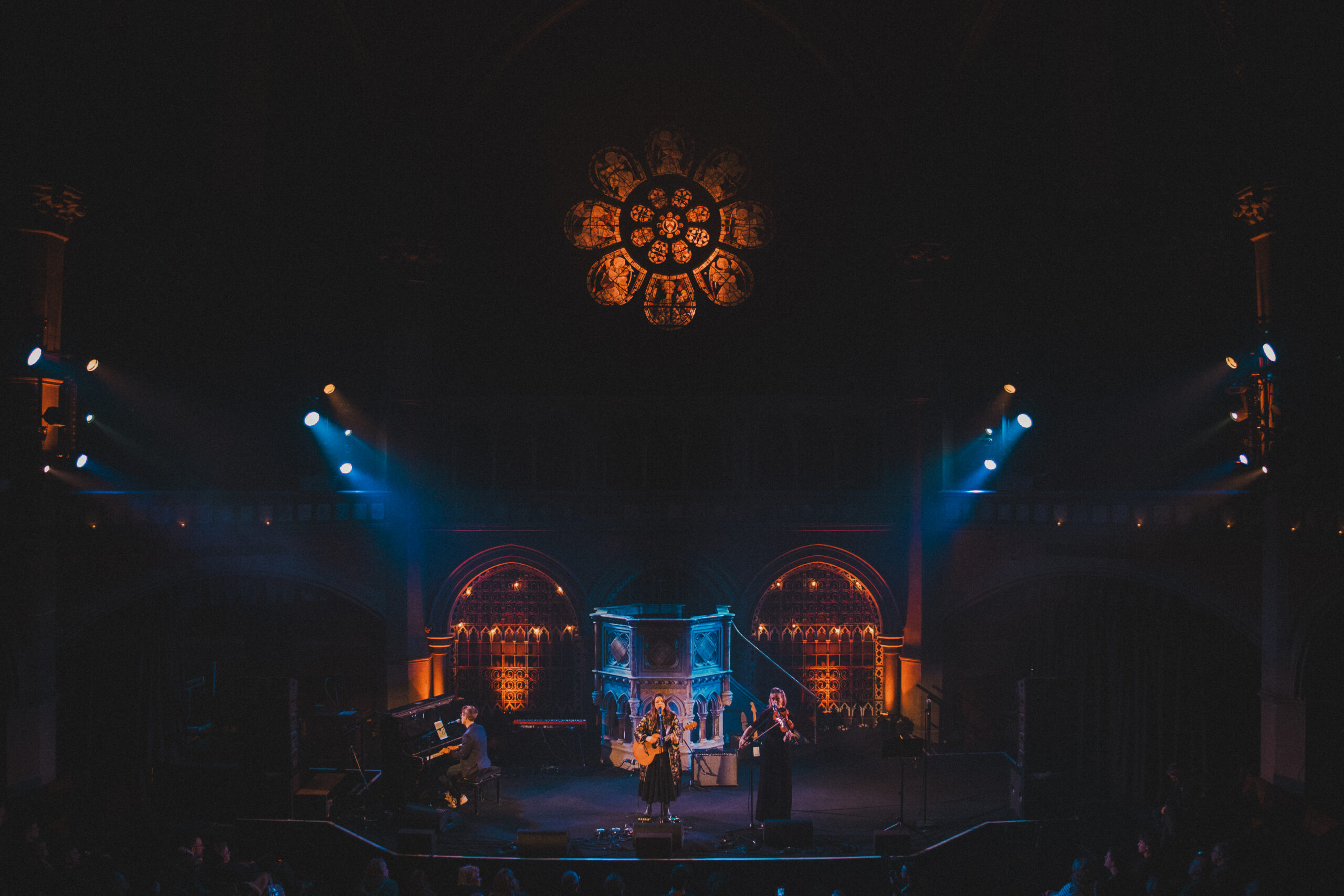
The landscape of live music in the United Kingdom reached a significant milestone on February 6, 2026, with the successful execution of Quiet Night Out, a concert designed to prove that high-fidelity performance and hearing health are not mutually exclusive. Hosted at the historic Union Chapel, the event was orchestrated by Tinnitus UK to address the growing crisis of noise-induced hearing damage and the social isolation experienced by those living with tinnitus and hyperacusis. By prioritizing acoustic clarity over raw volume, the organizers challenged the industry-standard belief that "louder is better," setting a potential new benchmark for accessible live entertainment.
A New Paradigm for Live Performance
For decades, the standard operating procedure for live music venues has involved decibel levels frequently exceeding 100 dB, a threshold that, according to the World Health Organization (WHO), can cause permanent hearing damage in as little as 15 minutes of exposure. Quiet Night Out was conceived as a direct response to this reality. The concert featured a diverse roster of performers, including Justin Sullivan of New Model Army, the Penguin Cafe Orchestra, Daisy Chute, Cosmo Pyke, and comedian Rob Newman.
The production team, working in tandem with the venue’s sound technicians, implemented a strict sound management protocol. The event adhered to a 90 dB limit averaged over any 15-minute period, utilizing sophisticated sound-limiting technology to ensure the peaks remained safe. Rather than muffling the music, this approach focused on dynamic range and frequency clarity, allowing the audience to experience the nuances of the performance without the auditory fatigue typically associated with amplified shows.
The Chronology of an Accessible Event
The planning for Quiet Night Out began months in advance, rooted in the data collected by Tinnitus UK regarding the barriers that keep people with hearing conditions from participating in cultural life. The organizers sought to create a "proof of concept" model that could be scaled for larger venues.

On the night of the event, attendees were provided with ACS Custom earplugs upon entry—a standard of protection that filters sound while maintaining the integrity of the musical frequencies. This proactive measure was intended to mitigate the "fear factor" that often prevents individuals with tinnitus from stepping back into crowded, loud spaces. The evening’s program was carefully curated to include varying levels of intensity, allowing for "natural ebbs and flows" in sound pressure, which further protected the audience’s ears throughout the duration of the show.
A standout moment occurred during the performance of musician Tim Bricheno. Having abstained from live music for seven years due to the severity of his condition, Bricheno’s return to the stage alongside Daisy Chute served as the emotional centerpiece of the evening. His testimony—that he had to "slowly rebuild his relationship with sound"—underscores the psychological trauma that often accompanies hearing-related disabilities, and how the right environment can act as a bridge back to social participation.
Contextualizing the Crisis: Data and Industry Standards
The necessity for such an event is supported by sobering statistics. Research suggests that the prevalence of tinnitus is increasing globally, exacerbated by prolonged exposure to high-decibel environments and the ubiquity of personal listening devices. According to the WHO’s Global Standard for Safe Listening at Venues and Events, the responsibility for hearing health lies with the venue operators and event organizers as much as it does with the individual listener.
The "Quiet Night Out" initiative aligns with these global guidelines, which emphasize that sound systems should be calibrated to avoid sustained levels that cause cellular damage in the cochlea. Critics of current industry practices argue that the "loudness war" has effectively alienated a significant portion of the population. By providing a concert experience that is explicitly safe, Tinnitus UK is gathering empirical evidence that audience enjoyment is not dependent on volume, but on the quality of the sound engineering and the clarity of the performance.
Official Responses and Industry Implications
The impact of the event extended beyond the walls of the Union Chapel. Held during Tinnitus Week 2026, the concert served as a practical demonstration of the principles discussed at a concurrent event held at the House of Lords. There, policymakers and health experts reviewed new research into the correlation between concert-going and the worsening of tinnitus symptoms.
The industry response has been one of cautious observation. While major concert promoters have historically prioritized volume as a means of generating "energy," the success of Quiet Night Out suggests that a market exists for "hearing-conscious" entertainment. If venues can successfully market safe-listening shows, they may be able to capture a demographic that has been effectively priced out of the live music scene by the physical toll it takes on their health.
Broader Societal and Health Impacts
The implications of this initiative are far-reaching. For many, tinnitus is not merely a physical symptom but a life-altering condition that can lead to severe anxiety, depression, and social withdrawal. By framing the concert as a "safe space," Tinnitus UK is advocating for a shift in public health policy regarding entertainment venues.
The analysis of the event’s success suggests that technical solutions—such as improved speaker placement, digital limiting, and mandatory distribution of protective equipment—are readily available and economically viable. The challenge, however, remains cultural. The music industry must transition away from the outdated notion that high volume is synonymous with a high-quality experience. If, as Tinnitus UK argues, safe listening becomes the "norm rather than the exception," it could fundamentally alter the way future generations engage with live sound.
The Role of Advocacy and Future Funding
The sustainability of such projects relies heavily on continued advocacy and public support. Tinnitus UK has utilized the momentum from this event to launch a wider appeal, aimed at funding the next stage of their research and lobbying efforts. The organization’s stated ambition is to eliminate preventable hearing loss caused by cultural participation, ensuring that the "right to listen" does not compromise the "right to hear."
As the organization continues to analyze feedback from the attendees of Quiet Night Out, the focus will shift toward creating a set of "best practice" guidelines that can be distributed to venues across the UK. These guidelines will likely include recommendations for sound desk calibration, the implementation of "quiet zones" within large-scale venues, and standardized training for sound engineers regarding the physiological impact of long-term noise exposure.

Conclusion: A Way Forward
The success of Quiet Night Out represents a pivot point for the live entertainment sector. By proving that a high-quality, emotionally resonant, and artistically significant event can be delivered without exposing the audience to dangerous noise levels, Tinnitus UK has provided a roadmap for inclusivity.
The event was not merely a concert; it was an act of advocacy that forced a conversation about the ethics of sound production. As the findings from the 2026 Tinnitus Week continue to be disseminated, the pressure on venue operators to adopt these safety protocols is expected to mount. For those who have been forced to stay away from the music they love, the success of this event offers more than just a memory—it offers the promise that the stage is once again open, and that the music can be heard safely, clearly, and sustainably.
Moving forward, the challenge for Tinnitus UK will be to maintain this momentum, transforming a one-off success into an industry standard. With the support of artists, researchers, and a growing number of hearing-conscious fans, the organization is well-positioned to ensure that the future of live music is defined by the quality of the sound, rather than the volume of the decibels.