

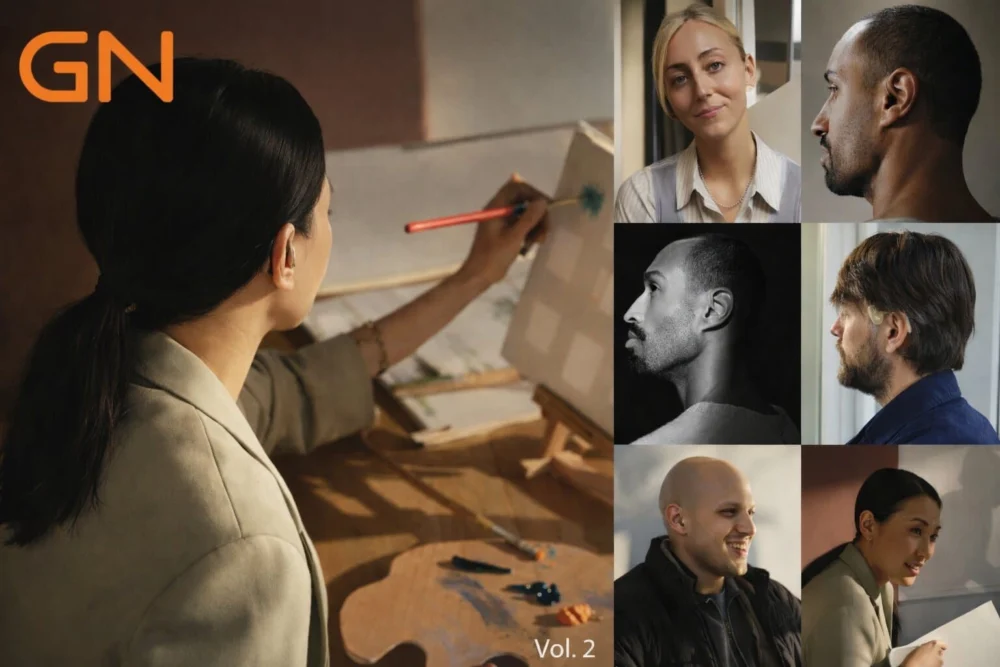
BALLERUP, DENMARK – GN, a global leader in intelligent audio solutions, has significantly expanded its impactful ‘New Norm’ initiative with the launch of ‘New Norm vol. 2’ on World Hearing Day, a free, global library of authentic images designed to drastically improve the everyday representation of individuals living with hearing loss across mainstream media. This strategic expansion builds upon the foundation laid by GN’s original ‘New Norm’ image bank, introduced on World Hearing Day in 2024, which sought to dismantle prevalent stigma and misperceptions surrounding hearing loss by replacing outdated, often stereotypical stock imagery with modern, real-world visuals of hearing aid users. With the introduction of ‘vol. 2’, GN is intensifying this critical effort, offering an even broader and more diverse collection of high-quality photographs featuring real people aged between 20 and 60 years, all depicted naturally wearing hearing aids in various everyday contexts. These invaluable assets are specifically curated for widespread use by newsrooms, brands, educators, non-profit organizations, and health communicators worldwide, aiming to foster a more accurate and inclusive visual narrative.
The imperative for such an initiative is starkly illuminated by recent global research, which uncovers a significant media blind spot: a substantial portion of the population struggles to recall seeing anyone wearing a hearing device or hearing aid in mainstream content, unless the narrative is explicitly centered on hearing loss. This profound lack of visibility not only perpetuates but actively fuels the stigma associated with hearing loss. Compounding the issue, existing portrayals are frequently unrealistic, with a vast majority of individuals living with hearing loss reporting that media depictions inaccurately represent key aspects of their lives. In response to this urgent need, GN’s ‘New Norm vol. 2’ provides a vital resource, showcasing real people with hearing loss in authentic scenarios, thereby empowering media outlets and creators to replace entrenched, outdated stereotypes with visuals that reflect the true diversity and experiences of hearing aid users.
Unveiling the "Invisible Millions": YouGov Research Highlights Media Blind Spots
To underscore the critical need for ‘New Norm vol. 2’, GN commissioned comprehensive YouGov research across Australia, the United Kingdom, and the United States. The findings from this extensive study paint a compelling picture of what GN terms "media invisibility," revealing that large segments of the general public, alongside those who experience hearing loss, are simply unable to recall encountering individuals wearing hearing aids in mainstream content unless the story explicitly pertains to hearing loss or hearing devices.
The data is particularly striking: in Australia, a significant 41% of respondents reported being unable to name a single instance from the past year where someone wearing a hearing aid or cochlear implant appeared in media where the content was unrelated to hearing loss. This figure climbed to 49% in the UK and a concerning 55% in the US, collectively highlighting a pervasive absence of integrated representation. These statistics are not merely numerical; they represent millions of individuals whose daily reality is consistently overlooked by the visual landscape of our media. This media blind spot is not benign; its implications ripple through society, impacting perceptions, self-identification, and the proactive pursuit of hearing health.
Dr. Laurel Christensen, Ph.D., Chief Audiology Officer at GN, articulated the gravity of this situation, stating, "This ‘media invisibility’ and unrealistic portrayal highlighted by our YouGov research can negatively impact the mental health of people living with hearing loss and deter others from seeking help when they notice early signs of hearing loss. GN wants to challenge the outdated misconceptions of hearing aids and living with hearing loss, fostering an environment where wearing hearing aids is seen as a symbol of empowerment in daily life, and our New Norm image library gives newsrooms, brands, and creators practical assets to change it." Her comments underscore the direct link between media representation and public health outcomes, emphasizing the psychological toll of being unseen and misunderstood.
A Chronology of Change: From New Norm 1.0 to 2.0
The launch of ‘New Norm vol. 2’ on World Hearing Day in 2026 marks a significant milestone in an ongoing initiative that began two years prior. The journey commenced in March 2024 with the introduction of the original ‘New Norm 1.0’ collection. This initial phase was driven by a clear objective: to confront and correct the visual misperception surrounding modern hearing aids, a misperception widely acknowledged to contribute to the alarmingly high levels of untreated hearing loss globally. The prevailing imagery often depicted hearing aids as cumbersome, antiquated devices, reinforcing stereotypes of fragility and advanced age, thereby deterring younger individuals or those with early signs of hearing loss from seeking assistance.

The impact of ‘New Norm 1.0’ was immediate and substantial, demonstrating a profound global demand for authentic imagery related to hearing loss. The collection has since been downloaded over fifty thousand times and viewed more than eleven million times, signaling a widespread recognition among media professionals, marketers, and educators of the need for more accurate visual narratives. This success provided compelling evidence that a shift in visual language was not only desired but urgently required.
Building on this momentum, ‘New Norm vol. 2’ represents a targeted evolution. While the first collection aimed to tackle general visual misperceptions, the second volume specifically broadens the age range of individuals depicted, focusing on real people aged 20 to 60. This expansion is crucial, as it directly addresses the misconception that hearing loss is exclusively an affliction of the elderly, thereby making the imagery more relatable to a wider demographic. The full collection now encompasses over 90 pictures and moving stills, showcasing individuals wearing hearing aids across diverse ages, lifestyles, and settings. This continuous effort, slated to extend through 2026, is a testament to GN’s sustained commitment to breaking down stigma and fundamentally changing perceptions of living with hearing loss, transforming it from a hidden struggle into an openly acknowledged and empowered aspect of daily life.
Redefining Relatability: Challenging Dated Stereotypes
The YouGov research further illuminated a critical "relatability gap" in media portrayals of hearing loss. Roughly a quarter of respondents with hearing loss across Australia, the UK, and the US reported that depictions of people with hearing devices were rarely or not at all relatable. Conversely, only about one in ten stated they very often encountered relatable portrayals. This disconnect is not merely an aesthetic issue; it profoundly impacts how individuals perceive their own condition and the willingness of others to recognize or address hearing loss.
This relatability gap matters immensely because representation undeniably shapes behavior and self-perception. The study found that 55% of Australians, 42% of Britons, and 41% of Americans believe that the lack of everyday media representation makes it harder for people to recognize hearing loss in themselves or others, or to seek timely help. Even more telling, a vast majority of those with hearing loss – 77% in Australia, 79% in the UK, and 77% in America – asserted that media depictions frequently misrepresent key aspects of their lives. Common inaccuracies cited included framing people with hearing loss as inherently elderly, fragile, or overly dependent, perpetuating stereotypes that are not only untrue but deeply damaging.
These outdated stereotypes contribute to internalized shame and hesitation. When individuals do not see themselves reflected accurately or positively in media, it reinforces a sense of otherness and can delay critical steps toward managing their hearing health. The conventional narrative often focuses on the challenges of hearing loss rather than the empowering solutions available, such as modern hearing aids, which can significantly enhance quality of life and maintain active social engagement.
Empowerment Through Visibility: Voices from the Forefront
The consensus among experts and advocates is clear: authentic, everyday representation is a powerful catalyst for change. Barbara Kelley, Executive Director of the Hearing Loss Association of America (HLAA), emphasized this point, stating, "Authentic, everyday representation can move people from hesitation to action when it comes to recognizing and ‘owning’ their hearing loss." She continued, "When people see hearing aids as a helpful tool, not just as a sign of getting older, we think they are more likely to seek hearing care as an overall proactive health choice." Kelley’s statement highlights the transformative potential of ‘New Norm vol. 2’ to reframe the narrative around hearing aids, shifting public perception from a symbol of decline to one of proactive self-care and technological empowerment.
The initiative aims to cultivate an environment where wearing hearing aids is not just accepted but celebrated as a proactive choice for enhancing communication and engagement in daily life. This philosophical shift is central to GN’s mission, which seeks to empower individuals to overcome real-life challenges associated with hearing loss through innovative solutions. By providing a visual library that reflects the modern reality of hearing aid users – active, diverse, and engaged individuals – ‘New Norm vol. 2’ offers a tangible means for media and brands to contribute to a more inclusive society.

The Solution: A Global Library for Authentic Representation
The ‘New Norm vol. 2’ image library is a robust collection of free, high-quality photographs meticulously curated to showcase real people aged between 20 and 60 years who live with hearing loss and wear their hearing aids. A core principle behind this collection is to shift the visual focus away from sterile, staged studio shots, which often feel inauthentic, towards capturing genuine, everyday moments. The images portray individuals in a variety of real-world settings – at work, socializing, engaging in hobbies, and navigating daily life – providing a far more relatable and positive representation.
These images are now globally available for free use by a wide array of stakeholders, including the media, academic institutions, non-profit organizations, and anyone reporting on or discussing hearing loss. The explicit goal is to facilitate the replacement of outdated and stereotypical imagery with a contemporary and positive portrayal of hearing aids and the vibrant lives of those who use them. By making these resources readily accessible, GN empowers creators to integrate realistic visuals seamlessly into their content, thereby normalizing the presence of hearing aids in everyday contexts.
The image library, along with comprehensive usage guidance and alt text examples, can be downloaded at https://unsplash.com/@gnhearingglobal. This accessible platform ensures that editors, marketers, health communicators, and content creators have the tools they need to immediately begin incorporating more accurate and empowering visuals into their work. The sustained effort, from the initial 2024 launch through the continued expansion in 2026, demonstrates a long-term commitment to fostering lasting change in visual representation.
Broader Implications and the Path Forward
The launch of ‘New Norm vol. 2’ transcends a simple marketing initiative; it represents a significant step towards greater societal inclusivity and an acknowledgment of corporate responsibility in shaping public perception. The implications of improved, authentic representation are far-reaching. By normalizing hearing aid use, the initiative has the potential to:
- Reduce Stigma: Encourage open conversations about hearing loss and dismantle the social barriers that prevent individuals from seeking help.
- Improve Mental Health: Alleviate the psychological burden of feeling invisible or misrepresented, fostering a sense of belonging and self-acceptance among those with hearing loss.
- Promote Proactive Health Choices: Encourage earlier intervention for hearing loss, which is crucial given its links to cognitive decline and social isolation if left untreated.
- Enhance Empathy and Understanding: Educate the general public about the diverse realities of living with hearing loss, fostering a more empathetic and understanding society.
- Drive Innovation: As societal acceptance grows, so too might the demand for and innovation in hearing aid technology, further improving user experience and accessibility.
GN, with its deep roots in connecting people through leading intelligent hearing, audio, video, and gaming solutions, is uniquely positioned to drive this change. Founded more than 150 years ago with a vision to connect the world, GN’s mission today continues to be inspired by people and driven by innovation, delivering technologies that enhance the senses of hearing and sight. Through its brands like ReSound, Beltone, and Jabra, GN serves millions across 100 countries, making its commitment to initiatives like ‘New Norm’ a natural extension of its core values and heritage. The company’s proactive stance highlights a growing trend among leading corporations to leverage their platforms for social good, contributing to a more equitable and representative world.
The YouGov research, conducted by nationally representative online surveys between January 30th and February 4th, 2026, across Australia (n=1014), the UK (n=1023), and the US (n=1016), including substantial samples of individuals with hearing loss in each country, provides a robust evidence base for the urgent need for such initiatives. This rigorous methodology ensures the data’s credibility and the pressing nature of the issues it uncovers. ‘New Norm vol. 2’ is not merely a collection of images; it is a powerful tool for social change, aiming to illuminate the "invisible millions" and foster a world where everyone, regardless of their hearing status, sees themselves reflected authentically and positively in the mainstream narrative.