

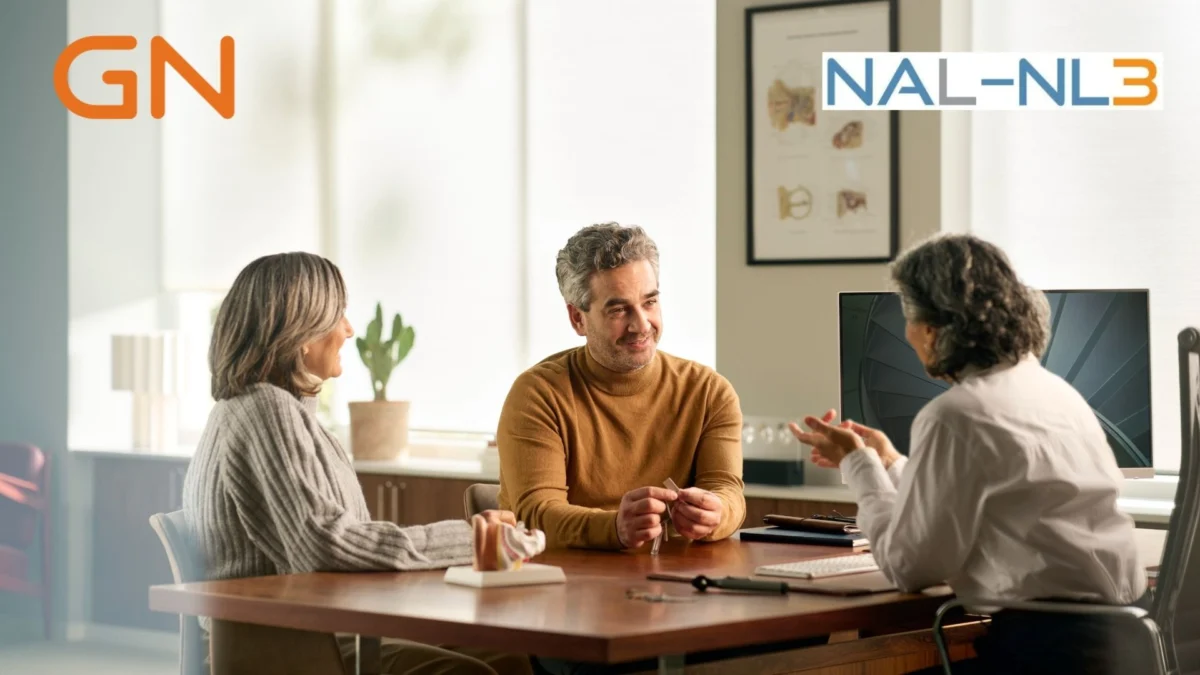
BALLERUP, DENMARK – GN, a global leader in intelligent audio solutions, has announced the worldwide release of its updated fitting software, version 2.3.1, marking a significant advancement in hearing aid technology through the direct integration of NAL-NL3, the latest hearing aid prescription formula developed by the esteemed National Acoustic Laboratories (NAL). This pivotal launch, which commenced globally on March 11, 2026, equips hearing care professionals (HCPs) with advanced tools designed to deliver more precise, consistent, and highly personalized hearing aid fittings, ultimately enhancing patient outcomes and elevating the standard of audiological care.
The introduction of NAL-NL3 into GN’s core fitting platforms—ReSound Smart Fit™ 2.3.1, Beltone Solus Max™ 2.3.1, and Hearing Australia Fitware 2.3.1—represents a culmination of extensive research and development. This integration is set to transform how hearing aids are configured, moving towards a more scientifically grounded and individually tailored approach. For decades, the National Acoustic Laboratories has been at the forefront of audiological research, and their prescription formulas have served as global benchmarks for optimizing hearing aid performance. NAL-NL3 is positioned as the next generation in this lineage, building upon previous iterations like NAL-NL1 and NAL-NL2, and is specifically engineered to support the most current evidence-based fitting practices.
The Evolution of Precision: Understanding NAL-NL3 and its Impact
Hearing aid prescription formulas are sophisticated algorithms that determine the optimal amplification characteristics for an individual’s hearing loss, considering factors such as audiogram thresholds, loudness perception, and speech understanding needs. The goal is to maximize speech intelligibility while ensuring listening comfort across various sound environments. The development of NAL-NL3 by the National Acoustic Laboratories underscores a continuous commitment to refining these crucial parameters.
Historically, the NAL formulas have been widely adopted by audiologists and hearing aid manufacturers worldwide due to their robust scientific foundation and clinical efficacy. NAL-NL3 is designed to offer enhanced performance, particularly in complex listening situations, by potentially incorporating a more nuanced understanding of signal processing, binaural hearing, and cognitive load. While the specifics of its proprietary algorithms are detailed within NAL’s research, its integration into commercial fitting software signifies its readiness for widespread clinical application. By making NAL-NL3 directly accessible within their software, GN is empowering HCPs to leverage this cutting-edge research instantly, bypassing manual calculations or approximations. This direct integration streamlines the fitting process, reduces the potential for human error, and ensures that patients receive a fitting optimized by the most current audiological science.
Beyond Prescription: Enhanced Real-Ear Measurement for Verification
Complementing the NAL-NL3 integration, GN’s updated software also features enhanced AutoREM (Real-Ear Measurement) capabilities. Real-Ear Measurement is a critical component of best practice fitting protocols, involving the use of a small microphone placed in the patient’s ear canal to measure the actual sound output of the hearing aid in situ. This process is vital for verifying that the hearing aid’s output precisely matches the individual user’s unique ear acoustics and the prescribed amplification targets.

The enhancement of AutoREM within GN’s software signifies an automated or semi-automated approach to this verification process, making it more efficient, consistent, and potentially more accurate. Traditional REM can be time-consuming and requires specialized equipment and expertise. By integrating and enhancing AutoREM, GN aims to simplify this crucial step, encouraging more HCPs to consistently perform real-ear verification. This ensures that the theoretical benefits of a prescription formula like NAL-NL3 are translated into tangible acoustic reality for the patient, leading to better initial fit, reduced need for follow-up adjustments, and ultimately, higher patient satisfaction and adherence to hearing aid use. The synergy between an advanced prescription formula and precise real-ear verification forms the bedrock of truly personalized and effective hearing healthcare.
A Testament to Collaboration: Voices from the Forefront
The significance of this launch was underscored by statements from key figures in both the research and industry sectors. Brent Edwards, Director of the National Acoustic Laboratories, expressed profound enthusiasm for GN’s pioneering role in adopting NAL-NL3. “We are incredibly excited that GN introduces the first fitting software to integrate NAL-NL3,” commented Edwards. He further emphasized the transformative potential, stating, “This will enable hearing care professionals to harness the full power of our cutting-edge prescriptive formula, providing their patients with the most precise and personalised sound experience possible. It truly elevates the standard of care.” This statement highlights the NAL’s vision for their research to be translated into practical, impactful clinical tools, and GN’s commitment to leading that translation.
From GN’s perspective, Andreas Anderhov, Regional President of Asia-Pacific for GN Hearing, specifically highlighted the strategic rollout and initial success in Australia. “This launch underscores GN’s commitment to innovation built through partnership and clinical evidence. We are proud that the very first fitting with NAL-NL3 successfully has taken place at a Hearing Australia Clinic, the largest provider of government-funded hearing services in Australia. This achievement demonstrates our dedication to people-centred innovation.” The choice of Hearing Australia for the inaugural fitting is particularly noteworthy. As a large-scale government provider, Hearing Australia serves a diverse and extensive patient population, providing a robust real-world validation of the new software and formula in a high-volume clinical environment. This successful initial deployment signals the readiness and efficacy of the integrated solution for broader global adoption.
A Chronology of Innovation in Audiology
The journey to NAL-NL3 is rooted in decades of audiological research and technological advancement.
- 1940s-1950s: Early empirical fitting methods emerge, often relying on rules of thumb and patient feedback.
- 1960s: The advent of the first scientific prescriptive methods, like the Berger method, begins to formalize gain and output targets.
- 1970s: The National Acoustic Laboratories (NAL) in Australia introduces its first prescriptive formula, NAL-R (Revised), which becomes widely influential. It focuses on achieving equal loudness across frequencies for speech.
- 1980s: NAL-RP (Revised, Profound) is developed to address the unique needs of individuals with profound hearing loss.
- 1990s: The paradigm shifts towards non-linear amplification with the introduction of digital hearing aids. NAL-NL1 (Non-linear 1) is developed, designed for fitting non-linear hearing aids, optimizing for speech intelligibility and comfort with varying input levels. This marked a significant leap in adapting fittings to the dynamic range of digital processing.
- 2000s: NAL-NL2 is released, further refining the non-linear approach based on extensive research into loudness perception, speech intelligibility, and listening preferences. It became the most widely used and validated prescription formula globally, influencing fitting practices for over a decade.
- Late 2010s – Early 2020s: Research and development for NAL-NL3 intensifies, aiming to address limitations of previous formulas in increasingly complex sound environments and with more sophisticated hearing aid features. This includes considering factors like directional microphone technology, noise reduction algorithms, and individual cognitive factors.
- March 11, 2026: GN announces the global launch of its fitting software with integrated NAL-NL3, making this cutting-edge research available to HCPs worldwide.
This timeline illustrates a consistent drive within audiology to leverage scientific understanding and technological progress to continually improve the quality of life for individuals with hearing loss. GN’s latest launch is a direct continuation of this legacy.
Broader Implications for the Hearing Healthcare Ecosystem

The integration of NAL-NL3 into GN’s fitting software carries substantial implications for various stakeholders within the hearing healthcare ecosystem:
- For Hearing Care Professionals (HCPs): The software update promises a more efficient, confident, and evidence-based fitting process. HCPs can rely on a validated formula to establish initial settings, potentially reducing the time spent on manual adjustments and fine-tuning. This allows them to focus more on patient counseling, rehabilitation strategies, and addressing individual communication needs. The enhanced AutoREM further streamlines verification, ensuring that the prescribed targets are met in the patient’s ear. This could lead to increased job satisfaction for HCPs and improved workflow management.
- For Patients: The ultimate beneficiaries are individuals with hearing loss. More precise and personalized fittings translate directly into improved sound quality, better speech understanding in various environments (including challenging noisy situations), and greater overall satisfaction with their hearing aids. Reduced need for follow-up appointments due to initial optimal fitting can also save patients time and effort. Ultimately, this can foster greater acceptance and consistent use of hearing aids, which is crucial for long-term hearing health and cognitive well-being.
- For GN and the Hearing Aid Industry: As the first manufacturer to integrate NAL-NL3 globally, GN gains a significant competitive edge. This positions the company as a leader in innovation and a strong advocate for evidence-based practice. It could influence other manufacturers to accelerate their own integration plans, thereby raising the bar for fitting software across the entire industry. The move also reinforces the importance of collaboration between academic research institutions like NAL and commercial entities to bring scientific advancements to clinical reality. This fosters a dynamic environment of continuous improvement and patient-centered innovation within the hearing aid market.
- For Research and Development: The widespread adoption of NAL-NL3 will provide invaluable real-world data, which can further inform future research into hearing aid algorithms, signal processing, and patient outcomes. It creates a feedback loop where clinical experience can refine theoretical models, pushing the boundaries of what is possible in audiological science.
The Global Challenge of Hearing Loss and the Role of Advanced Technology
Hearing loss is a pervasive global health issue. According to the World Health Organization (WHO), over 1.5 billion people worldwide experience some degree of hearing loss, and this number is projected to rise significantly in the coming decades. Untreated hearing loss can have profound negative impacts on communication, social interaction, mental health, education, and employment. Effective hearing aid intervention is therefore critical.
However, the efficacy of hearing aids is highly dependent on their proper fitting and programming. A poorly fitted hearing aid can be uncomfortable, provide inadequate amplification, or even over-amplify, leading to patient dissatisfaction and eventual abandonment of the device. This is where advancements like NAL-NL3 and enhanced AutoREM play a crucial role. By providing HCPs with the best possible tools to optimize hearing aid performance, these innovations contribute directly to addressing the global burden of hearing loss, improving accessibility to quality care, and ultimately, enhancing the lives of millions.
GN’s commitment to integrating the latest scientific breakthroughs into its commercial products reflects a broader industry trend towards more data-driven, personalized, and clinically validated approaches to hearing healthcare. This launch is not just about a software update; it is about setting a new benchmark for precision and personalization in the fitting of hearing aids, ushering in an era of improved outcomes for patients worldwide.
About GN: A Legacy of Connecting People
GN’s rich history spans over 150 years, founded with a vision to connect the world. Today, this vision translates into a diverse portfolio of leading intelligent hearing, audio, video, and gaming solutions. The company’s commitment to innovation is inspired by people and driven by a mission to enhance the senses of hearing and sight. Through brands such as Jabra, ReSound, SteelSeries, Beltone, Interton, BlueParrott, Danavox, and FalCom, GN touches lives in 100 countries. Founded in 1869, the GN Group employs more than 7,000 people globally and is publicly listed on Nasdaq Copenhagen (GN.CO). The global launch of NAL-NL3 integration within its fitting software platforms is a testament to GN’s enduring dedication to leveraging unique expertise and a broad product portfolio to bring people closer to what is important to them, particularly those navigating the challenges of hearing loss.
Source: GN