

Federal safety investigators have issued significant financial penalties to two stone manufacturing facilities in Cartersville, Georgia, following a series of follow-up inspections that revealed a persistent disregard for worker safety standards. The U.S. Department of Labor’s Occupational Safety and Health Administration (OSHA) announced that both Stone Atlanta Countertops Inc. and GT Stone Granite LLC failed to rectify critical hazards involving exposure to respirable crystalline silica and excessive noise levels—dangers that were previously documented by federal inspectors.
The enforcement action underscores a growing regulatory focus on the stone fabrication industry, where the rise of engineered stone and the traditional cutting of granite and marble have been linked to an increase in preventable respiratory illnesses. By failing to implement necessary engineering controls and personal protective equipment (PPE) programs, these companies have effectively jeopardized the long-term health of their workforces.
A Chronology of Non-Compliance
The recent citations are the result of comprehensive follow-up inspections conducted by OSHA to ensure that previous safety orders were being met. In the case of Stone Atlanta Countertops Inc., federal investigators found that the company had not only failed to address earlier violations but had allowed a culture of negligence to persist regarding respiratory protection. The agency issued two repeat, seven serious, and three other-than-serious violations, resulting in proposed penalties totaling $42,699.
GT Stone Granite LLC faced even stiffer scrutiny from federal officials. Following their inspection, OSHA identified eight repeat, four serious, and two other-than-serious violations. The proposed penalties for this facility reached $73,607. The recurring nature of these violations suggests that, despite prior notifications and opportunities to improve workplace safety, the management at both firms failed to make the structural or procedural adjustments required by law.
The Dangers of Respirable Crystalline Silica
The primary concern cited by investigators is the presence of respirable crystalline silica—a microscopic particle generated during the sawing, grinding, drilling, or crushing of stone, rock, or concrete. When these particles become airborne, they are easily inhaled by workers. Because these particles are so fine, they can travel deep into the lungs, where they cause inflammation and scarring of the tissue.

The medical implications of exposure are severe. Prolonged inhalation of silica dust is the direct cause of silicosis, an incurable and potentially fatal lung disease. Furthermore, the International Agency for Research on Cancer (IARC) classifies crystalline silica as a Group 1 carcinogen. Beyond silicosis, exposure is strongly linked to lung cancer, chronic obstructive pulmonary disease (COPD), and kidney disease.
In the context of the stone fabrication industry, the hazard is compounded by the high silica content found in many modern countertops, particularly engineered stone, which can contain significantly higher percentages of silica than natural stone. Without industrial-grade dust suppression systems, such as wet-cutting methods or localized exhaust ventilation, the air quality in these shops can quickly exceed legal exposure limits.

Regulatory Requirements and Employer Obligations
OSHA’s standards for silica exposure are designed to be stringent because the health risks are irreversible. Employers are required by federal law to implement a written exposure control plan that details how they intend to monitor and minimize airborne dust. This includes:
- Engineering Controls: Using water sprays on cutting equipment and installing high-efficiency particulate air (HEPA) filtered vacuum systems.
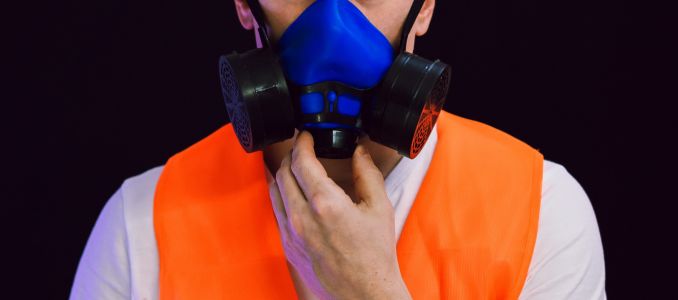
- Respiratory Protection: Providing workers with N95 or higher-rated respirators when engineering controls are insufficient, alongside a formal, written respiratory protection program that includes medical evaluations and fit testing.
- Hazard Communication: Clearly labeling dangerous materials and training employees on the specific risks associated with the substances they handle daily.
- Monitoring: Regularly measuring the amount of silica in the air to ensure it remains below the permissible exposure limit (PEL) of 50 micrograms per cubic meter of air, averaged over an eight-hour shift.
The citations issued to the Cartersville companies specifically note the absence of these core elements. By failing to provide a written respiratory protection program or a hazard communication plan, these companies deprived their employees of the essential knowledge and equipment needed to protect their own health.

Broader Implications for the Stone Fabrication Industry
The penalties levied against Stone Atlanta Countertops and GT Stone Granite represent a broader trend in OSHA enforcement. Over the past several years, the agency has prioritized "high-hazard" industries, with stone fabrication remaining at the top of the list due to the high mortality and morbidity rates associated with silica exposure.
Industry analysts note that these fines serve as a warning to smaller manufacturers who may believe that safety regulations are secondary to production speed. However, the economic cost of non-compliance goes beyond government fines. Companies facing repeat citations often experience higher employee turnover, increased workers’ compensation premiums, and the potential for litigation from former employees who develop occupational illnesses.

"The enforcement action taken by OSHA is not just about penalizing a business; it is about preventing the development of chronic, life-altering diseases in the workforce," said an industry safety consultant who reviewed the OSHA findings. "When a company is cited for ‘repeat’ violations, it indicates a failure of management to prioritize human life over output. In this industry, that failure has a very high human cost."
Next Steps and Legal Recourse
Following the issuance of these citations, both Stone Atlanta Countertops Inc. and GT Stone Granite LLC have been granted 15 business days to respond. During this period, the companies have three primary options:

- Compliance: The companies can choose to pay the fines and submit evidence to OSHA that they have corrected the violations and implemented the required safety programs.
- Informal Conference: The companies may request a meeting with the OSHA area director to discuss the citations, negotiate the fine amounts, or provide additional context regarding their safety protocols.
- Contestation: The firms have the right to formally contest the findings before the independent Occupational Safety and Health Review Commission. This legal process would require the companies to present evidence that the citations were issued in error or that the violations were not as severe as characterized by inspectors.
As of the current reporting, the companies have not issued public statements regarding their intent to contest the findings.
Conclusion: A Call for Cultural Change
The situation in Cartersville is a stark reminder that workplace safety is not a static checkbox but a continuous operational requirement. For the stone industry, the integration of dust-mitigation technology and rigorous safety training is no longer an optional business expense; it is a fundamental requirement for the viability of the enterprise.

As OSHA continues its oversight, it is expected that inspections will remain frequent in sectors with high exposure risks. For employees, the availability of these reports and the transparency of the citation process are vital tools in ensuring they have the information necessary to advocate for their own safety. The ultimate goal of the Department of Labor remains the reduction of occupational fatalities and the protection of workers who, in the absence of corporate responsibility, remain the most vulnerable stakeholders in the manufacturing process.