

The Evolution of Core Vocabulary Instruction
The concept of core vocabulary—a small set of high-frequency words that account for approximately 80% of what we say—has become the gold standard in AAC intervention. By prioritizing words like "go," "more," "stop," and "that," communication partners can model language in a way that is functional, flexible, and applicable across diverse environments.
The initiative began with the foundational "Year of Core Vocabulary Words," which sought to move away from the traditional, often ineffective, "word of the week" approach that prioritized fringe vocabulary (e.g., specific nouns like "apple" or "giraffe"). Instead, this initiative emphasized the durability of core words. Over the past several years, this project has evolved from a simple list into a multi-tiered pedagogical framework. The chronological development of these resources reflects a maturation in the field:
- 2013-2015: The initial launch of the "Year of Core Vocabulary" series, establishing the monthly thematic approach.
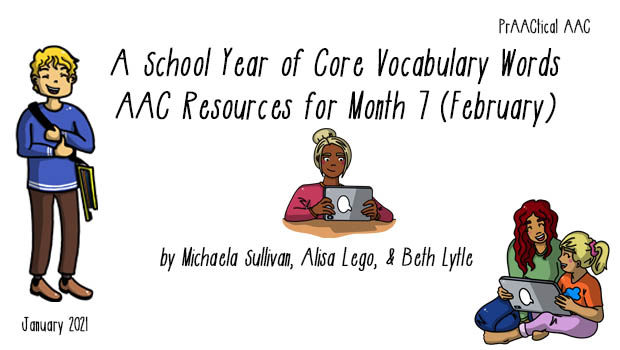
- 2020: The introduction of the "School Year of Core Vocabulary Words," a more structured curriculum designed by guest contributors Michaela Sullivan, Alisa Lego, and Beth Lytle, which tailored activities specifically for the classroom environment.
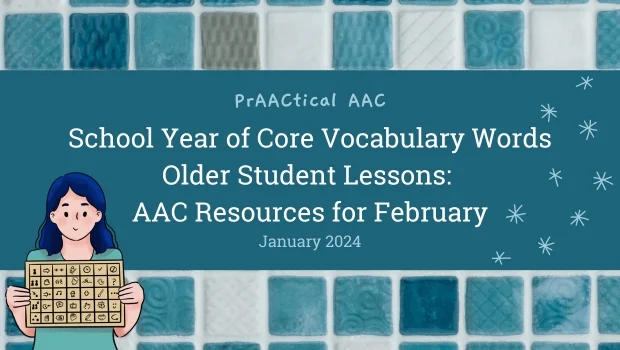
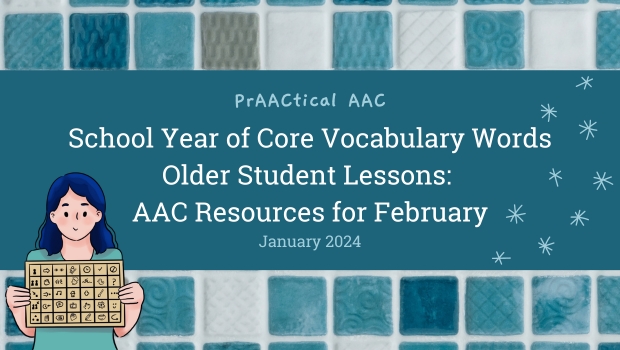
- 2023-2024: The expansion of the model to include dedicated lessons for older students, addressing the need for age-respectful and cognitively appropriate material for adolescents and young adults.
Data-Driven Pedagogical Frameworks
Research in speech pathology consistently demonstrates that individuals who use AAC require significant exposure to language models before they can reliably produce their own messages. This process, often referred to as "aided language stimulation," requires communication partners to provide consistent visual and auditory input of core words on the user’s communication device.

The resources provided in this February update are structured to support this input. The activity calendars, a hallmark feature developed by SLP Rachael Langley, provide a daily roadmap for modeling. For a child or student to move from receptive understanding to expressive use of a word, they require, on average, hundreds of repetitions in varied contexts. The "School Year of Core Vocabulary" curriculum provides exactly these types of structured, diverse opportunities, ensuring that core words are not just taught in a clinical session but are integrated into math, social studies, and extracurricular activities.
Structuring the February Resources
The materials available for February are categorized into three distinct tiers, ensuring that practitioners can select the level of complexity that aligns with the student’s current communication profile:
1. Set 1 and Set 2 Foundations
These resources cater to early communicators and those just beginning their journey with AAC. The focus is on high-frequency, functional words that allow for immediate communication of needs and preferences. These sets prioritize "low-floor, high-ceiling" activities—tasks that are simple to start but offer depth for more complex interaction.
2. School Year of Core Vocabulary
Designed by a collaborative team of experts, this segment of the resource library is tailored for the academic calendar. It incorporates classroom-specific vocabulary and social communication strategies. By aligning with the school year, these resources help bridge the gap between home and the classroom, fostering a consistent communicative environment.
3. Older Student Lessons
Perhaps the most significant development in recent years is the shift toward materials specifically designed for older students. There is often a pervasive "developmental age" bias in AAC, where adolescents are given materials designed for toddlers. The 2023-2024 curriculum updates mitigate this by focusing on age-appropriate topics—such as social media, personal advocacy, and workplace communication—while still targeting essential core vocabulary.
Implications for AAC Intervention
The systematic nature of these resources addresses a critical hurdle in the field: the "implementation gap." Many educators and parents have access to high-tech speech-generating devices but lack a roadmap for how to use them effectively throughout the day. By providing a structured, month-by-month plan, these resources alleviate the cognitive load on the communication partner.
Professional feedback from the AAC community suggests that when instruction is planned and intentional, rather than spontaneous or reactive, the outcomes for students are significantly improved. The collaborative nature of this project—drawing on the expertise of practitioners like Michaela Sullivan, Lindsay Dougherty, and the original team—ensures that the materials remain grounded in real-world clinical experience rather than abstract theory.
Broader Educational and Social Impact
The implications of this initiative extend beyond individual communication gains. By equipping teachers and SLPs with these tools, the PrAACtical AAC project helps create inclusive classroom cultures where students with complex communication needs are seen as active participants in the learning process.
When a student has access to core vocabulary, they are better positioned to express opinions, ask clarifying questions, and participate in peer-to-peer discussions. This shifts the role of the student from a passive recipient of information to an active stakeholder in their education. Furthermore, the focus on core words supports the "presumption of competence"—a fundamental ethical stance in AAC that assumes every individual has the capacity to communicate, provided they have the right tools and support.
Challenges and Future Directions
Despite the availability of these resources, the field still faces challenges regarding the consistent implementation of AAC in general education settings. Time constraints, heavy caseloads for SLPs, and a lack of specialized training for general education teachers remain persistent obstacles.
The February resources are designed to be "plug-and-play" to address these time-based pressures. By offering pre-made calendars and lesson plans, the project reduces the time required for preparation, allowing educators to focus on the high-quality interactions that truly move the needle on communication development.
As the community looks toward the remainder of the 2026 school year, the continued distribution of these resources highlights a shift toward a more collaborative, open-access model of professional development. The legacy of these contributors—whose work has been iterated upon and refined over more than a decade—serves as a testament to the power of shared knowledge in the field of assistive technology.
Conclusion
For practitioners and families looking to enhance their AAC practice, the resources highlighted for February provide a robust, evidence-based starting point. Whether working in a preschool classroom or an adult day program, the commitment to core vocabulary remains the most effective strategy for fostering long-term communicative independence. By utilizing these structured, chronological materials, stakeholders can ensure that students receive the consistent, high-frequency modeling necessary to unlock their full potential. As these tools continue to be refined and expanded, they remain an essential component of the modern AAC toolkit, bridging the gap between potential and performance.