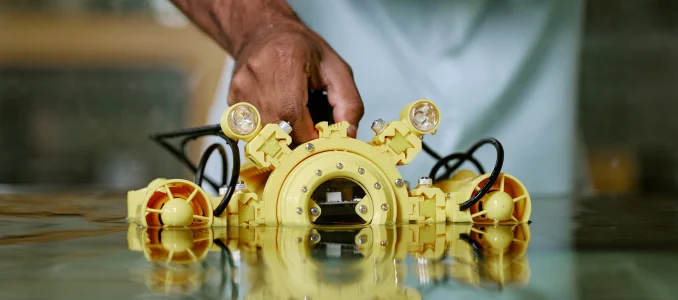
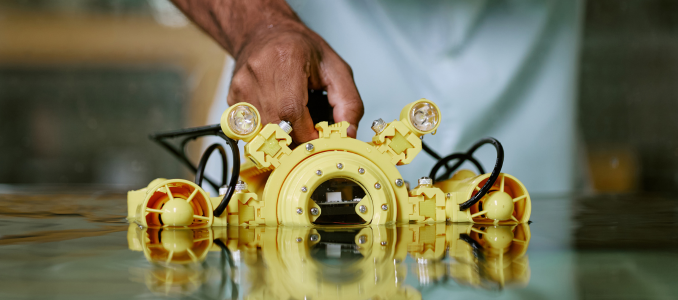
The proposed system utilizes a tethered dual-robot architecture. In this design, the first unit—developed by the Stony Brook team—functions as a primary navigation and steering module, guiding the pair from the air-water interface down to the seabed. Once the pair reaches the target area, the second unit, engineered by Case Western Reserve, is tasked with the delicate operation of burrowing into the sediment to inspect and identify potential explosive hazards. This division of labor allows for both mobility in the water column and precise excavation capabilities, a combination that has historically proven difficult for single-body autonomous underwater vehicles (AUVs).
The Technical Challenge of Surf Zone Operations
The necessity for this project arises from the unique physical characteristics of surf zones. In these areas, constant wave action, shifting tides, and high-velocity currents create a chaotic environment. William Stewart, an assistant professor in Stony Brook’s Department of Mechanical Engineering and the project’s lead researcher, notes that standard underwater robots typically rely on small jet thrusters for propulsion. While effective in the open ocean, these thrusters are frequently inadequate for the surf zone.

"Typical underwater robots driven by small jet thrusters are a poor fit for surf zones, where conditions keep changing," Stewart explained. "Those robots cannot alter their trajectories or torques fast enough to respond to the rapid fluctuations of waves and currents."
When a jet-propelled AUV attempts to navigate such an environment, the system often experiences "control lag," where the internal processors cannot adjust the thrust output quickly enough to compensate for the force of an incoming wave. This failure to stabilize results in the robot being tossed or swept off course, making it impossible to perform delicate tasks like scanning for buried ordnance. Crabs, however, have evolved to thrive in these exact conditions. By utilizing a combination of swimming appendages and sturdy, articulated legs, crustaceans can anchor themselves against the force of a wave or move efficiently through the water column. The researchers are now translating these biological adaptations into robotic actuators, examining how similar motions could stabilize a robot in high-energy, unpredictable environments.

Research Timeline and Development Phases
The development of this technology is currently in a critical experimental phase, with a multi-year roadmap focused on transitioning from theoretical computer modeling to physical validation.
- Initial Modeling (2024–2025): The team began by developing advanced computer simulations to model the fluid dynamics of the crab-like appendages. These models are intended to predict how the robots will interact with water currents and moving sand.
- Facility Development (2025–2026): Stony Brook University is currently finalizing a specialized test facility at the School of Marine, Atmospheric, and Sustainability Sciences (SoMAS) Boathouse. The facility will feature a 40-foot wave tank equipped with advanced fan arrays capable of simulating gusting winds and complex wave patterns.
- Physical Testing and Calibration (2026–2027): Once the facility is operational, the team will begin testing the prototypes. Data collected from the wave tank will be used to fine-tune the control algorithms, specifically focusing on how the tethered robots manage the transition between aerial deployment and deep-sea operation.
- Field Deployment (2027 and beyond): Pending successful trials in the controlled environment of the wave tank, the team plans to conduct field demonstrations off the coast of Southampton, New York. These tests will subject the robots to real-world maritime conditions, including tidal surges and varying sediment density.
Limitations of Current Computational Models
One of the significant hurdles identified by the research team is the inadequacy of current computational fluid dynamics (CFD) in predicting the behavior of flexible structures in turbulent water. While computer models are excellent for standard, rigid-body robotics, the inclusion of flexible "flippers" and appendages introduces a level of complexity that existing software often fails to capture accurately.

Stewart emphasizes that physical testing is not merely a final step, but an essential component of the iterative design process. Because the fluid-structure interaction—the way the water pushes against the robot and the robot pushes back—is so complex, real-world data from the new wave tank is expected to refine the team’s understanding of how these robots perform. This data will serve as a feedback loop, allowing engineers to adjust the mechanical design and the software control logic to optimize movement efficiency and energy consumption.
Broader Implications for Maritime Security and Safety
The implications of this research extend far beyond academic curiosity. Unexploded ordnance, including mines, artillery shells, and bombs discarded or left behind during military exercises and conflicts, remains a global issue. These items are often covered by layers of sand and silt, making them difficult to detect with traditional sonar or visual scanning techniques. When left in place, they pose a significant threat to coastal communities, commercial fishing operations, and marine ecosystems.

By developing a robot that can safely "bury" itself in the seafloor to inspect these hazards, the team is offering a potential solution that reduces the risk to human divers and expensive, large-scale naval equipment. The ability to autonomously identify and map these hazards would enable more efficient cleanup operations, turning what is currently a high-risk manual labor job into a semi-automated, data-driven process.
Furthermore, the technology holds promise for secondary applications in marine biology and environmental monitoring. A robot capable of navigating a surf zone and remaining stable on the seafloor could be repurposed to monitor coastal erosion, track the movement of sediment, or observe the behavior of benthic species in their natural, high-energy habitats.

Official Stance and Funding Context
The U.S. Office of Naval Research (ONR) has invested heavily in this project, reflecting a broader strategic interest in autonomous systems that can operate in the "littoral" or near-shore zone. The littoral environment is notoriously difficult for traditional naval technology, yet it is a critical theater for modern maritime security.
The $2.4 million grant provides the necessary infrastructure for the SoMAS Boathouse upgrades and ensures that the university has the resources to recruit graduate researchers and maintain the specialized hardware required for the project. While the current focus is on the prototype, stakeholders anticipate that successful demonstrations will pave the way for larger-scale integration into naval reconnaissance and mine-countermeasure (MCM) operations.

As the research moves toward the testing phase in the 40-foot wave tank, the engineering community will be watching closely. The success of the "crab-bot" could represent a paradigm shift in how autonomous vehicles interact with the most challenging environments on Earth. By embracing biomimicry, the collaborative team at Stony Brook and Case Western is moving away from the "brute force" approach of jet-propelled robotics and toward a more nuanced, biological model of navigation that respects the power of the ocean rather than attempting to fight it. If the physical testing validates the computer models, the project will serve as a blueprint for the next generation of resilient, adaptive marine robotics.