

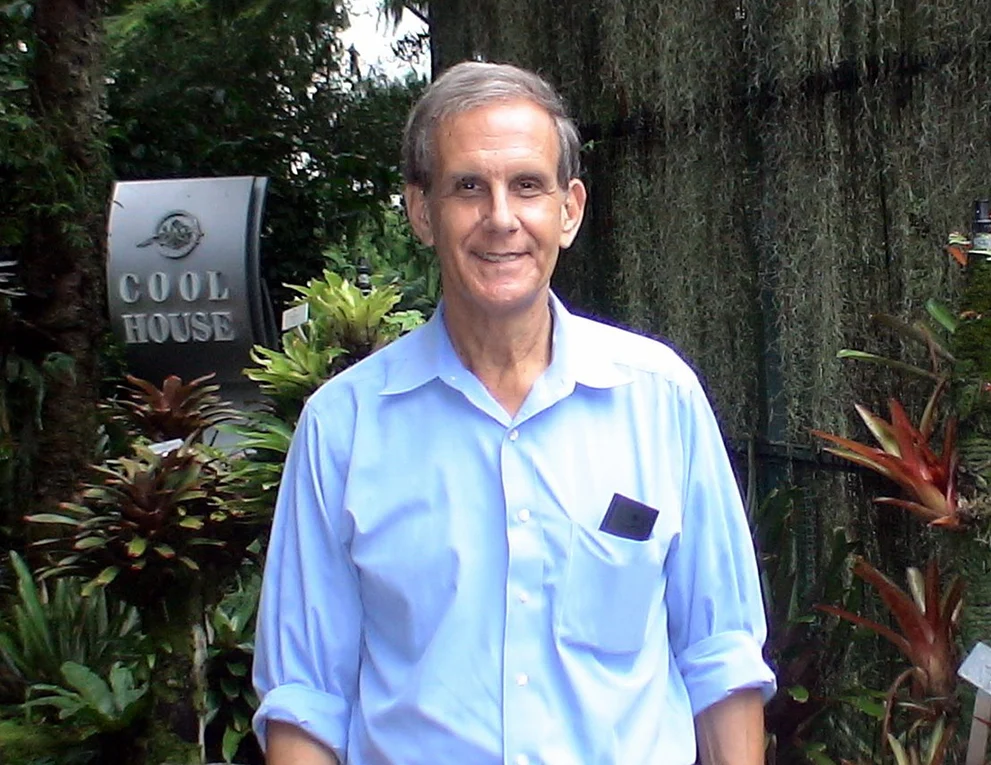
The Vestibular Disorders Association (VeDA) has announced a transformative donation from Dr. David Zee, MD, a world-renowned neurologist whose career at Johns Hopkins University has spanned six decades. This significant contribution is aimed at bolstering VeDA’s medical advocacy programs, specifically targeting the enhancement of educational tools, the expansion of professional clinician training, and the amplification of outreach efforts for both patients and healthcare providers. Dr. Zee, who has served as a long-standing member of VeDA’s Medical and Scientific Advisory Board, has recently transitioned into a new leadership role as a Trustee, further solidifying his commitment to the organization’s mission of providing support and resources for those suffering from balance-related disorders.
The announcement marks a pivotal moment for the vestibular community, as Dr. Zee’s involvement combines high-level clinical expertise with the financial resources necessary to bridge the gap between complex neurological research and accessible patient care. His donation is expected to fund initiatives that simplify the diagnostic process for dizziness and vertigo—symptoms that remain among the most common yet frequently misdiagnosed complaints in primary care and emergency medicine.
A Legacy of Excellence at Johns Hopkins University
Dr. David Zee’s professional trajectory is inextricably linked with Johns Hopkins University, an institution synonymous with medical innovation. His journey began in 1965 as a medical student, a period during which the field of neurology was undergoing significant shifts toward understanding the intricate relationship between the brain and sensory systems. After completing his initial medical training and immersing himself in clinical practice, Dr. Zee pivoted toward a specialized focus on eye-movement and vestibular disorders.
Over the course of nearly 55 years, Dr. Zee has remained at the forefront of neuro-ophthalmology. His work at Johns Hopkins has not only contributed to the university’s reputation as a leader in brain sciences but has also provided a foundation for the modern understanding of how the human brain maintains stability in a moving world. By integrating bedside observations with rigorous laboratory experimentation, Dr. Zee developed a methodology that reconciled the physical symptoms of patients with the underlying mathematical and biological mechanisms of the nervous system.
Groundbreaking Research and the Definitive Text on Eye Movements
One of the most significant milestones in Dr. Zee’s career occurred in 1980. Working alongside colleagues from Johns Hopkins and the United Kingdom, he identified the first effective pharmacologic therapy for a persistent, pathological form of nystagmus—a condition characterized by involuntary, rhythmic eye movements—associated with cerebellar disorders. Before this discovery, patients suffering from these types of ocular instabilities had few, if any, treatment options to stabilize their vision.
Dr. Zee’s influence on the field is perhaps most visible through his academic contributions. He co-authored The Neurology of Eye Movements with John Leigh, a textbook that is universally regarded as the definitive resource for neurologists, ophthalmologists, and vestibular therapists. Currently in its fifth edition, the text serves as a comprehensive guide to the anatomy, physiology, and pathology of the systems that control gaze. The book is credited with standardizing the language used by clinicians to describe ocular motor disorders, thereby improving the accuracy of diagnoses across the globe.
Throughout his career, Dr. Zee has authored or co-authored over 560 peer-reviewed publications. His research portfolio covers an expansive range of topics, including the function of the cerebellum, the mechanics of the vestibulo-ocular reflex (VOR), and the ways in which the brain adapts to trauma or disease. His ability to translate complex "wet lab" findings into clinical applications has made him a central figure in the evolution of vestibular medicine.
The Intersection of Physics and Medicine: The MRI Discovery
In the mid-2010s, Dr. Zee and his team tackled a phenomenon that had long puzzled clinicians: why patients frequently experience vertigo and nystagmus when entering or exiting an MRI scanner. Through meticulous study, Dr. Zee and his collaborators demonstrated that the strong static magnetic fields of an MRI machine exert a "Lorentz force" on the fluid (endolymph) in the inner ear’s semicircular canals. This force creates a sensation of movement where none exists, triggering the vestibular system.
This discovery had profound implications for the scientific community. It not only explained a common patient complaint but also necessitated a re-evaluation of functional MRI (fMRI) studies. Researchers realized that the vestibular stimulation caused by the magnetic field could potentially bias brain activity data, particularly in studies involving balance or spatial orientation. For this groundbreaking work, Dr. Zee was awarded the Bárány Society Gold Medal in 2018, an honor reserved for the most outstanding vestibular research conducted worldwide over the preceding six-year period.
Advancing Bedside Diagnosis and Digital Health Solutions
Despite his high-level research, Dr. Zee has maintained a steadfast focus on the practical needs of the "dizzy patient." Recognizing that many primary care providers struggle to differentiate between benign and life-threatening causes of vertigo, he co-authored the "Dizzy Exam Guide" with Dr. Amir Kheradmand and Dr. Joel Goebel. This guide was designed to provide a structured, evidence-based approach to the physical examination, empowering clinicians to make more accurate diagnoses at the bedside without immediately resorting to expensive or unnecessary imaging.
In recent years, Dr. Zee has embraced the digital health revolution. He has been instrumental in the development of smartphone-based eye-tracking tools. These applications utilize high-resolution mobile cameras to track and analyze nystagmus, specifically for the diagnosis of Benign Paroxysmal Positional Vertigo (BPPV). BPPV is the most common cause of vertigo, occurring when small calcium carbonate crystals shift into the semicircular canals of the inner ear. By providing a low-cost, portable diagnostic tool, Dr. Zee’s work aims to make specialized vestibular testing accessible to clinicians in rural or underserved areas.
Furthermore, his recent collaborative proposals include the creation of standardized BPPV testing protocols using 3D simulations. These simulations allow students and clinicians to visualize the movement of "ear stones" within the canals in real-time, enhancing the precision of the Epley maneuver and other canalith repositioning treatments.
Strengthening the Mission of the Vestibular Disorders Association
The recent donation by Dr. Zee is a logical extension of his lifelong commitment to the field. VeDA, an organization that has spent decades advocating for the millions of people affected by vestibular dysfunction, relies on the synergy between medical expertise and philanthropic support. According to industry analysts, vestibular disorders are often "invisible illnesses" that receive significantly less funding and public attention than other neurological conditions like Parkinson’s or Alzheimer’s disease.
Dr. Zee’s contribution is expected to have a multi-faceted impact on VeDA’s operations:
- Educational Resource Development: Funding will support the creation of high-quality, patient-centered materials that explain complex vestibular conditions in accessible language.
- Clinician Training: A portion of the funds will likely be directed toward continuing medical education (CME) programs, ensuring that the next generation of healthcare providers is equipped with the latest diagnostic techniques.
- Research Advocacy: By serving as a Trustee and a major donor, Dr. Zee provides the organizational weight needed to lobby for increased federal research funding for balance disorders.
- Patient Outreach: Enhancing the digital infrastructure of VeDA to connect patients with specialized "vestibular-aware" providers more efficiently.
In 2017, VeDA recognized Dr. Zee’s contributions with the "Champion of Vestibular Medicine Award." His current role as a Trustee ensures that his vision for a more informed and capable medical community will continue to guide the organization’s strategic decisions.
Broader Implications for the Future of Vestibular Care
The work of Dr. David Zee highlights a critical shift in neurology: the move toward precision medicine in the diagnosis of sensory disorders. As the global population ages, the prevalence of balance-related issues is expected to rise, increasing the risk of falls and subsequent hospitalizations. According to data from the Centers for Disease Control and Prevention (CDC), falls are the leading cause of injury-related death among adults aged 65 and older, and vestibular dysfunction is a primary contributor to this risk.
Dr. Zee’s emphasis on bedside diagnosis and affordable technology addresses the economic burden of these disorders. By reducing the time to diagnosis and the number of ineffective treatments, his contributions help lower healthcare costs while improving the quality of life for patients.
The vestibular community’s reaction to Dr. Zee’s donation and continued leadership has been one of overwhelming gratitude. Colleagues note that his "unwavering devotion" and "scientific rigor" have set a standard for the field. For patients, Dr. Zee represents a bridge between the laboratory and the clinic—a luminary whose work provides not just answers, but the hope for a steadier future.
As VeDA moves forward with its expanded advocacy programs, the legacy of Dr. David Zee will serve as both a foundation and a catalyst. His career demonstrates that the pursuit of scientific truth, when paired with a genuine desire to help others, can transform the landscape of modern medicine. Through his research, his mentorship of hundreds of trainees, and now his significant philanthropy, Dr. Zee remains a central figure in the ongoing effort to help the world find its balance.