

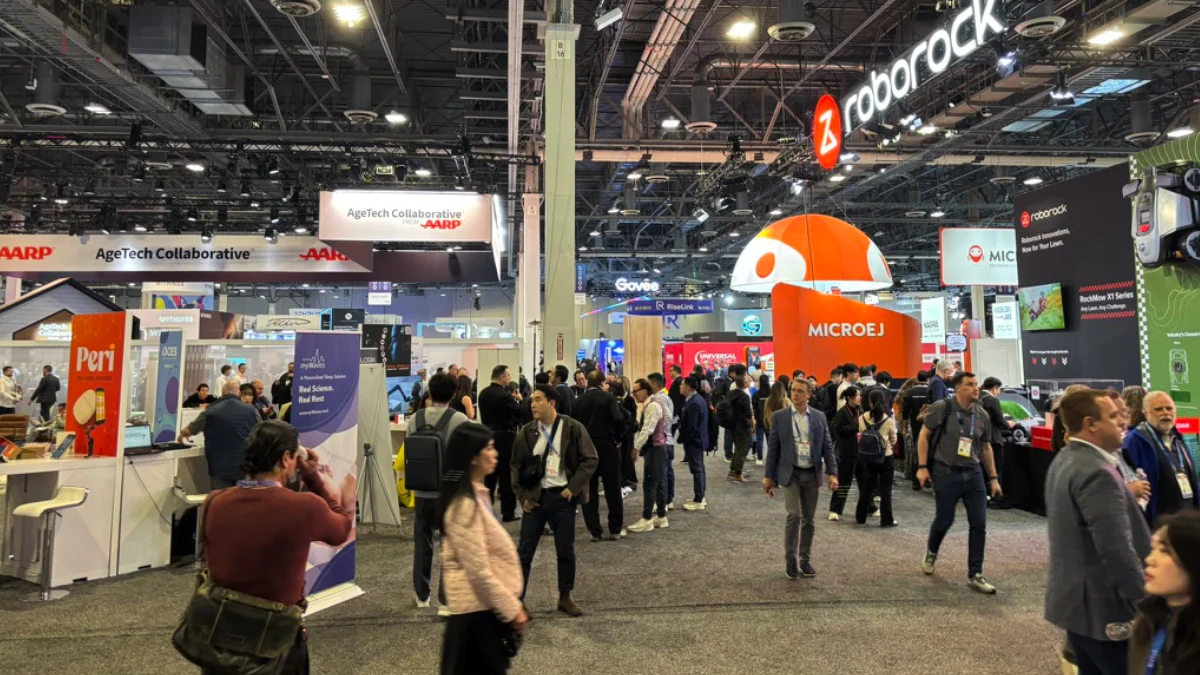
LAS VEGAS – The Consumer Electronics Show (CES) 2026, held annually as a premier global platform for technological innovation, concluded with significant revelations in the realm of hearing health and assistive technologies. Published on January 19, 2026, observations from the show floor indicated three major trends poised to redefine the landscape of auditory assistance: the rapid and impressive evolution of over-the-counter (OTC) hearing aids from China, the emergence of hybrid hearing and live-captioning glasses as a potential game-changer, and the accelerating integration of accessibility features into mainstream consumer electronics. These developments underscore a pivotal shift towards more accessible, affordable, and technologically sophisticated solutions for individuals with hearing loss and for broader communication enhancement.
The Ascent of Chinese OTC Hearing Aids: Rapid Innovation and Market Disruption
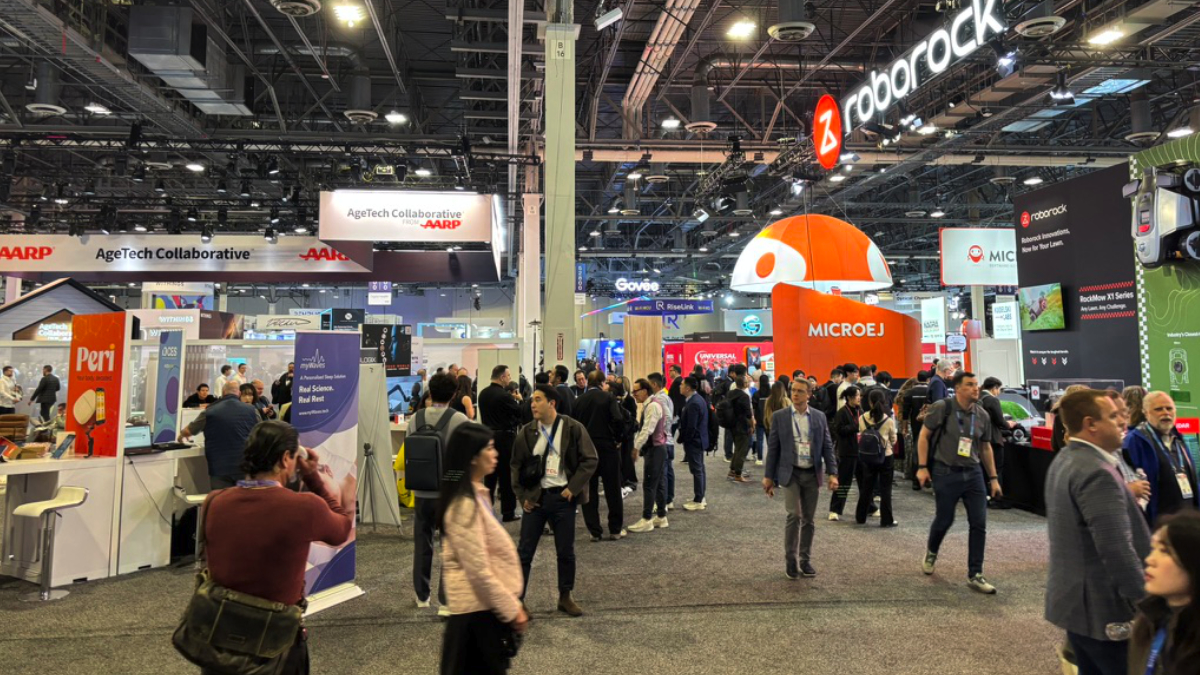
Just over three years after the U.S. Food and Drug Administration (FDA) finalized its rules for over-the-counter (OTC) hearing aids in October 2022, the market has undergone a dramatic transformation. Initially, a significant portion of the influx of new devices, particularly those from Chinese manufacturers, were perceived as basic, pre-set amplifiers with limited features, often struggling with sound quality and speech clarity in noisy environments. Many early models were characterized by a utilitarian design, prompting skepticism from industry veterans and consumers alike.
However, CES 2026 presented a starkly different picture. Chinese hearing aid manufacturers were not only prominent but showcased devices that have achieved remarkable advancements in sophistication and performance. Companies like ELEHEAR, Yeasound, and Cearvol have rapidly climbed the ranks, with models such as the ELEHEAR Beyond and Beyond Pro, Yeasound RIC800, and Cearvol Wave now consistently featuring among the top-10 best-performing OTC hearing aids in independent evaluations by labs like HearAdvisor. This rapid improvement is particularly noteworthy given their competitive price points, with many leading models retailing for less than $700.
This swift evolution is attributed to several factors. Chinese manufacturers have significantly ramped up their research and development investments, leveraging advancements in artificial intelligence (AI), miniaturization, and digital signal processing. They have moved beyond generic chipsets to develop proprietary algorithms and hardware that enhance speech understanding in complex listening environments, reduce feedback, and improve overall sound quality. For instance, ELEHEAR, with dual headquarters in Minneapolis and Shenzhen, China, demonstrated its AI-powered Beyond series. These devices integrate user-friendly apps, real-time translation capabilities, and tinnitus management features, delivering exceptional speech clarity in noise. While not designed to replace the bespoke fitting and advanced features of prescription hearing aids from industry giants like Phonak, Oticon, or Starkey, these OTC alternatives offer a highly effective and significantly more affordable option for millions.
)
The diversity in form factors has also expanded beyond traditional Receiver-In-Canal (RIC) designs. Cearvol, for example, showcased a surprisingly broad array of open- and closed-ear OTC hearing aids and wearables. CEO Quilong Zhu highlighted the company’s access to a vast pool of engineers with experience from leading consumer electronics brands like Sennheiser and JBL, underscoring the deep technical expertise now being applied to hearing devices. Their flagship Cearvol Wave earbud/ITE, despite being a preset aid, achieved an "A" SoundGrade from HearAdvisor, indicating strong performance. ELEHEAR also introduced "Delight," a compact, rechargeable, in-ear hearing aid designed for discreet everyday wear, complete with a smart app and remote fitting support, alongside Bluetooth audio streaming.
Other notable players at CES included Ceretone and Jinghao Medical. Jinghao, a major original design manufacturer (ODM), made headlines in September 2024 with its acquisition of Intricon’s hearing aid division. This strategic move is expected to integrate Intricon’s respected technology into Jinghao’s designs, benefiting partners like Ceretone, which displayed its compact Core One Pro IIC rechargeable hearing aid.
The bottom line is that Chinese hearing aid technology has matured considerably, with speech-in-noise processing capabilities now rivaling established global OTC competitors such as Sony/WSA, Lexie/LXE, and Lucid Hearing. This competitive acceleration promises to democratize access to quality hearing amplification for the estimated 400 million people globally who could benefit from hearing aids. While the U.S. prescription hearing aid market presents complex distribution challenges, the rapid innovation and competitive pricing from Chinese manufacturers, alongside U.S.-based innovators like Fortell, suggest a potential future bid to enter this more regulated segment within the next few years. This market dynamism is a clear win for consumers, offering more choices and driving down costs.
)
Hybrid Hearing and Live-Captioning Glasses: A Vision for Repositioned Hearing Care
The concept of hearing aids integrated into eyeglasses is not new, with such devices dominating the U.S. market in the 1960s. However, CES 2026 demonstrated a sophisticated resurgence of this form factor, driven by advancements in smart glass technology and artificial intelligence. The new generation of "hearing glasses" and "audio glasses" transcends mere amplification, integrating features like live captioning and advanced audio processing to offer a holistic solution for communication challenges.
Nuance Audio, a division of the global eyewear giant Essilor-Luxottica, showcased its OTC hearing glasses at the AARP AgeTech Collaborative. These devices, designed for individuals with mild to moderate hearing loss, have received an "A" SoundGrade from HearAdvisor, indicating strong performance. Dr. Douglas Beck, a prominent audiologist and Nuance collaborator, highlighted the growing commercial traction, buoyed by Essilor-Luxottica’s extensive retail network of 18,000 stores and 300,000 third-party points of sale. This distribution power provides a unique advantage in bringing innovative hearing solutions to a broad consumer base.
)
Cearvol also introduced a novel design for hearing aid glasses, featuring a unique swiveling, inch-long "arm" near the temple that houses the receiver for situational hearing enhancement. While not yet officially an OTC hearing aid, its design for flexible use—with the receiver able to swivel up when not needed—points to a user-centric approach. Further pushing the boundaries, Alango Founder Alexander Goldin demonstrated a prototype of AI-driven audio glasses boasting a directional microphone array with virtually zero latency and extended battery life. His prototype, utilizing an earbud-like transducer, allowed for clear speech understanding even amidst the noisy show floor, underscoring the potential for highly effective, discreet amplification.
The most compelling vision, however, lies in the integration of live-captioning technology with these amplification capabilities. Such hybrid glasses could offer profound benefits for individuals with severe or profound hearing loss, providing both auditory enhancement and visual text transcription of conversations. Vuzix, a leader in smart glasses, showcased its platform, which powers products like XanderGlasses. While impressive, XanderGlasses currently faces challenges regarding limited battery life and a high price point (around $5,000).
The landscape is poised for significant disruption with Meta’s entry into this space. As reported in September, Meta’s new Conversation Focus and live-captioning glasses represent a formidable force. The Conversation Focus feature, delivered as a software update to existing Ray-Ban Meta (Gen 2) and Oakley Meta HSTN smart glasses (starting under $400), intelligently amplifies the speaker’s voice while suppressing background noise. The new Meta Ray-Ban Display glasses, priced at $799, further integrate live captioning. Through its collaboration with Essilor-Luxottica, Meta is effectively transforming fashionable eyewear into advanced situational hearables, making the technology appealing and accessible to a wider demographic.
)
While technical hurdles such as battery life, latency, and device size remain, the pace of innovation suggests these will be overcome swiftly. A recent report by Susannah Ludwig and colleagues at Bernstein articulated a compelling case for these devices: their immediate impact may not be in replacing traditional hearing aids but in capturing the vast population with mild hearing loss who do not identify as hearing aid users. These consumers are more likely to embrace solutions that feel like consumer tech rather than medical treatment. Furthermore, transcription glasses could mitigate the "neuroadaptation problem"—the initial discomfort many first-time hearing aid users experience—by providing visual cues, especially crucial in OTC models where professional counseling is limited. The mainstream appeal of glasses, coupled with the growing preference for captions among younger generations, positions "subtitles for real life" as a significant draw for the stigma-conscious OTC market.
The potential extends to prescription hearing aids, where captioning eyeglasses could become integrated accessories, perhaps wirelessly connecting a boom-type multi-mic array to a RIC device. This "back to the future" scenario, where hearing aids return to eyewear, but without the feedback and with added captioning, holds immense promise. When combined with technologies like Auracast and competitive pricing ($250-$400), these devices could appeal to a diverse demographic, making advanced hearing assistance both cool and attainable.
CES 2026: The Mainstreaming of Accessibility
)
The third major takeaway from CES 2026 was the unequivocal shift of hearing-related accessibility into the mainstream. The exhibition clearly demonstrated that technology designed to enhance hearing is no longer exclusively for individuals with clinically diagnosed hearing loss; its utility extends to everyone, fostering better communication and situational awareness for a broader population.
This theme was prominently featured throughout CES 2026. The CTA Foundation’s Accessibility Stage, powered by Verizon and strategically located on the Venetian Expo’s second level, served as a hub for discussions on inclusive technology. A key seminar featured Henry Wong of the Bluetooth SIG, Wayne Whiteley of Listen Technologies, and Luke Westin of Williams AV. Their presentation highlighted how Auracast, a new Bluetooth broadcasting technology, is poised to dismantle barriers and revolutionize both consumer audio and assistive listening devices.
Auracast enables a single audio transmitter to broadcast to an unlimited number of nearby Auracast receivers, effectively creating public or personal broadcast audio networks. This means users could, for example, listen to public address systems in airports, TVs in gyms, or presentations in conference halls directly through their personal Auracast-enabled headphones, earbuds, or hearing aids. This capability dramatically improves accessibility in public spaces and offers unparalleled convenience.
)
Bill Schiffmiller, a Forbes contributor, echoed this sentiment in his recent op-ed, declaring that CES 2026 marked a turning point where "accessibility stopped being something the industry talked about and became something the industry is now building around." He further elaborated that the long-term signal was not that accessibility had arrived as a distinct destination, but that it is "beginning to dissolve into everything else." This powerful observation captures the essence of the shift: accessibility is transitioning from a niche concern to an inherent design principle for a vast array of consumer technologies.
The pivotal question remains: when will Auracast truly "dissolve" into everyday technology? Discussions at the Bluetooth SIG suite, including with Henry Wong and David Hollander, revolved around the inevitable adoption by major players. While no inside knowledge of Apple’s intentions or timelines was disclosed, the consensus was clear: the moment Auracast appears in products like Apple’s AirPods Pro, consumers will swiftly grasp its immense utility. This adoption, once considered years away, is now potentially much closer.
The anticipation for Auracast, though perhaps sounding like a tech-nerd’s version of a Samuel Beckett play, carries a crucial distinction: unlike the play, Auracast will arrive. When it does, it will serve as a powerful exclamation point on how new technology is not just embracing accessibility out of ethical imperative, but because it fundamentally enhances the attractiveness and functionality of all audio products. This mainstreaming of accessibility promises not only to improve the lives of individuals with hearing challenges but also to enrich the auditory experience for everyone, making the world a more connected and understandable place.