

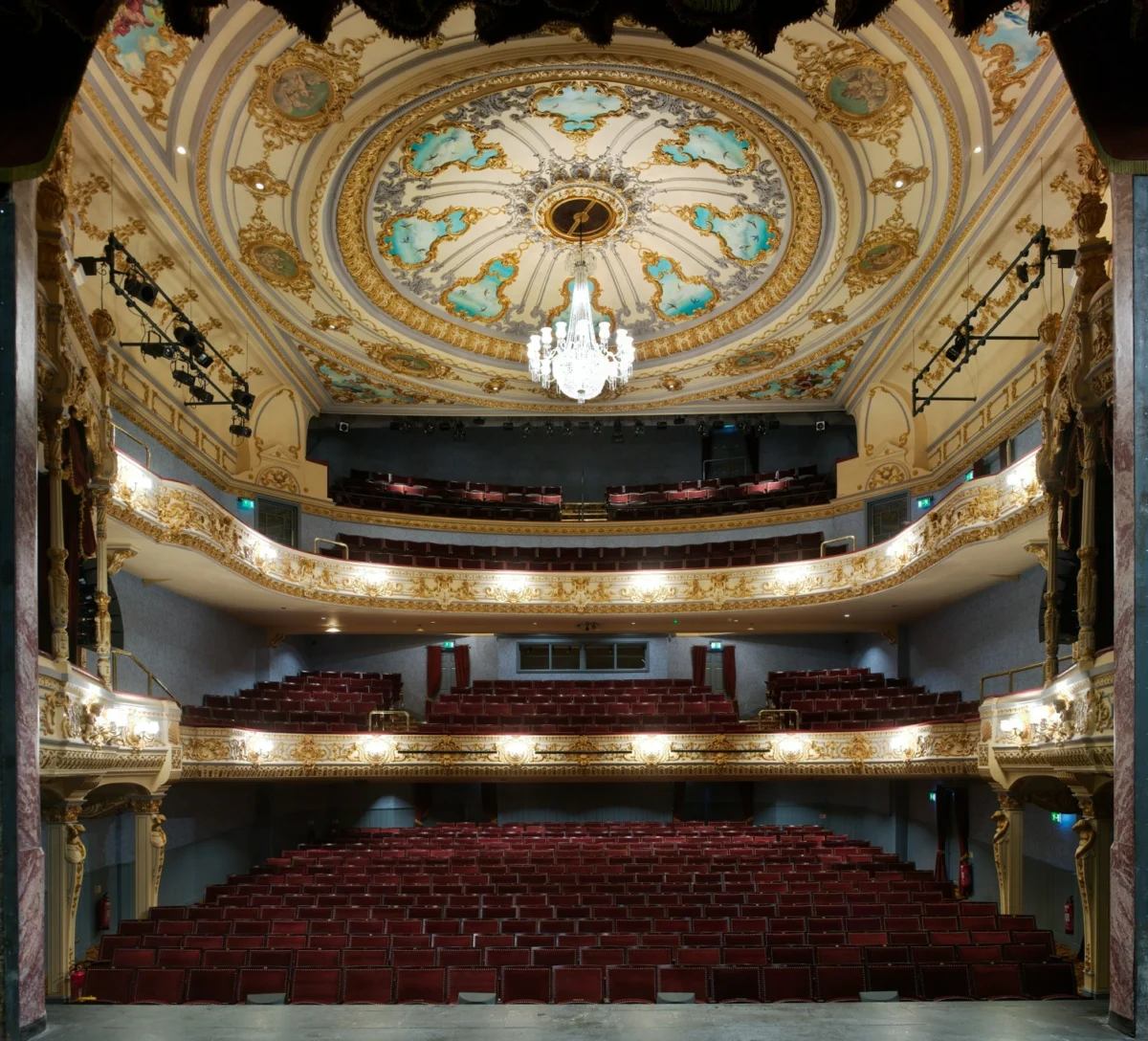
Live theatre, an art form rich in auditory nuance and spoken word, has historically faced significant hurdles in ensuring full accessibility for individuals with hearing loss. For decades, assistive listening systems have been a staple, yet they often grappled with inherent limitations stemming from complex venue acoustics, outdated infrastructure, and an inconsistent user experience. A new era is dawning with the advent of Auracast™ broadcast audio technology, which is fundamentally reshaping how sound is delivered and experienced in these dynamic environments, offering an unprecedented level of clarity and personalization.
The Enduring Challenge of Inclusive Performance
The performing arts sector has long striven for inclusivity, recognizing that diverse audiences enrich the cultural fabric of society. However, the unique demands of live performance—ranging from intricate sound design to spontaneous dialogue—have presented formidable challenges for those with hearing impairments. Traditional assistive listening technologies, such as induction loops and infrared (IR) systems, were pioneering in their time but have often struggled to keep pace with evolving expectations and technological advancements.
Induction loops, while widely adopted, can suffer from signal spillover, interference from electrical equipment, and a lack of privacy. Users often need to be within a specific range and activate a "T-coil" setting on their hearing aids, which can be inconsistent. Infrared systems, like the one previously used at the Everyman Theatre, offered more secure transmission but were prone to line-of-sight issues, requiring receivers to be unobstructed, and their signal quality could degrade with age and environmental factors. Both systems often relied on bulky, venue-provided headsets, which could be uncomfortable, limited in number, and perceived as stigmatizing. This patchwork of older technologies frequently led to inconsistent audio quality, patchy coverage within venues, and frustrating experiences for both patrons and staff.
A New Standard: Bluetooth LE Audio and Auracast
The landscape of assistive listening is now being transformed by Auracast, a groundbreaking feature built upon the Bluetooth® Low Energy (LE) Audio standard. Unveiled by the Bluetooth Special Interest Group (SIG), Bluetooth LE Audio represents the most significant update to the Bluetooth standard since its inception, promising higher quality audio at lower power consumption, and crucially, new capabilities like Auracast.

Auracast fundamentally redefines how audio is shared. Instead of one-to-one connections, it enables a single audio source – such as a live theatre’s sound desk – to broadcast audio to an unlimited number of nearby, compatible receiving devices. This ‘one-to-many’ broadcast model is a game-changer for public spaces. For individuals with hearing loss, it means they can connect their personal Bluetooth LE Audio-compatible hearing aids, cochlear implants, or smartphones (paired with compatible earbuds) directly to the venue’s broadcast. For those without compatible personal devices, venues can provide lightweight, dedicated Auracast receivers.
This technology directly addresses many of the shortcomings of older systems. It offers:
- Enhanced Clarity and Fidelity: Digital audio transmission reduces interference and delivers a clean, direct signal.
- Personalization: Users can adjust volume and potentially other audio settings directly on their personal devices.
- Wider Compatibility: As Bluetooth LE Audio adoption grows, more personal devices will natively support Auracast.
- Seamless Experience: Eliminates the need for specialized, often cumbersome, venue-specific equipment.
- Reduced Latency: Critical for live performances where synchronization with visual cues (like lip-reading) is paramount.
- Improved Coverage: Digital signals are less prone to degradation across a venue.
Pioneering Implementation in the UK: AURI™ Takes the Stage
AURI™, an assistive listening system based on Bluetooth® Auracast™ broadcast audio, is currently available in the UK and is rapidly being adopted by a growing number of theatres. This early adoption signals a significant shift towards more personalized and flexible listening experiences across the arts sector. The implementation journey for theatres adopting AURI™ involves not just technical installation but also a proactive engagement with their communities and a commitment to continuous learning.
Everyman Theatre, Cheltenham: A Case Study in Collaborative Accessibility
At the historic Everyman Theatre in Cheltenham, the drive for enhanced accessibility has been a collaborative journey, deeply informed by direct audience feedback and partnerships with local organizations like the Gloucestershire Deaf Association. Francesca Goddard, Individual Giving and Corporate Partnership Manager and one of the theatre’s audio describers, articulates the theatre’s pragmatic, learning-based approach: "We’re learning as we go. The most important thing has been having conversations – with our audiences, and with organisations like Gloucestershire Deaf Association."
These crucial conversations brought to light the significant limitations of the theatre’s existing infrared assistive listening system. Some components were nearing two decades old, leading to inconsistent equipment reliability and varying signal coverage throughout the grand venue. The consequence was tangible: "We were turning people away because we didn’t have enough working headsets," Francesca explains. "And people expect more now. They expect clarity, reliability, and the ability to use modern devices." The challenges were particularly acute during audio-described performances, where technical glitches could severely undermine the extensive preparation required to make performances accessible. The installation of AURI™, supported by funding from the Barnwood Trust and technical guidance from Ampetronic, was a direct response to these identified needs.

Contact, Manchester: Redefining Audio Delivery
Further north, at Contact in Manchester, Production Manager Adam Steed echoes the sentiment of a transformative shift. He describes how Auracast fundamentally alters the approach to assistive listening: "We’re no longer amplifying a room. We’re delivering a direct signal." This distinction is pivotal. Traditional systems often attempted to boost the ambient sound within the theatre space, which meant users were still contending with the room’s acoustics, reverberation, and general noise. Auracast, by contrast, allows venues to deliver a pristine audio feed directly from the sound desk to individual listeners. This means, for the first time, assistive listening can be treated as a separate, optimized audio mix, tailored specifically for clarity, rather than being a compromise dictated by the acoustic properties of the performance space.
Audience feedback from both theatres consistently emphasized the paramount importance of speech clarity. For many individuals with hearing loss, understanding dialogue is often more critical than experiencing every intricate element of the sound design. Adam Steed eloquently summarizes this: "People don’t come to the theatre to hear louder sound. They come to understand the story." With Auracast, sound engineers gain the unprecedented ability to prioritize voices, ensuring dialogue is crystal clear, while selectively integrating music and ambient sound at appropriate levels. The outcome is significantly improved clarity, delivered with minimal latency, which is crucial for users who also rely on lip-reading to follow the narrative.
Transformative Real-World Impact for Audiences
The early feedback from audiences underscores the meaningful improvements in accessibility and user experience. Francesca Goddard recounts a particularly moving experience of an audience member who travelled to Cheltenham specifically to try the new system after many years of struggling with hearing loss. "He had tears in his eyes," she shares. "He couldn’t believe the clarity, or that he could enjoy live theatre again." This anecdote powerfully illustrates the profound emotional and social impact of truly effective assistive technology. It’s not just about hearing sound; it’s about reconnecting with a cherished cultural experience that had become inaccessible.
At Contact, the benefits extended even to support professionals. Feedback from British Sign Language (BSL) interpreters highlighted significant improvements. While initial testing revealed some device setting issues, once adjusted to a direct-feed-only mode, performance dramatically improved. "An interpreter told us it made her job easier and improved the precision of her interpretation," Adam notes. "That was a really important moment for us." This demonstrates the ripple effect of improved audio clarity, enhancing the work of other accessibility services.
Beyond the technical enhancements, Auracast has resolved longstanding logistical barriers. Audiences are no longer confined to specific "accessible" seating areas, a common restriction with older systems that required users to be within range of an induction loop or IR emitter. Now, patrons can choose whether to use assistive listening on the day of the performance, offering unparalleled flexibility. "That freedom of choice is huge. Accessibility shouldn’t dictate where someone sits or how they enjoy a performance," Francesca emphasizes. This shift empowers individuals, allowing them to participate in the theatre experience on their own terms, integrating assistive listening seamlessly into their personal preferences. The system supports a broad spectrum of users, accommodating those with compatible personal devices as well as those who prefer to use venue-provided receivers.

The benefits even extend beyond individuals with diagnosed hearing loss. Adam Steed points out a wider applicability: "It’s not just about hearing loss. It’s about giving people control." Neurodivergent audiences, for instance, may find comfort and better engagement by using personal headphones to modulate their auditory environment, filtering out overwhelming sounds or focusing solely on dialogue. This highlights Auracast’s potential as a tool for broader sensory accessibility, offering a customizable auditory experience for diverse needs.
Implementation, Adoption, and the Future Outlook
The successful implementation of Auracast, as demonstrated by Everyman and Contact, involves careful planning and collaboration. At the Everyman Theatre, the process included securing funding, receiving expert technical guidance during deployment, and crucially, hosting an accessibility open day. This open day allowed potential users to experience the system firsthand, provide feedback, and build confidence. Front-of-house staff were also comprehensively trained to assist users, ensuring a smooth and welcoming experience.
Contact Theatre has further pushed the boundaries of Auracast’s application by adapting the system for use in non-traditional venues, showcasing its flexibility beyond fixed theatre spaces. This adaptability is key for a dynamic arts sector that often utilizes diverse performance locations.
Both organizations view Auracast as a strategic, long-term investment in inclusivity. While the current adoption rate of Bluetooth LE Audio-compatible hearing devices is still nascent, it is steadily increasing. In the interim, venue-provided receivers bridge this gap, ensuring immediate accessibility. Furthermore, these pioneering theatres are actively sharing their experiences and insights with others in the sector, contributing to a broader industry dialogue about the future direction of assistive listening technologies.
The global prevalence of hearing loss, affecting over 1.5 billion people worldwide and projected to rise to 2.5 billion by 2050 according to the World Health Organization, underscores the immense societal need for such advancements. In the UK alone, over 12 million adults experience some form of hearing loss. By removing barriers that have long excluded a significant portion of the population, Auracast not only enhances the theatre-going experience for individuals but also expands the potential audience base for venues, fostering greater community engagement and economic viability for the arts.
"This has removed barriers we’d been struggling with for years," Francesca Goddard reflects. "And it’s shown us what’s possible." As Auracast adoption continues to grow and Bluetooth LE Audio becomes a standard feature in personal audio devices, these early implementations suggest that the technology is poised to play a pivotal role in fundamentally reshaping how accessibility is delivered across all live performance environments and public spaces, moving towards a future where inclusive auditory experiences are the norm, not the exception. The ripple effect of this technology extends far beyond theatres, promising to transform accessibility in museums, conference centers, sports arenas, and even public transportation. It signifies a future where a personalized, high-quality audio experience is available to everyone, everywhere.

Source: BIHIMA
Disclaimer: The Bluetooth® word mark and logos are registered trademarks owned by Bluetooth SIG, Inc. The Auracast™ word mark and logos are trademarks owned by Bluetooth SIG, Inc.
Further Reading: Readers may be interested in the audience reaction to the recent Auracast installation at Marriott Theatre.