The Evolution of Core Vocabulary Instruction
The initiative began as a response to a common challenge in the field: the "implementation gap." While many AAC users are provided with sophisticated communication devices, the adults in their lives often struggle to model language consistently. By providing monthly, actionable resources, the PrAACtical AAC project aimed to reduce the cognitive load on educators and therapists, ensuring that language modeling became a predictable part of the school day.

Chronological Development of the Resource Library
The development of these resources has been a multi-year project involving a diverse group of experts. The trajectory of these tools reflects the growing maturity of the AAC field:
- 2013-2015: The initial series established the foundation. It introduced a small, manageable set of core words each month, focusing on immediate, functional utility. This phase established the concept of the "monthly focus" that remains the standard today.
- 2016-2019: Following the success of the initial rollout, a second set of resources was introduced to expand the breadth of the vocabulary. During this time, the inclusion of activity calendars, spearheaded by AAC specialist Rachael Langley, transformed abstract word lists into concrete, daily classroom activities.
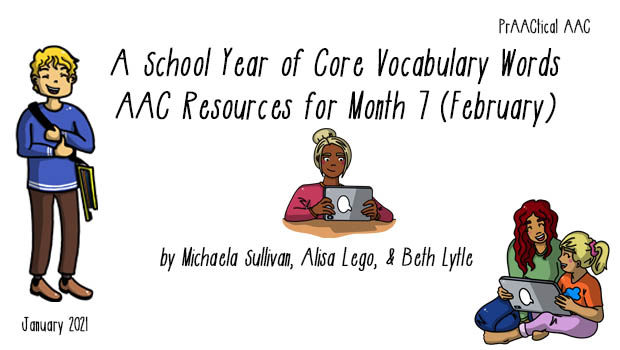
- 2020: The "School Year of Core Vocabulary Words" was launched. Authored by Michaela Sullivan, Alisa Lego, and Beth Lytle, this iteration shifted the focus toward a structured school-year curriculum. It was specifically designed to integrate into existing classroom routines, rather than serving as an add-on activity.
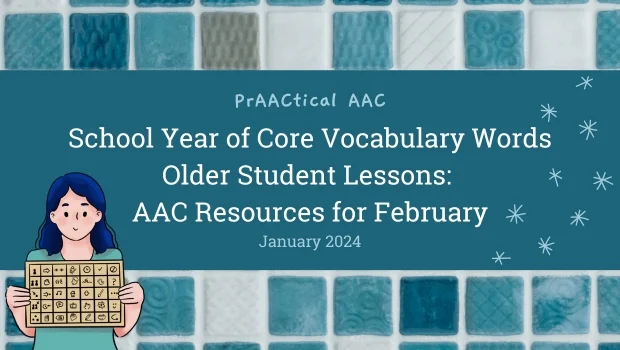
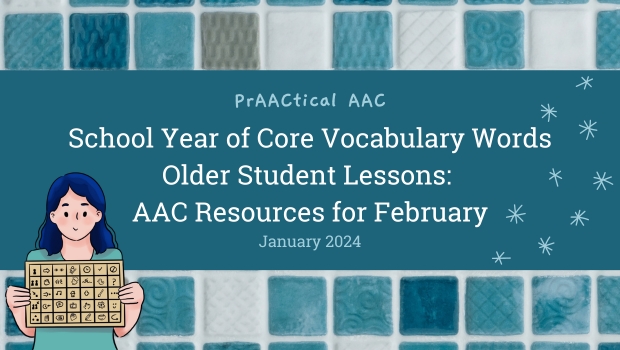
- 2023-2024: A dedicated series for older students was introduced, recognizing that adolescents require age-appropriate materials that respect their maturity while still teaching core language skills. This project, led by Michaela Sullivan and Lindsay Dougherty, bridged the gap for secondary education, where AAC support has historically been less robust.
The Role of Evidence-Based Practice in AAC
The efficacy of these resources is supported by long-standing research in speech-language pathology. Studies consistently demonstrate that aided language stimulation—the process of modeling the use of AAC symbols while speaking—is the gold standard for teaching language to those with complex communication needs.
According to data from the American Speech-Language-Hearing Association (ASHA), consistent access to and modeling of core vocabulary leads to higher rates of spontaneous communication. By providing structured lessons, the PrAACtical AAC resources ensure that practitioners are not just giving the child a device, but are also providing the necessary environment for language acquisition. The use of thematic monthly units allows for "spaced repetition," a cognitive strategy that improves memory retention by revisiting core words in different contexts throughout the year.
Structural Overview of Available Resources
The February resources are categorized into three distinct tiers to ensure appropriateness for different developmental stages:
- Set 1 & 2: These modules are designed for foundational learning. They focus on basic, high-utility words that are immediately applicable in home and classroom settings.
- School Year of Core Vocabulary: This tier is tailored for the elementary and middle school environment. It includes lesson plans that align with typical classroom activities, making it easier for teachers to embed language goals into their daily curriculum.
- Older Student Lessons: Recognizing that the vocabulary needs of a teenager differ significantly from those of a preschooler, these lessons focus on social interaction, self-advocacy, and academic participation. The content is curated to be engaging for older learners, avoiding the infantilization that can sometimes occur in AAC programming.
Perspectives from the Clinical Community
The collaborative nature of these materials has been praised by clinical experts as a model for "community-sourced professional development." By pooling the expertise of various SLPs and educators, the platform has created a repository that would be impossible for a single practitioner to develop alone.
Dr. Carole Zangari, who manages the platform, has emphasized that the success of these materials relies on the willingness of professionals to share their "real-world" adaptations. "The goal was never to create a rigid, top-down curriculum," an observation that echoes throughout the community’s discussions. "The goal was to provide a starting point that allows clinicians to tailor their instruction to the unique needs of their students."
Broader Impact and Educational Implications
The availability of these resources carries significant implications for inclusive education. When students with complex communication needs are provided with a robust, core-focused curriculum, the barriers to academic participation are lowered. In many educational systems, the lack of a clear plan for AAC implementation leads to "device abandonment," where the student stops using their communication tool. By providing a structured, month-by-month framework, these resources help ensure that the communication device remains an active, essential part of the student’s learning process.
Furthermore, the integration of these materials into mainstream classrooms supports the inclusion of students with significant disabilities. When the entire classroom is exposed to core vocabulary, the peer-modeling effect is amplified, creating a more communication-rich environment for all students, including those who are typically developing.
Implementation Challenges and Future Directions
Despite the availability of these high-quality resources, the field still faces challenges regarding time management and staffing. The "implementation gap" persists in many school districts where caseloads are high and training is limited. The PrAACtical AAC project addresses this by emphasizing that these resources are designed to be "low prep" or "no prep," allowing for rapid deployment in busy clinical settings.
Looking forward, the community is moving toward more digital integration. While the printed calendars and PDFs have been the staple of the program, the shift toward mobile-friendly and interactive digital formats is a priority for the coming years. As AI and machine learning tools begin to enter the AAC space, the importance of a human-centered, core-based curriculum remains as relevant as ever. The focus on human interaction, social connection, and linguistic autonomy serves as a counterbalance to the purely technological aspects of AAC.
Conclusion
As the PrAACtical AAC community enters February 2026, the commitment to providing accessible, evidence-based, and highly practical language resources remains a cornerstone of the field. By reprising these monthly sets, the organization ensures that new generations of educators and families have access to the same high-quality instruction that has supported thousands of students over the past decade. The systematic approach to teaching core vocabulary—moving from foundational concepts to advanced, age-appropriate applications—continues to be one of the most effective strategies for promoting long-term communication success for AAC users across the lifespan. Professionals interested in utilizing these materials are encouraged to visit the official repository to download the specific modules relevant to their students’ developmental levels and educational environments.