The Catalyst for Change: A Journey to Biodiversity Hotspots
The expedition to Madagascar and the Seychelles represented more than just a luxury trip; it was an intensive educational and scientific voyage designed to explore some of the planet’s most unique ecosystems and their endemic species. Participants, often individuals with a keen interest in natural history, conservation, and scientific inquiry, embarked on a journey that typically involves a rich tapestry of expert-led lectures, interactive discussions, and on-site observations. Such environments, while intellectually stimulating, often present inherent communication challenges, especially in dynamic settings like moving vessels, outdoor lectures, or auditoriums with variable acoustics.
Dr. Alison Richard, a distinguished figure in primatology known for her extensive research on lemurs in Madagascar and her influential tenure as Provost of Yale University, was a key participant. Her academic and leadership roles have placed her at the forefront of scientific discourse for decades. However, Dr. Richard also navigates a personal journey with hearing loss, a reality that often introduces significant hurdles in traditional learning and group settings. Her firsthand experience provided a critical lens through which to evaluate the effectiveness of the accessibility measures adopted during the expedition.
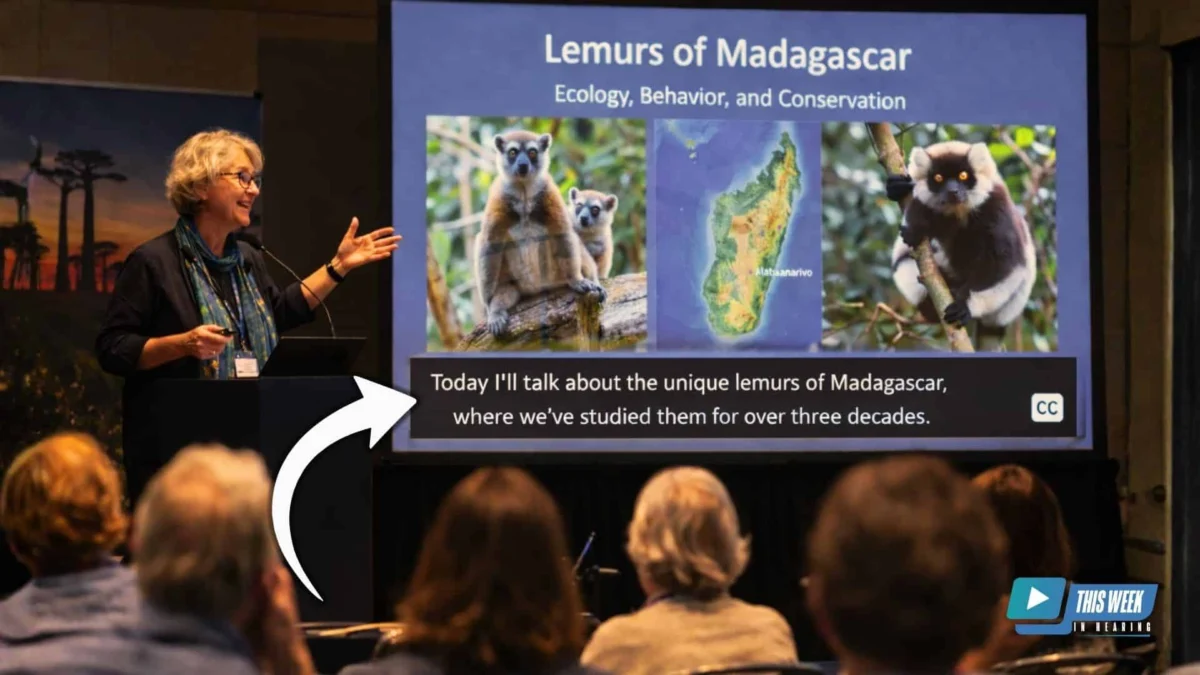
The pivotal element that elevated this particular trip from merely memorable to truly transformative was the consistent and effective use of PowerPoint captions during all formal presentations. What began as a discreet request, likely stemming from an understanding of the diverse needs within the participant group, quickly blossomed into a powerful demonstration of how seemingly minor adjustments can yield monumental gains in inclusivity and engagement.
Dr. Richard’s Insights: Navigating the Auditory Landscape
Dr. Alison Richard’s illustrious career, spanning decades of groundbreaking research in primatology and high-level academic administration, has inadvertently provided her with a unique perspective on communication challenges. Having spent extensive periods in the field, often in remote and acoustically complex environments, and subsequently in the demanding lecture halls and boardrooms of academia, her insights are particularly salient. She recounted her personal experiences with progressive hearing loss, a condition that subtly, then overtly, began to impact her ability to fully engage in conversations, lectures, and fieldwork discussions.
In academic settings, the traditional format of lectures, seminars, and Q&A sessions heavily relies on auditory comprehension. For individuals with hearing loss, this often translates into a constant struggle to piece together fragmented sentences, decipher mumbled words, or follow rapid-fire exchanges in group discussions. The mental fatigue associated with this continuous effort can significantly diminish the overall learning experience and sense of participation. Dr. Richard noted that even in optimal acoustic environments, the nuances of speech, especially from speakers with diverse accents or varying vocal projections, could be lost, leading to missed information and reduced comprehension. In fieldwork, where ambient noise from nature, equipment, or even wind can be pervasive, the challenges are often exacerbated, making clear communication an even greater imperative.
The implementation of live captions during the Madagascar and Seychelles expedition directly addressed these long-standing challenges. Dr. Richard emphasized how the captions provided a reliable, visual anchor to the spoken word. This eliminated much of the strain associated with auditory processing, allowing her and others with hearing loss to follow presentations effortlessly, engage more deeply with the content, and participate confidently in question-and-answer sessions. The ability to cross-reference the auditory input with clear, real-time text transformed passive listening into active, fully immersed participation.
Beyond Hearing Loss: The Universal Benefits of Inclusive Design
One of the most compelling revelations from the expedition, as highlighted in the discussion between Shari Eberts and Dr. Richard, was that the benefits of live captions extended far beyond the immediate target group of individuals with hearing loss. This observation strongly reinforces the principles of universal design, which posits that solutions created for specific accessibility needs often enhance usability and experience for everyone.
Numerous studies corroborate this finding. Research indicates that captions significantly improve comprehension and retention for a wide array of individuals, including:
- Non-native speakers: Captions provide crucial linguistic support, helping them to better understand spoken English (or any language) and expand their vocabulary. A 2016 study by the University of Texas at Austin found that 70% of students who used captions were not deaf or hard of hearing, and many used them to aid comprehension, especially those with English as a second language.
- Individuals in noisy environments: Whether it’s the hum of a ship’s engine, the chatter of a busy conference hall, or the ambient sounds of nature during fieldwork, captions cut through auditory distractions, ensuring the message is delivered clearly.
- Those with learning disabilities or cognitive processing differences: Visual reinforcement can aid in information processing and memory recall.
- Visual learners: Many individuals naturally process information better when it is presented visually, making captions an invaluable tool for enhanced learning.
- Students taking notes: Captions allow individuals to verify spellings of complex scientific terms or names, ensuring accuracy in their records.
- Anyone experiencing fatigue: When concentration wanes, captions provide an alternative pathway to absorb information without relying solely on auditory processing.
Data from major streaming platforms further underscores this trend. A 2019 survey by Ofcom in the UK revealed that 80% of people who use subtitles are not deaf or hard of hearing. Similarly, statistics from platforms like YouTube show that a significant portion of viewers engage with captions, often for reasons unrelated to hearing impairment. This widespread adoption in entertainment media clearly demonstrates a general preference for and benefit from textual support alongside audio.
The experience on the Madagascar and Seychelles trip vividly illustrated this broader impact. Participants reported improved clarity, enhanced focus, and a greater overall understanding of the complex scientific lectures, regardless of their hearing status. What started as an accommodation became a universal enhancement, fostering a more equitable and effective learning environment for the entire group. This shift from "accommodation" to "enhancement" is a hallmark of truly inclusive design.
The Underutilization Paradox in Academic and Professional Spheres
Despite the demonstrable benefits and relatively low cost of implementing tools like live captions, their adoption remains surprisingly low in many academic and professional settings. This underutilization presents a paradox, especially given the stated commitments of many institutions to diversity, equity, and inclusion.
Several factors contribute to this persistent gap:
- Lack of Awareness: Many educators and professionals are simply unaware of the ease with which these tools can be integrated into existing presentation software (e.g., PowerPoint, Google Slides, Zoom) or the profound positive impact they can have.
- Perceived Effort/Complexity: There can be a misconception that setting up accessibility features is time-consuming or technically challenging, whereas in many modern platforms, it’s often a one-click activation.
- Funding and Resources: While the direct cost of activating built-in captions is minimal, institutional inertia, budget constraints for dedicated accessibility specialists, or lack of investment in modern infrastructure can be barriers.
- Cultural Inertia: Traditional pedagogical methods often prioritize auditory delivery, and shifting this paradigm requires a cultural change within institutions. There’s sometimes a reluctance to deviate from established norms, even when evidence points to superior alternatives.
- "Invisible" Disability: Hearing loss, being an invisible disability, often goes unaddressed until an explicit request is made. Without proactive measures, the needs of those with hearing loss can be overlooked. The World Health Organization estimates that by 2050, nearly 2.5 billion people will have some degree of hearing loss, and at least 700 million will require hearing rehabilitation. This demographic reality necessitates a more proactive approach to accessibility.
The conversation between Shari Eberts and Dr. Richard implicitly serves as a call to action, urging academic institutions, conference organizers, and professional bodies to re-evaluate their current practices. The "small request" that transformed the Madagascar trip exemplifies how minor adjustments can have a broad, positive ripple effect across diverse populations. The potential return on investment in terms of enhanced learning outcomes, increased engagement, and improved inclusivity far outweighs the minimal effort required.
Shari Eberts: A Leading Voice in Hearing Health Advocacy
Shari Eberts, the interviewer in this pivotal discussion, is herself a powerful force in the hearing health community. As a passionate advocate and internationally recognized author and speaker on hearing loss issues, her work through "Living with Hearing Loss," a popular blog and online community, has provided invaluable support and resources to countless individuals. Her role as an executive producer of "We Hear You," an award-winning documentary, further demonstrates her commitment to raising awareness and challenging perceptions surrounding hearing loss. Her co-authored book, "Hear & Beyond: Live Skillfully with Hearing Loss," serves as a practical guide for navigating life with auditory impairment.
Eberts’ personal experience with adult-onset genetic hearing loss fuels her dedication. Her advocacy is not merely academic; it is deeply rooted in a desire to share coping strategies and foster a sense of community, ensuring others do not feel isolated in their journeys. Her perspective as both an individual with hearing loss and a leading advocate provides a unique and empathetic lens through which to explore the societal implications of accessibility, making her conversation with Dr. Richard particularly resonant. Her consistent message revolves around empowering individuals and institutions to embrace solutions that foster greater inclusion and understanding.
Broader Implications and the Path Forward
The experience from the Madagascar and Seychelles expedition, as illuminated by Dr. Alison Richard and Shari Eberts, offers a compelling case study for a broader societal shift towards universal accessibility. The implications extend far beyond scientific expeditions or academic lectures.
- Accessible Tourism: The travel industry, a multi-trillion-dollar global sector, has a significant opportunity to embrace inclusive design. Providing captions on tours, in museums, during cultural presentations, and even on cruise ship announcements can open up travel experiences to a much wider demographic, including the elderly, individuals with hearing loss, and non-native speakers. The economic argument for accessible tourism is strong, tapping into a growing market segment.
- Workplace Inclusion: Companies can foster more inclusive work environments by routinely utilizing captions in virtual meetings, training sessions, and internal presentations. This not only benefits employees with hearing loss but also improves communication clarity for global teams, individuals working remotely, or those in open-plan offices prone to distractions.
- Public Engagement and Education: Museums, government agencies, and public institutions can enhance their outreach and educational efforts by making all audio-visual content captioned. This ensures that vital information and cultural experiences are accessible to the entire population.
- Technological Integration: The increasing sophistication of AI-powered transcription and translation services makes the implementation of real-time captions more accurate and seamless than ever before. Encouraging the development and adoption of these technologies as standard features, rather than optional add-ons, is crucial.
The journey to Madagascar and the Seychelles, originally conceived as an exploration of unique ecosystems, inadvertently became a powerful testament to the transformative potential of inclusive design. It demonstrated that accessibility is not merely about compliance or accommodating a minority; it is about enriching the experience for everyone, fostering deeper engagement, and unlocking human potential across diverse abilities. The insights shared by Dr. Richard and Shari Eberts serve as a potent reminder that small changes, thoughtfully implemented, can pave the way for a more equitable and comprehensively accessible world.
For those interested in delving deeper into this insightful conversation and understanding the nuances of accessibility in real-world scenarios, the full discussion is available via the TWIH Podcast. Listeners can tune in on their preferred podcast streaming service, including Apple Podcasts, Spotify, Google Podcasts, and more, to gain further perspectives on this critical topic.