The overhaul was prompted by a desire to move beyond mere compliance with the Public Sector Bodies (Websites and Mobile Applications) (No. 2) Accessibility Regulations 2018. While the initial iteration of the manual, launched in September 2024, received positive feedback and saw consistent traffic, internal audits and user feedback suggested that the information architecture was hindering the efficiency of design and delivery teams. By focusing on the specific needs of designers, product managers, and delivery leads, the DfE has transformed the manual into a more intuitive resource that aligns with the practical workflows of modern digital development.
A Chronology of Iteration and Development
The journey toward the current iteration of the manual began in September 2024, when the DfE first published the Accessibility and Inclusive Design Manual. This initial release was intended to centralize the department’s standards and provide a unified reference point for both internal teams and external contractors. Throughout the final quarter of 2024 and the first half of 2025, the DfE’s accessibility team monitored usage patterns and gathered qualitative data through structured user research sessions.
The research phase specifically targeted three core areas: the discoverability of content, the utility of the existing "knowledge hub," and the effectiveness of the homepage in directing users to relevant information. By engaging with professionals in design, product, and delivery roles, the researchers identified that while the content itself was highly valued, the way it was organized did not always reflect the mental models of the people using it.
In early 2025, the team began the process of deconstructing the manual’s structure. This led to the pivotal decision to remove the "knowledge hub" and reintegrate its contents into more logical, task-oriented sections. Following a series of beta tests and design sprints, the updated manual was finalized and deployed in July 2025. The September 2025 review of these changes indicates a marked improvement in user satisfaction and a reduction in the time required for teams to find specific guidance.
Structural Overhaul: Moving Beyond the Knowledge Hub
One of the most significant changes in the 2025 update was the total removal of the "knowledge hub" section. Originally conceived as a centralized library for all accessibility-related information, the hub had inadvertently become what users described as a "dumping ground" for content. Research indicated that the sheer volume of unstructured information made the section cluttered and difficult to navigate, often leading to "information overload" for users seeking quick answers to specific design challenges.
To rectify this, the DfE accessibility team reorganized the content based on the user journey—specifically how digital professionals think and search for information during different phases of a project. Rather than isolating "knowledge" in a separate silo, the information was woven into the functional parts of the manual where it would be most relevant.
For instance, guidance that was previously buried in the hub regarding specific HTML elements or ARIA (Accessible Rich Internet Applications) roles was moved into direct proximity with the design patterns they support. This contextual placement ensures that designers and developers encounter the necessary accessibility requirements at the exact moment they are making technical or aesthetic decisions. This approach aligns with the "Accessibility by Design" philosophy, which advocates for the integration of inclusive practices from the very beginning of the development lifecycle rather than treating them as an afterthought.
Improving Tools Guidance Through Human-Centric Design
Prior to the July 2025 update, the "tools" section of the manual was primarily technical and instructional, focusing on a list of software and the steps required for installation. User feedback revealed that this was insufficient for the needs of multidisciplinary teams. Professionals were not just asking "how do I install this?" but rather "which tool is right for my specific task?" and "how do I interpret the results this tool provides?"
The DfE responded by reframing the tools guidance to focus on the human element of testing and validation. The updated section now categorizes tools based on the specific needs they fulfill, such as contrast checking, screen reader simulation, or automated code scanning.
The new guidance provides clarity on:
- Selection Criteria: Helping teams choose between automated tools (like Axe or Lighthouse) and manual testing methods involving assistive technologies.
- Contextual Usage: Explaining when in the development cycle a specific tool is most effective—for example, using wireframe accessibility checkers during the design phase versus using screen readers like NVDA or JAWS during the QA phase.
- Interpretation of Results: Providing frameworks for understanding the output of accessibility audits, ensuring that teams can distinguish between critical blockers and advisory improvements.
By shifting the focus from installation to application, the manual now empowers teams to conduct more meaningful accessibility testing, reducing the reliance on external audits and fostering a culture of internal accountability.
Streamlining the Homepage and User Interface
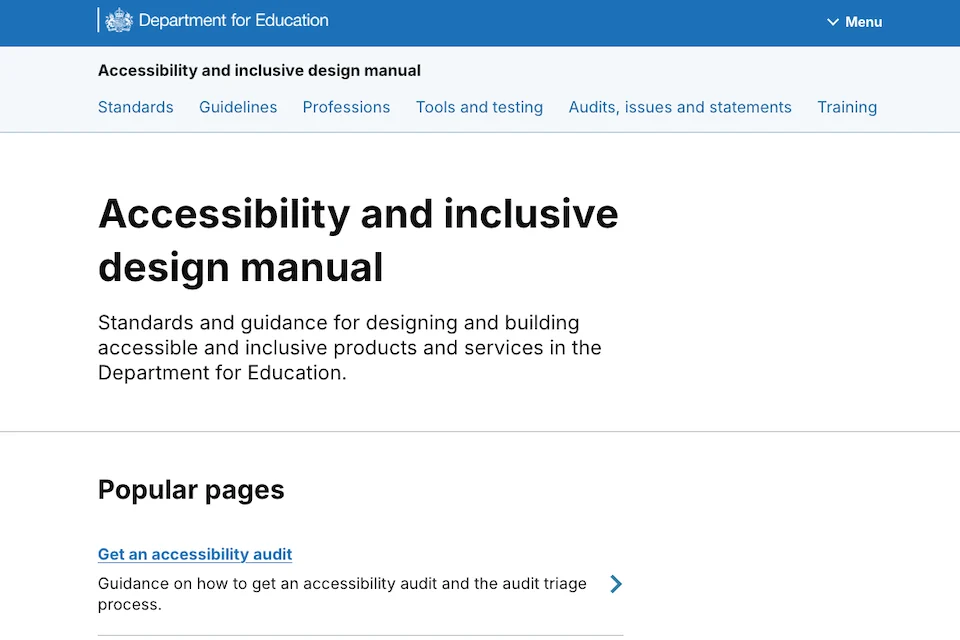
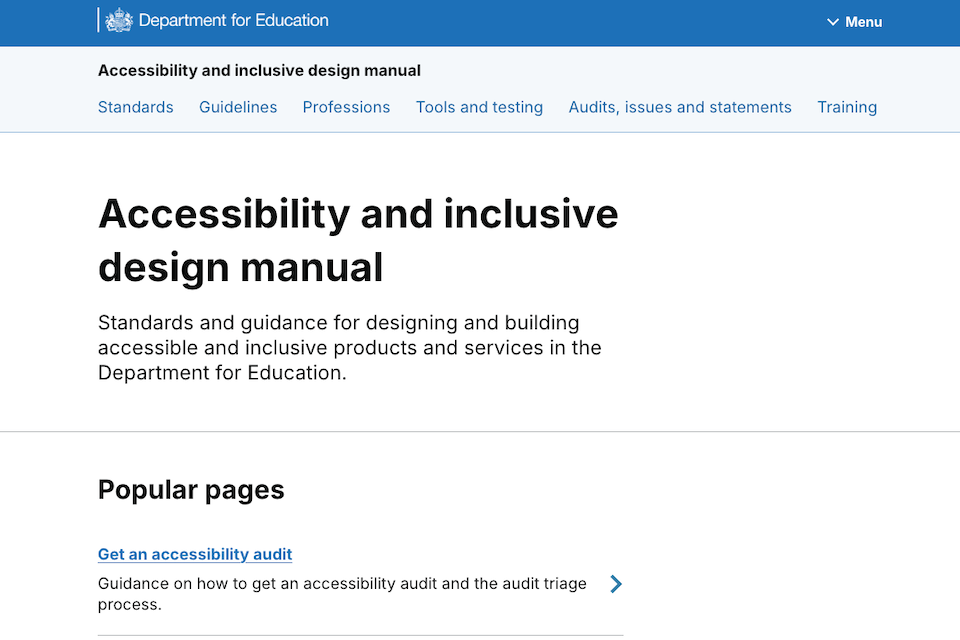
The visual and functional design of the manual’s homepage underwent a significant simplification to reduce cognitive load. The previous version of the homepage was noted for being overly "busy," featuring an abundance of icons, decorative images, and a long-scroll format that forced users to hunt for information. Furthermore, the top navigation bar was found to be unclear, leading to "pogo-sticking"—a behavior where users click into a section, realize it is not what they need, and immediately return to the previous page.
The 2025 redesign addressed these issues by:
- Reducing Visual Noise: Removing non-essential images and icons that did not contribute to the user’s understanding of the content.
- Optimizing Navigation: Implementing a clearer, more hierarchical navigation structure that reflects the most common user tasks.
- Improving Scannability: Utilizing a more concise layout that allows users to see the primary categories of the manual without excessive scrolling.
These changes are rooted in fundamental UX principles. By simplifying the interface, the DfE has made the manual itself a testament to inclusive design, ensuring that the resource is accessible to users with various cognitive needs or those using assistive technologies to browse the site.
Supporting Data and the Importance of Inclusive Design
The necessity for such a robust manual is underscored by broader demographic data regarding disability in the United Kingdom. According to recent figures from the Department for Work and Pensions (DWP), there are approximately 16 million people living with a disability in the UK, representing roughly 24% of the population. For these individuals, the accessibility of digital government services is not a luxury but a fundamental requirement for participating in modern society.
Furthermore, the DfE’s internal data shows that the demand for accessibility guidance is at an all-time high. With the transition to Web Content Accessibility Guidelines (WCAG) 2.2 as the new standard for government services, teams require more granular and practical advice than ever before. The WCAG 2.2 standards introduced nine new success criteria, including requirements for focus appearance, target size, and redundant entry, all of which are addressed in the updated DfE manual.
The economic argument for inclusive design is equally compelling. Research by the Cabinet Office has previously suggested that "accessibility by design" is significantly more cost-effective than retrofitting services to meet standards after they have been built. By providing clear, actionable guidance through the manual, the DfE is effectively reducing the long-term technical debt and legal risk associated with non-compliant digital products.
Official Responses and Industry Implications
While the manual was primarily developed for DfE teams, the department has maintained an "open by default" policy, making the resource available to the public. This move has been welcomed by the wider digital community and other government departments.
Industry experts have noted that the DfE’s approach of "research-led iteration" sets a high bar for public sector documentation. By openly discussing the flaws of the previous version—such as the "dumping ground" nature of the knowledge hub—the DfE has demonstrated a commitment to transparency and continuous improvement. This transparency is seen as vital for building trust within the developer community and encouraging the adoption of best practices across the board.
A spokesperson for the DfE’s digital team emphasized that the manual is a "living document" that will continue to evolve as technology and user needs change. The department plans to conduct further rounds of research as new assistive technologies emerge and as the WCAG standards continue to advance.
Broader Impact and Future Outlook
The implications of the DfE’s updated manual extend far beyond the department itself. As one of the most comprehensive accessibility resources in the UK public sector, it serves as a blueprint for other organizations looking to modernize their inclusive design strategies. The focus on "people over tools" and "context over clutter" reflects a maturing of the digital accessibility field, moving away from a checklist-based compliance model toward a more holistic, user-centric approach.
As the 2025 update settles into standard practice, the DfE is looking toward the future of inclusive design, including the potential role of Artificial Intelligence (AI) in accessibility testing and the challenges posed by increasingly complex data visualizations. The foundation laid by this recent overhaul ensures that the department is well-positioned to navigate these future challenges while maintaining its core mission of providing accessible education services for all.
In conclusion, the July 2025 update to the DfE Accessibility and Inclusive Design Manual is more than a simple website redesign. It is a strategic realignment of resources intended to bridge the gap between technical standards and practical application. By listening to its users and restructuring its content to match their needs, the DfE has created a tool that is not only a repository of information but a catalyst for better, more inclusive digital public services.